First-Offense Powder Cocaine Possession Penalties in Kansas
Not sure how this applies to you? Ask about your own facts and see which parts of current Kansas law apply, with citations to the statutes.
Free for 7 days, then $249/mo. Cancel anytime.
At a glance
| Governing source and schedule | K.S.A. 65-4107(b)(5) lists cocaine in Schedule II; §§ 21-5701(m)(4), 21-5706(a), (c)(1) govern possession. |
|---|---|
| Possession and authorization | Section 21-5706(a) prohibits possession of narcotic drugs without an express prescription clause in that subsection; § 21-5202(d)–(e) supplies the default mental-state rule. The fixed facts assume knowing, unauthorized possession. |
| Quantity and form measured | The half gram of powder is in § 21-5706(a)'s single cocaine-possession tier; that subsection does not split the grade by weight, purity, cutting agent, or powder form. |
| First-offense grade | Drug severity level 5 felony (§ 21-5706(c)(1)); first-possession status alone does not determine criminal-history column. |
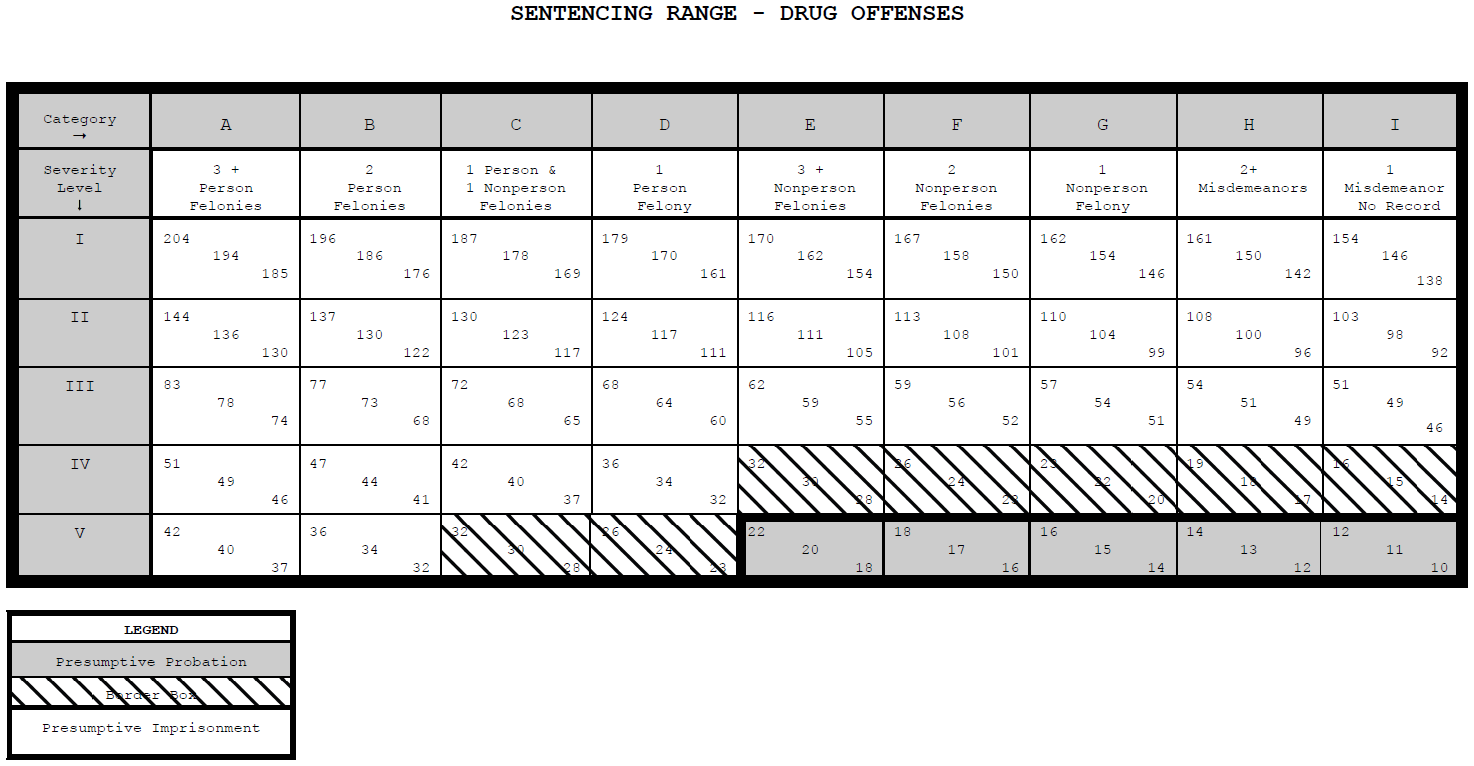
| Ordinary confinement range | Level 5 drug-grid terms span 10–42 months across criminal-history columns; grid position and presumptive prison/probation disposition depend on history (§ 21-6805(a), (b), (d)). |
| Ordinary fine range | Optional fine up to $100,000 for a post-2012 drug severity level 5 felony; no positive fine floor in the quoted clause (§ 21-6611(a)(3)). |
| Mandatory minimum or exception | No offense-specific mandatory custody floor in § 21-5706(c)(1); the applicable grid block controls, and some level 5 blocks presume nonprison (§ 21-6805(d)). |
| First-offender disposition | Prosecutor may offer preconviction diversion after considering statutory factors; completion requires dismissal with prejudice (§§ 22-2907(a), 22-2909(a)(1)). Assessed treatment may attach to eligible diversion or postconviction nonprison sanction (§§ 21-6825(a)–(c), 21-6824(a), (c), as amended in 2026). |
| Higher-tier boundary | Section 21-5706(a), (c)(1) states no higher cocaine-possession weight threshold; sale or intent to distribute falls outside the fixed personal-use facts. |
Requirements one by one
Grade and sentencing grid
K.S.A. 65-4107(b)(5) lists cocaine in Schedule II, and § 21-5701(m)(4) places coca derivatives within the narcotic-drug definition. Section 21-5706(a), (c)(1) makes possession of a narcotic drug a drug severity level 5 felony. That possession subsection does not set a weight or purity threshold. The fixed half gram of powder therefore stays in that grade; the cited subsection supplies no separate higher cocaine-possession amount. Section 21-5202(d)–(e) provides a default culpable mental state when an offense does not specify one. These facts assume knowing possession without authorization; § 21-5706(a) itself does not spell out a prescription exception.
Under § 21-6805(a), (b), (d), the drug grid sets a prison term by severity level and criminal-history column, and marks the presumptive prison or nonprison disposition. The level 5 row runs from 10 months at the low end of column I to 42 months at the high end of column A. A first possession charge does not prove the person has no unrelated criminal history, so the 5-I probation block cannot be assumed. Section 21-6611(a)(3) permits a fine up to $100,000 for this post-2012 level 5 felony and states no positive fine minimum. Section 21-5706(c)(1) supplies no separate mandatory custody minimum.
Diversion and treatment
K.S.A. 22-2907(a) allows the district attorney to propose preconviction diversion after considering § 22-2908 factors and the interests of justice, the defendant and the community. It is a prosecutor decision, not automatic first-offender relief. Under § 22-2909(a)(1), fulfillment of the agreement requires dismissal of the charge with prejudice. For a qualifying level 5 possession complaint in grid blocks 5-C through 5-I, § 21-6825(a), (c) can require certified drug treatment under the diversion agreement if assessment criteria are met. Separately, § 21-6824(a), (c), as amended by 2026 Chapter 103, provides an assessed treatment sanction after conviction for eligible offenders; Chapter 103, § 5 makes the amendment effective on publication in the statute book. These routes do not change the felony grade itself.
What trips people up
The grid uses criminal history, not just whether this is the first possession offense. It also distinguishes the prison term announced for a block from the block's presumptive nonprison disposition. Diversion occurs before conviction; the § 21-6824 treatment sanction operates after conviction.
Common questions
Is diversion guaranteed for a first possession charge? No. Section 22-2907(a) leaves the initial offer to the district attorney, and § 22-2909(a)(1) makes dismissal depend on completing the agreement.
Does a half gram trigger a separate cocaine weight tier? No weight division appears in § 21-5706(a), (c)(1) for this possession offense. Sale or intent to distribute falls outside the fixed personal-use facts.
Statutes and sources
- K.S.A. 65-4107 and § 21-5701 identify Schedule II cocaine and narcotic drugs; read October 24, 2026.
- K.S.A. 21-5706 and § 21-5202 govern the offense and default mental state; read October 24, 2026.
- K.S.A. 21-6805, including its drug-grid image, and § 21-6611 set grid sentencing and the fine ceiling; read October 24, 2026.
- K.S.A. 22-2907, § 22-2909, and § 21-6825 govern diversion and eligible treatment; read October 24, 2026.
- 2026 Kansas Session Laws Chapter 103, § 2 updates K.S.A. 21-6824 treatment terms; read October 24, 2026.
Source links
Every statute quoted above, linked, with the date we checked it.
What does Kansas law mean for your facts?
You just read the general rule. Ask your own question and see which parts of current Kansas law apply to your situation, with citations you can check.
Try Ezel Pro free for 7 days. Cancel anytime before the trial ends and you pay nothing.
- Starts from the statutes this survey is built on
- Cites every source it relies on, so you can verify it
- Chat, drafting and research in one workspace