STRUCTURED SETTLEMENT VS. LUMP SUM ANALYSIS WORKSHEET
CASE INFORMATION
Case Caption: [________________________________]
Claimant Name: [________________________________]
Date of Birth: [__/__/____]
Age: [____]
Case Number: [________________________________]
Settlement Amount Being Analyzed: $[________________________________]
Prepared By: [________________________________]
Date Prepared: [__/__/____]
PART I: CLAIMANT PROFILE
A. Personal Information
Marital Status: ☐ Single ☐ Married ☐ Divorced ☐ Widowed
Dependents:
| Name | Relationship | Age | Special Needs? |
|---|---|---|---|
| [________________________________] | [____] | [____] | ☐ Yes ☐ No |
| [________________________________] | [____] | [____] | ☐ Yes ☐ No |
| [________________________________] | [____] | [____] | ☐ Yes ☐ No |
B. Health and Life Expectancy
Current Health Status: ☐ Excellent ☐ Good ☐ Fair ☐ Poor
Injuries from Incident:
[________________________________]
[________________________________]
Life Expectancy:
☐ Normal: [____] years
☐ Reduced due to injury: [____] years
☐ Rated age available for annuity: ☐ Yes ☐ No
Ongoing Medical Needs:
☐ None expected
☐ Periodic treatment
☐ Ongoing care required
☐ Permanent disability/chronic condition
C. Employment and Income
Current Employment Status:
☐ Employed Full-Time (Income: $[____]/year)
☐ Employed Part-Time (Income: $[____]/year)
☐ Self-Employed (Income: $[____]/year)
☐ Unemployed
☐ Disabled/Unable to Work
☐ Retired
Future Employment Capacity:
☐ Expected to return to work
☐ Reduced capacity
☐ Unable to work due to injury
☐ Retirement expected in [____] years
D. Financial Profile
Current Assets:
| Asset Type | Value |
|------------|-------|
| Savings/Checking | $[____] |
| Investments | $[____] |
| Retirement Accounts | $[____] |
| Real Estate Equity | $[____] |
| Other | $[____] |
| Total Assets | $[____] |
Current Debts:
| Debt Type | Balance |
|-----------|---------|
| Mortgage | $[____] |
| Credit Cards | $[____] |
| Medical Bills | $[____] |
| Student Loans | $[____] |
| Other | $[____] |
| Total Debts | $[____] |
Monthly Budget:
| Category | Amount |
|----------|--------|
| Housing | $[____] |
| Utilities | $[____] |
| Food | $[____] |
| Transportation | $[____] |
| Healthcare | $[____] |
| Insurance | $[____] |
| Other | $[____] |
| Total Monthly Needs | $[____] |
E. Financial Management Experience
Investment Experience:
☐ None/Limited
☐ Moderate
☐ Experienced
History of Financial Difficulties:
☐ No history
☐ Past bankruptcy
☐ Foreclosure/Repossession
☐ Credit problems
☐ Susceptible to pressure from others
Financial Advisor Relationship:
☐ Has professional advisor
☐ No advisor
☐ Willing to engage advisor
PART II: SETTLEMENT OPTIONS ANALYSIS
A. Option 1: Full Lump Sum
Gross Settlement: $[________________________________]
Deductions:
| Item | Amount |
|---|---|
| Attorney Fees | $[____] |
| Litigation Costs | $[____] |
| Medicare/Medicaid Liens | $[____] |
| Other Liens | $[____] |
| Medicare Set-Aside (if required) | $[____] |
| Total Deductions | $[____] |
Net Lump Sum to Claimant: $[________________________________]
B. Option 2: Full Structured Settlement
Amount Available for Structure: $[________________________________]
(After attorney fees, costs, and liens)
Structured Settlement Quote:
Annuity Company: [________________________________]
Quote Date: [__/__/____]
Quote Number: [________________________________]
Payment Options:
☐ Option A: Monthly Payments for Life
- Monthly Amount: $[____]
- Guaranteed Period: [____] years
- Total Guaranteed: $[____]
- Cost: $[____]
☐ Option B: Monthly Payments for Term Certain
- Monthly Amount: $[____]
- Term: [____] years
- Total Payout: $[____]
- Cost: $[____]
☐ Option C: Lump Sums at Future Dates
- Payment Schedule:
| Date | Amount | Purpose |
|---|---|---|
| [__/__/____] | $[____] | [________________________________] |
| [__/__/____] | $[____] | [________________________________] |
| [__/__/____] | $[____] | [________________________________] |
| [__/__/____] | $[____] | [________________________________] |
- Total Future Lump Sums: $[____]
- Cost: $[____]
☐ Option D: Combination (Monthly + Lump Sums)
- Monthly Amount: $[____]
- Guaranteed Period: [____] years
- Plus Future Lump Sums: (see schedule above)
- Total Guaranteed Payout: $[____]
- Cost: $[____]
C. Option 3: Hybrid (Partial Lump Sum + Structure)
Immediate Needs Lump Sum: $[________________________________]
For:
☐ Debt payoff
☐ Home purchase/modification
☐ Vehicle purchase
☐ Medical equipment
☐ Emergency reserve
☐ Other: [________________________________]
Remaining Amount for Structure: $[________________________________]
Structured Portion Details:
[________________________________]
[________________________________]
PART III: TAX ANALYSIS
A. Tax Treatment of Personal Injury Settlements
Qualifying Damages (Tax-Free under IRC § 104(a)(2)):
☐ Compensatory damages for physical injury/sickness
☐ Emotional distress damages arising from physical injury
Taxable Amounts:
☐ Punitive damages
☐ Interest (pre-judgment and post-judgment)
☐ Emotional distress not from physical injury
☐ Lost wages (in some jurisdictions)
Settlement Characterization:
| Component | Amount | Tax Treatment |
|-----------|--------|---------------|
| Compensatory (Physical Injury) | $[____] | Tax-Free |
| Punitive Damages | $[____] | Taxable |
| Interest | $[____] | Taxable |
| Other: [____] | $[____] | [____] |
B. Lump Sum Tax Implications
Tax-Free Portion: $[____]
Taxable Portion: $[____]
If Invested (Lump Sum):
- Assumed Annual Return: [____]%
- Annual Investment Income: $[____]
- Federal Tax Rate: [____]%
- State Tax Rate: [____]%
- Annual Tax on Investment Income: $[____]
C. Structured Settlement Tax Advantages
IRC § 104(a)(2) Benefits:
- All payments from qualifying structured settlement are tax-free
- Investment growth inside annuity is tax-free
- No tax on periodic payments
Tax Savings Over [____] Years:
| Lump Sum | Structured | |
|---|---|---|
| Initial Amount | $[____] | $[____] |
| Total Payments Received | $[____] | $[____] |
| Investment Growth | $[____] | $[____] |
| Taxes Paid on Growth | $[____] | $0 |
| Net After-Tax Value | $[____] | $[____] |
Tax Advantage of Structure: $[________________________________]
PART IV: FINANCIAL COMPARISON
A. Present Value Analysis
Discount Rate Used: [____]%
(Represents opportunity cost - what claimant could earn investing lump sum)
Present Value of Structured Settlement Payments:
| Payment | Date | Amount | PV Factor | Present Value |
|---|---|---|---|---|
| Monthly x 12 | Year 1 | $[____] | [____] | $[____] |
| Monthly x 12 | Year 2 | $[____] | [____] | $[____] |
| Monthly x 12 | Year 3 | $[____] | [____] | $[____] |
| Monthly x 12 | Year 4 | $[____] | [____] | $[____] |
| Monthly x 12 | Year 5 | $[____] | [____] | $[____] |
| Years 6-10 | $[____] | [____] | $[____] | |
| Years 11-20 | $[____] | [____] | $[____] | |
| Years 21+ | $[____] | [____] | $[____] | |
| Future Lump Sums | Various | $[____] | [____] | $[____] |
Total Present Value of Structure: $[________________________________]
Present Value Comparison:
- Net Lump Sum: $[____]
- Present Value of Structure: $[____]
- Difference: $[____] ☐ Favor Lump ☐ Favor Structure
B. Future Value Analysis
Assumptions:
- Investment Return (Lump Sum): [____]%
- Time Horizon: [____] years
- Tax Rate on Investment Income: [____]%
Lump Sum Growth:
| Year | Beginning Balance | Growth | Taxes | Ending Balance |
|---|---|---|---|---|
| 0 | $[____] | -- | -- | $[____] |
| 5 | $[____] | $[____] | $[____] | $[____] |
| 10 | $[____] | $[____] | $[____] | $[____] |
| 15 | $[____] | $[____] | $[____] | $[____] |
| 20 | $[____] | $[____] | $[____] | $[____] |
Structured Settlement Total Payout:
| Period | Payments Received | Running Total |
|---|---|---|
| Years 1-5 | $[____] | $[____] |
| Years 6-10 | $[____] | $[____] |
| Years 11-15 | $[____] | $[____] |
| Years 16-20 | $[____] | $[____] |
| Years 21+ | $[____] | $[____] |
| Lifetime Total | $[____] |
C. Internal Rate of Return (IRR)
Structure Cost: $[____]
Total Guaranteed Payments: $[____]
Effective IRR of Structure: [____]%
Comparison to Market Rates:
- Current 10-Year Treasury: [____]%
- High-Grade Corporate Bonds: [____]%
- S&P 500 Historical Average: ~10%
Structure IRR vs. Safe Alternatives: ☐ Competitive ☐ Below Market
PART V: QUALITATIVE FACTORS
A. Arguments for Structured Settlement
| Factor | Relevance (1-5) | Notes |
|---|---|---|
| Tax-free growth of payments | [____] | [________________________________] |
| Protection from poor financial decisions | [____] | [________________________________] |
| Guaranteed income stream | [____] | [________________________________] |
| Protection from creditors (varies by state) | [____] | [________________________________] |
| Budgeting/financial discipline | [____] | [________________________________] |
| Long-term care funding | [____] | [________________________________] |
| Minor child protection | [____] | [________________________________] |
| SSI/Medicaid eligibility (with special needs trust) | [____] | [________________________________] |
| Protection from third-party pressure | [____] | [________________________________] |
B. Arguments for Lump Sum
| Factor | Relevance (1-5) | Notes |
|---|---|---|
| Immediate access to funds | [____] | [________________________________] |
| Flexibility in investment choices | [____] | [________________________________] |
| Ability to pay off debt | [____] | [________________________________] |
| Home purchase opportunity | [____] | [________________________________] |
| Business investment | [____] | [________________________________] |
| Education funding | [____] | [________________________________] |
| Experienced investor | [____] | [________________________________] |
| Short life expectancy | [____] | [________________________________] |
| Higher risk tolerance | [____] | [________________________________] |
C. Risk Assessment
Structured Settlement Risks:
☐ Annuity company insolvency (rating: [____])
☐ Inflation eroding purchasing power
☐ Inability to access funds for emergencies
☐ Loss of investment control
☐ Rated age miscalculation (if applicable)
Lump Sum Risks:
☐ Overspending/fund depletion
☐ Poor investment decisions
☐ Market volatility
☐ Pressure from family/friends
☐ Scams and predatory practices
☐ Tax on investment income
PART VI: SPECIAL CONSIDERATIONS
A. Minor Claimant
Claimant is a Minor: ☐ Yes ☐ No
Current Age: [____]
Age of Majority in State: [____]
Structure Options for Minor:
☐ Payments begin at age 18
☐ Payments begin at age 21
☐ Payments begin at age 25
☐ Graduated payments as child ages
☐ Education funding payments
Court Approval Required: ☐ Yes ☐ No
B. Disabled Claimant/Special Needs
Claimant Receives Government Benefits:
☐ SSI
☐ SSDI
☐ Medicaid
☐ Medicare
☐ Other: [____]
Special Needs Trust Recommended: ☐ Yes ☐ No
Structure Can Fund SNT: ☐ Yes (payments to trust) ☐ N/A
C. Medicare Set-Aside Coordination
MSA Required: ☐ Yes ☐ No
MSA Amount: $[____]
MSA Funding Options:
☐ Lump sum MSA
☐ Structured MSA with periodic payments
☐ Rated age annuity for MSA
D. Liens and Deductions
Timing of Lien Payments:
☐ Paid from initial lump sum before structure
☐ Liens reduce structure principal
Attorney Fee Calculation:
☐ Based on gross settlement
☐ Based on present value of structure
☐ Based on cost of annuity
PART VII: ANNUITY COMPANY EVALUATION
A. Proposed Annuity Issuer
Company Name: [________________________________]
A.M. Best Rating: [____]
S&P Rating: [____]
Moody's Rating: [____]
State Guaranty Association Coverage: $[____] per life
B. Rating Evaluation
Minimum Acceptable Rating: A- or better
Company Meets Standard: ☐ Yes ☐ No
Consider Alternative Issuer: ☐ Yes ☐ No
PART VIII: RECOMMENDATION AND DECISION
A. Analysis Summary
| Factor | Lump Sum | Structured | Hybrid |
|---|---|---|---|
| Net Present Value | $[____] | $[____] | $[____] |
| Tax Efficiency | [____] | [____] | [____] |
| Financial Security | [____] | [____] | [____] |
| Flexibility | [____] | [____] | [____] |
| Risk Level | [____] | [____] | [____] |
| Overall Score | [____] | [____] | [____] |
B. Recommended Option
☐ Full Lump Sum
☐ Full Structured Settlement
☐ Hybrid Approach
Recommended Structure (if applicable):
[________________________________]
[________________________________]
[________________________________]
Rationale:
[________________________________]
[________________________________]
[________________________________]
C. Claimant Decision
Option Selected: [________________________________]
Client understands:
☐ Tax implications of each option
☐ Present value vs. total payout differences
☐ Liquidity/access limitations of structure
☐ Risks of lump sum management
☐ Annuity company ratings and guaranty limits
☐ Structure payments cannot be changed after funding
PART IX: CLIENT ACKNOWLEDGMENT
I, [________________________________], have reviewed this Structured Settlement Analysis Worksheet. I understand the differences between receiving my settlement as a lump sum versus a structured settlement.
I have been advised to consult with:
☐ Tax professional
☐ Financial advisor
☐ My attorney
I have had the opportunity to ask questions about:
☐ Tax consequences
☐ Present value calculations
☐ Annuity company ratings
☐ My personal financial situation
☐ Long-term implications of my choice
My Decision: ☐ Lump Sum ☐ Structured Settlement ☐ Hybrid
Client Signature: _________________________________ Date: [__/__/____]
Client Printed Name: [________________________________]
Witness/Attorney Signature: _________________________________ Date: [__/__/____]
SOURCES AND REFERENCES
- Internal Revenue Code §§ 104(a)(2), 130, 468B
- National Structured Settlement Trade Association (NSSTA)
- MetLife 2025 Personal Injury Settlement Study
- State Structured Settlement Protection Acts
- Annuity company rating agencies (A.M. Best, S&P, Moody's)
- State guaranty association coverage limits
This worksheet is for analysis and comparison purposes. Structured settlement decisions are significant and often irrevocable. Claimants should consult with qualified tax, financial, and legal professionals before making final decisions.
Do more with Ezel
This free template is just the beginning. See how Ezel helps legal teams draft, research, and collaborate faster.
AI that drafts while you watch
Tell the AI what you need and watch your document transform in real-time. No more copy-pasting between tools or manually formatting changes.
- Natural language commands: "Add a force majeure clause"
- Context-aware suggestions based on document type
- Real-time streaming shows edits as they happen
- Milestone tracking and version comparison
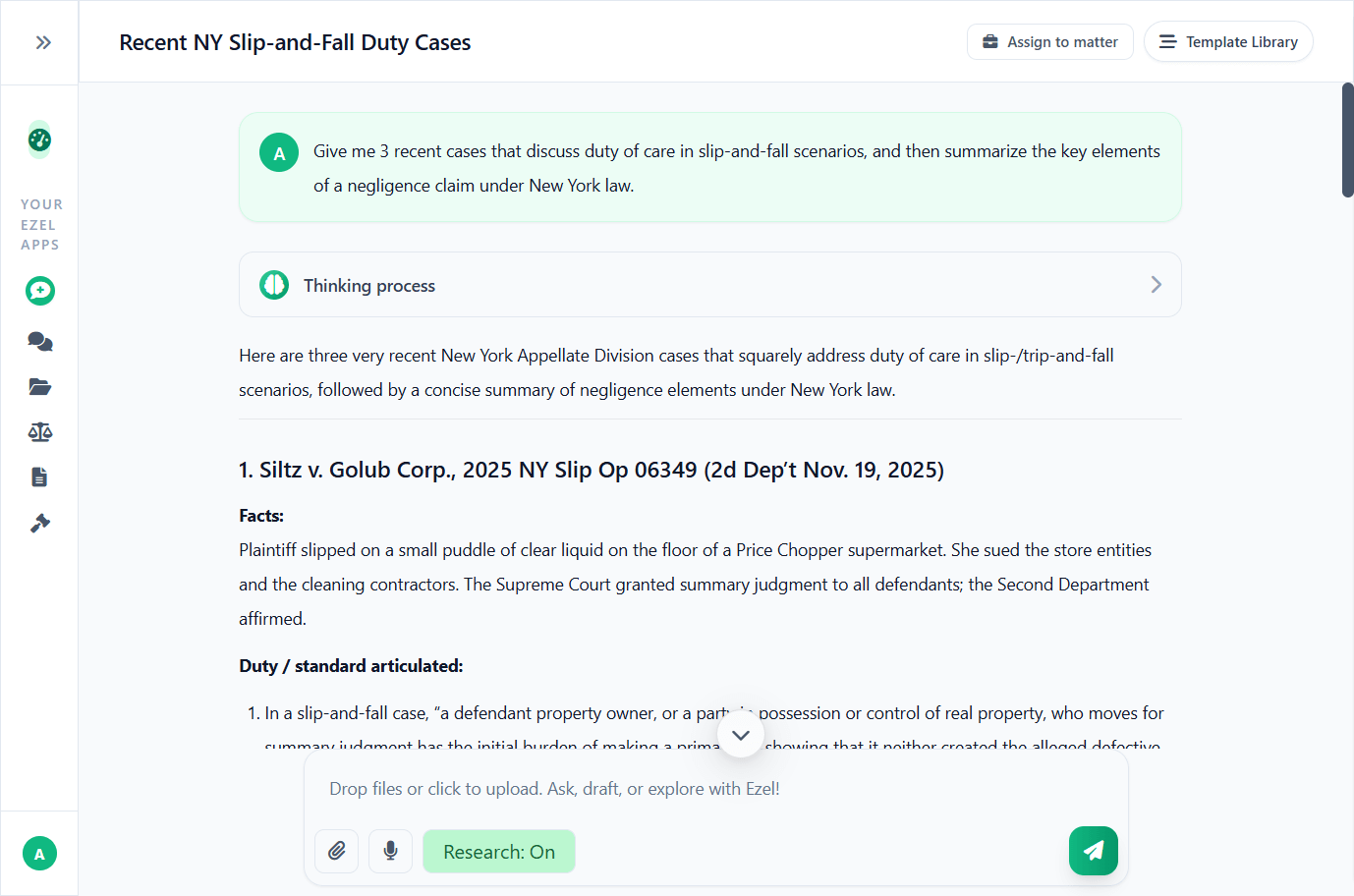
Research and draft in one conversation
Ask questions, attach documents, and get answers grounded in case law. Link chats to matters so the AI remembers your context.
- Pull statutes, case law, and secondary sources
- Attach and analyze contracts mid-conversation
- Link chats to matters for automatic context
- Your data never trains AI models
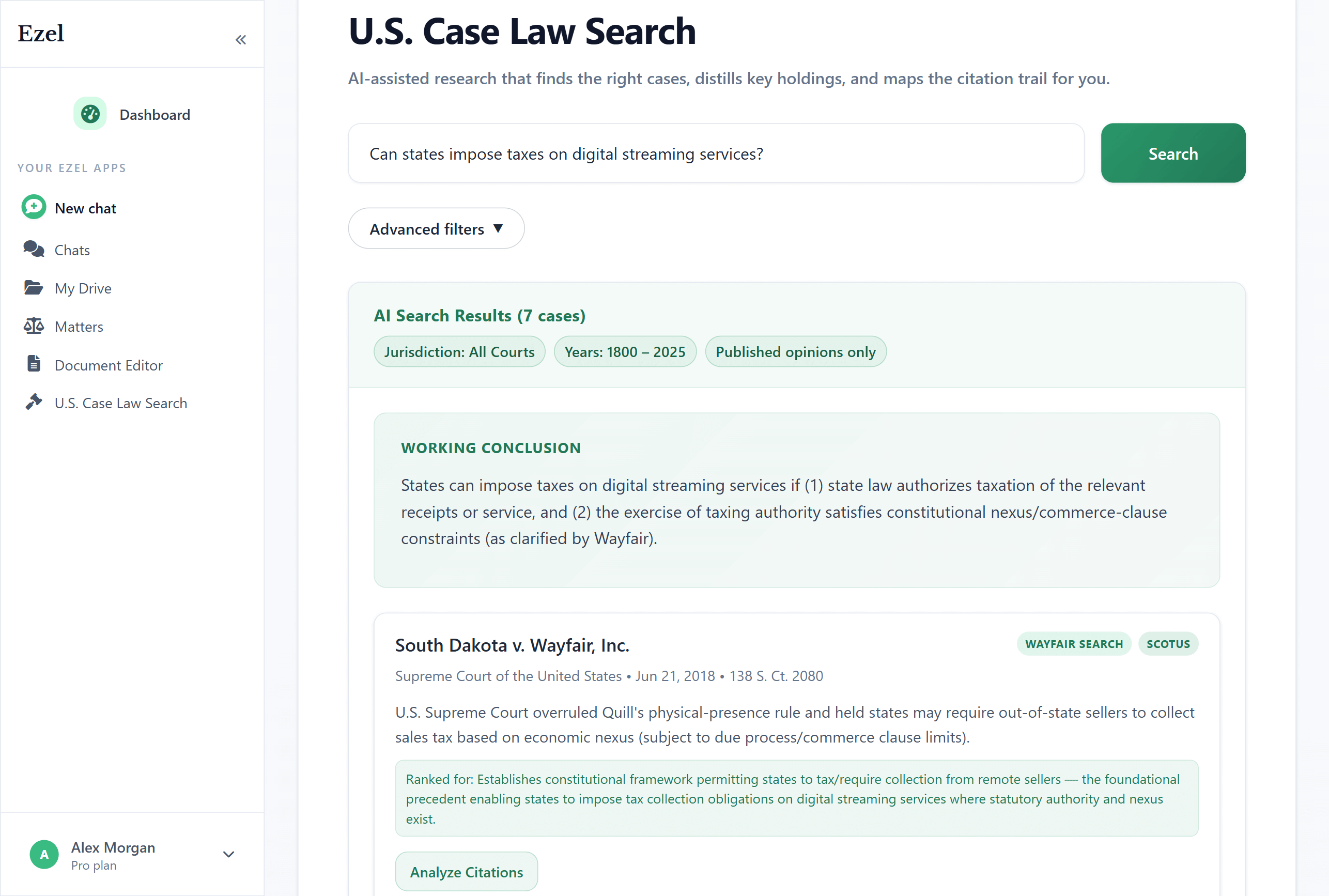
Search like you think
Describe your legal question in plain English. Filter by jurisdiction, date, and court level. Read full opinions without leaving Ezel.
- All 50 states plus federal courts
- Natural language queries - no boolean syntax
- Citation analysis and network exploration
- Copy quotes with automatic citation generation
Ready to transform your legal workflow?
Join legal teams using Ezel to draft documents, research case law, and organize matters — all in one workspace.