MENTAL RESIDUAL FUNCTIONAL CAPACITY QUESTIONNAIRE
Medical Source Statement for Social Security Disability
PATIENT INFORMATION
Patient Name: _________________________________________________
Date of Birth: _________________
Social Security Number: _____ - _____ - _________
PROVIDER INFORMATION
Provider Name: _________________________________________________
Credentials: ☐ MD ☐ DO ☐ PhD ☐ PsyD ☐ LCSW ☐ LPC ☐ LMFT ☐ Other: _________
Specialty: _________________________________________________
Practice Name: _________________________________________________
Address: _________________________________________________
Phone: _________________ Fax: _________________
Email: _________________________________________________
License Number: _________________ State: _________
NPI Number: _________________
TREATMENT RELATIONSHIP
1. Date of first evaluation/treatment: _________________
2. Date of most recent evaluation/treatment: _________________
3. Frequency of contact:
☐ Weekly or more ☐ Bi-weekly ☐ Monthly ☐ Quarterly ☐ Other: _________________
4. Total number of visits: _________
5. Type of treatment provided:
☐ Medication management
☐ Individual psychotherapy
☐ Group therapy
☐ Psychological testing
☐ Inpatient hospitalization
☐ Intensive outpatient program
☐ Partial hospitalization
☐ Other: _________________________________________________
DIAGNOSES
DSM-5 Diagnoses:
| # | Diagnosis | ICD-10 Code | Date of Onset | Severity |
|---|---|---|---|---|
| 1 | ☐ Mild ☐ Moderate ☐ Severe | |||
| 2 | ☐ Mild ☐ Moderate ☐ Severe | |||
| 3 | ☐ Mild ☐ Moderate ☐ Severe | |||
| 4 | ☐ Mild ☐ Moderate ☐ Severe | |||
| 5 | ☐ Mild ☐ Moderate ☐ Severe |
Primary psychiatric diagnosis: _________________________________________________
Comorbid substance use disorder? ☐ Yes ☐ No ☐ In remission
If yes, specify: _________________________________________________
CLINICAL FINDINGS
Describe the clinical findings, mental status examination results, and/or psychological testing that support your assessment:
_____________________________________________________________________________
_____________________________________________________________________________
_____________________________________________________________________________
_____________________________________________________________________________
_____________________________________________________________________________
GAF Score (if used): _____ Date: _________________
Note: SSA no longer requires GAF scores but may consider them as part of the record
Psychological Testing Administered:
☐ None
☐ MMPI-2/MMPI-3
☐ WAIS-IV
☐ Beck Depression Inventory (Score: _____)
☐ PHQ-9 (Score: _____)
☐ GAD-7 (Score: _____)
☐ PCL-5 (Score: _____)
☐ Other: _________________________________________________
SIGNS AND SYMPTOMS
Check all signs and symptoms currently present:
Mood/Affect:
☐ Depressed mood
☐ Anhedonia (loss of interest/pleasure)
☐ Elevated/expansive mood
☐ Irritability
☐ Mood swings
☐ Flat/blunted affect
☐ Inappropriate affect
☐ Labile affect
Anxiety:
☐ Generalized anxiety
☐ Panic attacks - Frequency: _________/month
☐ Obsessions
☐ Compulsions
☐ Social anxiety
☐ Specific phobias
☐ Agoraphobia
☐ Hypervigilance
Cognitive:
☐ Difficulty concentrating
☐ Memory impairment (short-term)
☐ Memory impairment (long-term)
☐ Disorientation
☐ Racing thoughts
☐ Confusion
☐ Slowed thinking
Thought Process/Content:
☐ Paranoia
☐ Delusions
☐ Hallucinations (auditory)
☐ Hallucinations (visual)
☐ Loose associations
☐ Tangentiality
☐ Ideas of reference
Behavioral:
☐ Social withdrawal/isolation
☐ Decreased energy/fatigue
☐ Sleep disturbance - Type: _________________
☐ Appetite disturbance
☐ Weight change
☐ Psychomotor agitation
☐ Psychomotor retardation
☐ Crying spells
☐ Self-harm behaviors
☐ Suicidal ideation
☐ Homicidal ideation
☐ Impulsivity
☐ Aggression
PTSD-Specific (if applicable):
☐ Intrusive memories/flashbacks
☐ Nightmares
☐ Avoidance behaviors
☐ Emotional numbing
☐ Exaggerated startle response
☐ Dissociative episodes
Other Symptoms:
_____________________________________________________________________________
MEDICATIONS
| Medication | Dosage | Frequency | Date Started | Response |
|---|---|---|---|---|
| ☐ Good ☐ Partial ☐ Poor | ||||
| ☐ Good ☐ Partial ☐ Poor | ||||
| ☐ Good ☐ Partial ☐ Poor | ||||
| ☐ Good ☐ Partial ☐ Poor | ||||
| ☐ Good ☐ Partial ☐ Poor |
Medication Side Effects Affecting Function:
☐ Drowsiness/sedation
☐ Cognitive dulling
☐ Tremor
☐ Weight gain
☐ Dizziness
☐ Nausea
☐ Other: _________________________________________________
Has medication been optimized? ☐ Yes ☐ No ☐ Ongoing adjustment
Medication compliance: ☐ Good ☐ Fair ☐ Poor
HOSPITALIZATION HISTORY
| Dates | Facility | Reason for Admission |
|---|---|---|
Number of psychiatric hospitalizations: _________
Most recent hospitalization: _________________
PARAGRAPH B CRITERIA ASSESSMENT
(Per 20 C.F.R. Part 404, Subpart P, Appendix 1, Section 12.00)
Rate your patient's degree of limitation in each area:
1. UNDERSTAND, REMEMBER, OR APPLY INFORMATION
Ability to learn, recall, and use information to perform work activities
☐ None
☐ Mild - Slight limitation, can generally function well
☐ Moderate - Fair ability, noticeable limitation
☐ Marked - Serious limitation, very limited ability
☐ Extreme - No useful ability to function
Examples: Following instructions, learning new tasks, applying information, using judgment
Supporting clinical observations:
_____________________________________________________________________________
_____________________________________________________________________________
2. INTERACT WITH OTHERS
Ability to relate to and work with supervisors, co-workers, and the public
☐ None
☐ Mild
☐ Moderate
☐ Marked
☐ Extreme
Examples: Cooperating with others, handling conflicts, responding to criticism, maintaining socially appropriate behavior
Supporting clinical observations:
_____________________________________________________________________________
_____________________________________________________________________________
3. CONCENTRATE, PERSIST, OR MAINTAIN PACE
Ability to focus attention and stay on task at a sustained rate
☐ None
☐ Mild
☐ Moderate
☐ Marked
☐ Extreme
Examples: Completing tasks in timely manner, maintaining regular attendance, working alongside others without distraction, sustaining ordinary routine
Supporting clinical observations:
_____________________________________________________________________________
_____________________________________________________________________________
4. ADAPT OR MANAGE ONESELF
Ability to regulate emotions, control behavior, and adapt to changes
☐ None
☐ Mild
☐ Moderate
☐ Marked
☐ Extreme
Examples: Responding to demands, managing psychologically-based symptoms, adapting to changes, maintaining hygiene, setting realistic goals
Supporting clinical observations:
_____________________________________________________________________________
_____________________________________________________________________________
DETAILED MENTAL FUNCTIONAL CAPACITIES
Rate your patient's ability to perform each activity on a sustained basis in a competitive work environment
Rating Scale:
- Unlimited/Very Good - Able to function in this area with no limitations
- Good - Limited but satisfactory ability
- Fair - Ability seriously limited but not precluded
- Poor - No useful ability to function
- None - Total lack of ability
A. UNDERSTANDING AND MEMORY
| Function | Unlimited | Good | Fair | Poor | None |
|---|---|---|---|---|---|
| Remember locations and work-like procedures | ☐ | ☐ | ☐ | ☐ | ☐ |
| Understand and remember very short, simple instructions | ☐ | ☐ | ☐ | ☐ | ☐ |
| Understand and remember detailed instructions | ☐ | ☐ | ☐ | ☐ | ☐ |
B. SUSTAINED CONCENTRATION AND PERSISTENCE
| Function | Unlimited | Good | Fair | Poor | None |
|---|---|---|---|---|---|
| Carry out very short, simple instructions | ☐ | ☐ | ☐ | ☐ | ☐ |
| Carry out detailed instructions | ☐ | ☐ | ☐ | ☐ | ☐ |
| Maintain attention and concentration for extended periods | ☐ | ☐ | ☐ | ☐ | ☐ |
| Perform activities within a schedule | ☐ | ☐ | ☐ | ☐ | ☐ |
| Maintain regular attendance and be punctual | ☐ | ☐ | ☐ | ☐ | ☐ |
| Sustain an ordinary routine without special supervision | ☐ | ☐ | ☐ | ☐ | ☐ |
| Work in coordination with or proximity to others | ☐ | ☐ | ☐ | ☐ | ☐ |
| Make simple work-related decisions | ☐ | ☐ | ☐ | ☐ | ☐ |
| Complete a normal workday/workweek without interruption from symptoms | ☐ | ☐ | ☐ | ☐ | ☐ |
| Perform at a consistent pace without unreasonable rest periods | ☐ | ☐ | ☐ | ☐ | ☐ |
C. SOCIAL INTERACTION
| Function | Unlimited | Good | Fair | Poor | None |
|---|---|---|---|---|---|
| Interact appropriately with the general public | ☐ | ☐ | ☐ | ☐ | ☐ |
| Ask simple questions or request assistance | ☐ | ☐ | ☐ | ☐ | ☐ |
| Accept instructions and respond appropriately to criticism | ☐ | ☐ | ☐ | ☐ | ☐ |
| Get along with coworkers or peers | ☐ | ☐ | ☐ | ☐ | ☐ |
| Maintain socially appropriate behavior | ☐ | ☐ | ☐ | ☐ | ☐ |
| Adhere to basic standards of neatness and cleanliness | ☐ | ☐ | ☐ | ☐ | ☐ |
D. ADAPTATION
| Function | Unlimited | Good | Fair | Poor | None |
|---|---|---|---|---|---|
| Respond appropriately to changes in work setting | ☐ | ☐ | ☐ | ☐ | ☐ |
| Be aware of normal hazards and take precautions | ☐ | ☐ | ☐ | ☐ | ☐ |
| Travel to unfamiliar places or use public transportation | ☐ | ☐ | ☐ | ☐ | ☐ |
| Set realistic goals or make plans independently | ☐ | ☐ | ☐ | ☐ | ☐ |
| Handle stress of semi-skilled or skilled work | ☐ | ☐ | ☐ | ☐ | ☐ |
| Handle normal work stress | ☐ | ☐ | ☐ | ☐ | ☐ |
WORK-RELATED FUNCTIONAL LIMITATIONS
1. Would this patient have difficulty working a full 8-hour day due to psychiatric symptoms?
☐ Yes ☐ No
If yes, explain: _____________________________________________________________________________
_____________________________________________________________________________
2. How often would symptoms likely interfere with attention and concentration needed to perform simple, routine tasks?
☐ Never ☐ Rarely ☐ Occasionally ☐ Frequently ☐ Constantly
3. How often would symptoms likely interfere with attention and concentration needed to perform detailed, complex tasks?
☐ Never ☐ Rarely ☐ Occasionally ☐ Frequently ☐ Constantly
4. Would this patient's symptoms be exacerbated by work stress?
☐ Yes ☐ No
If yes, explain: _____________________________________________________________________________
5. What level of work stress can this patient tolerate?
☐ High stress ☐ Moderate stress ☐ Low stress ☐ No stress
6. Estimated absences per month due to psychiatric symptoms or treatment:
☐ None ☐ 1-2 days ☐ 3-4 days ☐ More than 4 days
7. Would this patient likely need unscheduled breaks during a workday?
☐ Yes ☐ No
If yes, how often? _____ times per day for approximately _____ minutes
8. Are there limitations on the type of supervision this patient can tolerate?
☐ No limitations
☐ Needs more than usual supervision
☐ Cannot tolerate close supervision
☐ Needs supportive (non-critical) supervision
9. Are there limitations on social interaction?
☐ No limitations
☐ Should have no public contact
☐ Should have only occasional public contact
☐ Should have no contact with coworkers
☐ Should have only occasional contact with coworkers
DECOMPENSATION HISTORY
Has this patient experienced episodes of decompensation (deterioration in function requiring hospitalization, emergency treatment, or similar intervention)?
☐ Yes ☐ No
If yes:
| Date | Duration | Nature of Episode | Intervention Required |
|---|---|---|---|
In your opinion, would minimal increases in mental demands or changes in environment likely cause this patient to decompensate?
☐ Yes ☐ No
PROGNOSIS AND TREATMENT
1. What is your patient's prognosis?
☐ Good - Significant improvement expected
☐ Fair - Some improvement expected with treatment
☐ Guarded - Limited improvement expected
☐ Poor - Little or no improvement expected
2. Is your patient compliant with treatment?
☐ Yes ☐ Partially ☐ No
If not compliant, explain why: _____________________________________________________________________________
3. Are there treatment options that have not yet been tried that might improve function?
☐ Yes ☐ No
If yes, specify: _____________________________________________________________________________
4. Have these limitations lasted or are they expected to last at least 12 consecutive months?
☐ Yes ☐ No ☐ Already lasted 12+ months
ACTIVITIES OF DAILY LIVING
Describe any limitations in activities of daily living observed or reported:
☐ Self-care (hygiene, dressing, feeding)
☐ Household chores
☐ Managing finances
☐ Shopping
☐ Using transportation
☐ Social activities
☐ Other: _________________________________________________
Details:
_____________________________________________________________________________
_____________________________________________________________________________
ADDITIONAL COMMENTS
Please provide any additional information that would help evaluate your patient's ability to sustain full-time competitive employment:
_____________________________________________________________________________
_____________________________________________________________________________
_____________________________________________________________________________
_____________________________________________________________________________
_____________________________________________________________________________
PROVIDER CERTIFICATION
I certify that the opinions expressed in this questionnaire are based on my clinical examination and treatment of this patient, my review of available records, and my professional judgment. I have considered the patient's mental health diagnoses, symptoms, and clinical findings in making this assessment. These limitations reflect my assessment of the patient's ability to function in a competitive work environment on a sustained basis.
Provider Signature: _________________________________
Printed Name: _________________________________________________
Credentials: _________________________________________________
Date: _________________
Phone for questions: _________________
Please attach:
☐ Copy of most recent treatment notes
☐ Psychological testing reports (if applicable)
☐ Hospital discharge summaries (if applicable)
☐ CV or qualifications statement
Return completed form to:
_________________________________________________
_________________________________________________
Fax: _________________
Email: _________________________________________________
This medical source statement is requested pursuant to 20 C.F.R. § 404.1513 and § 416.913. Your opinion will be evaluated under 20 C.F.R. § 404.1520c and § 416.920c. Mental functional limitations will be assessed under 20 C.F.R. § 404.1520a and § 416.920a.
Do more with Ezel
This free template is just the beginning. See how Ezel helps legal teams draft, research, and collaborate faster.
AI that drafts while you watch
Tell the AI what you need and watch your document transform in real-time. No more copy-pasting between tools or manually formatting changes.
- Natural language commands: "Add a force majeure clause"
- Context-aware suggestions based on document type
- Real-time streaming shows edits as they happen
- Milestone tracking and version comparison
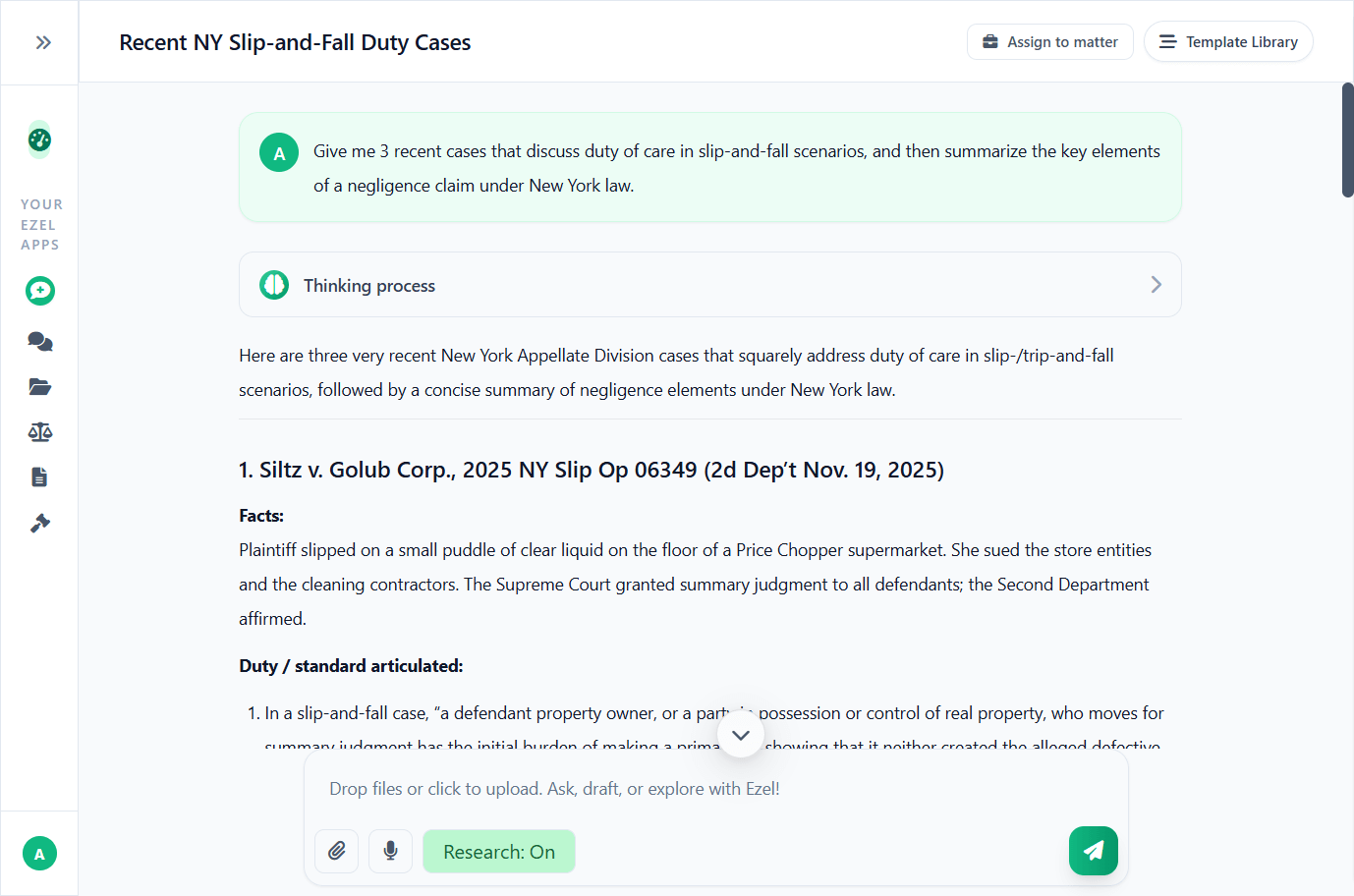
Research and draft in one conversation
Ask questions, attach documents, and get answers grounded in case law. Link chats to matters so the AI remembers your context.
- Pull statutes, case law, and secondary sources
- Attach and analyze contracts mid-conversation
- Link chats to matters for automatic context
- Your data never trains AI models
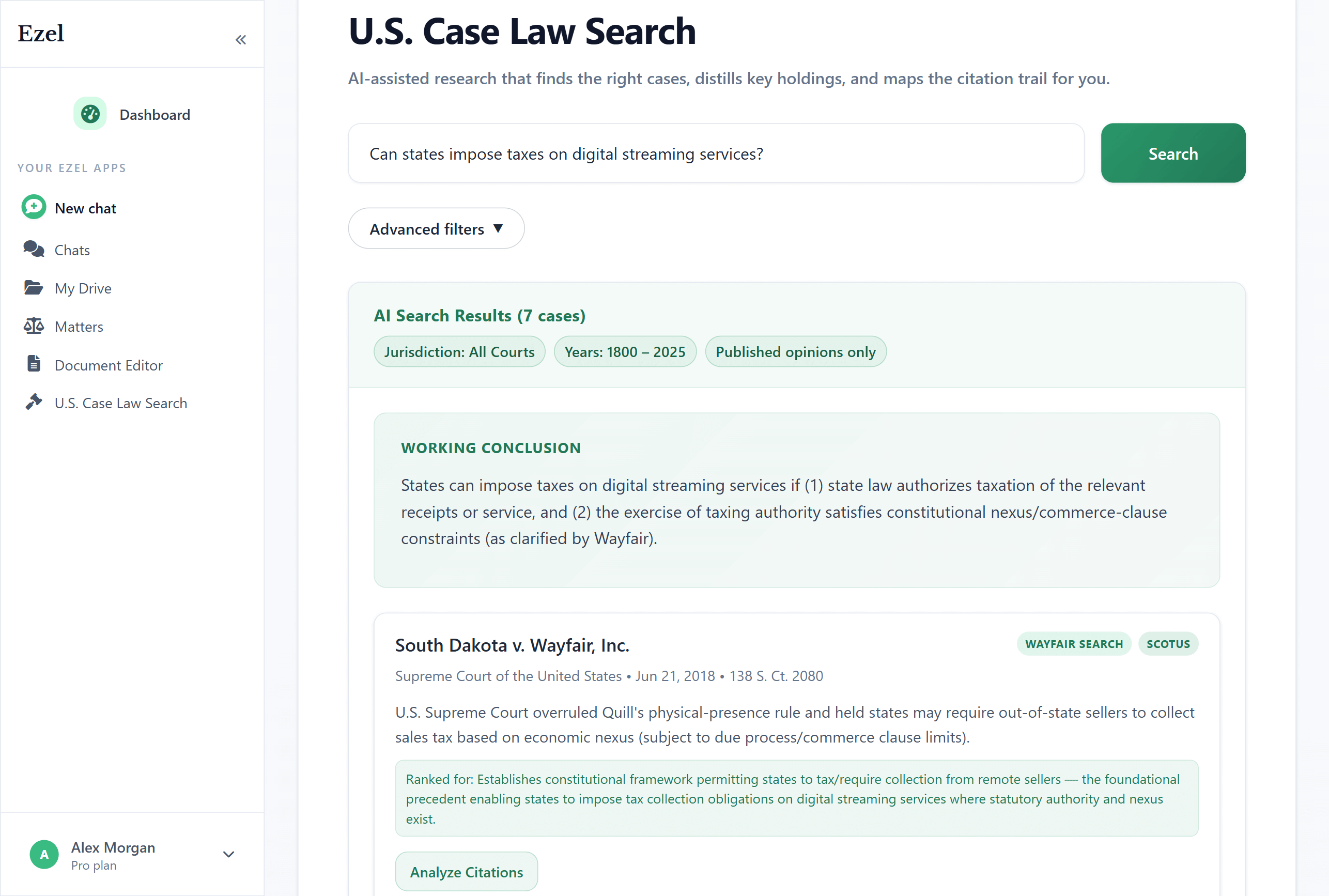
Search like you think
Describe your legal question in plain English. Filter by jurisdiction, date, and court level. Read full opinions without leaving Ezel.
- All 50 states plus federal courts
- Natural language queries - no boolean syntax
- Citation analysis and network exploration
- Copy quotes with automatic citation generation
Ready to transform your legal workflow?
Join legal teams using Ezel to draft documents, research case law, and organize matters — all in one workspace.