SOCIAL SECURITY DISABILITY INSURANCE (SSDI) APPEAL GUIDE
A Step-by-Step Guide for Representing Yourself
WHAT IS THIS GUIDE FOR?
This guide helps you appeal a denial of Social Security Disability Insurance (SSDI) benefits. If the Social Security Administration (SSA) denied your initial application or denied you at any appeal level, this guide explains your options and how to proceed.
Important Fact: Over 70% of initial SSDI applications are denied. However, many people eventually win benefits on appeal, especially at the hearing level before an Administrative Law Judge (ALJ).
UNDERSTANDING THE FOUR LEVELS OF APPEAL
The SSDI appeal process has four levels. You must complete each level before moving to the next:
Level 1: Reconsideration
- A different SSA reviewer examines your claim
- Based on existing records plus any new evidence you submit
- Approval rate: Approximately 10-15%
Level 2: Hearing Before an Administrative Law Judge (ALJ)
- You appear before an independent judge
- You can testify about your condition
- Medical and vocational experts may testify
- This is your best chance for approval (approximately 50% approval rate)
Level 3: Appeals Council Review
- Reviews whether the ALJ made legal or procedural errors
- Does not re-weigh evidence or make new credibility determinations
- Low approval rate (approximately 1-2%)
Level 4: Federal Court Review
- Federal district court judge reviews legal issues
- Does not consider new evidence
- Longest and most complex step
CRITICAL DEADLINES
| Action Required | Deadline |
|---|---|
| File Reconsideration | 60 days from denial date |
| Request ALJ Hearing | 60 days from reconsideration denial |
| Request Appeals Council Review | 60 days from ALJ denial |
| File Federal Court Lawsuit | 60 days from Appeals Council denial |
Note: The 60 days starts from the date you receive the denial letter. SSA assumes you received it 5 days after the date on the letter.
LEVEL 1: RECONSIDERATION
What Happens at This Level
A different examiner at your state's Disability Determination Services (DDS) reviews your entire file, including any new evidence you submit.
How to File
Option 1: Online (Recommended)
1. Go to www.ssa.gov/appeal
2. Create or sign in to your my Social Security account
3. Complete Form SSA-561 (Request for Reconsideration) online
Option 2: By Mail or In Person
1. Download Form SSA-561 from www.ssa.gov
2. Complete and submit to your local SSA office
Documents to Gather
☐ Copy of your denial letter
☐ Any new medical records since your application
☐ Updated list of all doctors and treatment providers
☐ New test results, imaging studies, or lab work
☐ Statements from treating physicians about your limitations
☐ Records of any hospitalizations
☐ Documentation of any new conditions
Tips for Reconsideration
- Submit New Evidence: If you have new medical records or your condition has worsened, submit this evidence
- Get a Medical Source Statement: Ask your doctor to complete a detailed statement about your functional limitations
- Request a Disability Hearing (some states only): In some states, you can request an in-person hearing during reconsideration
- Explain What Changed: If your condition worsened, explain this in detail
LEVEL 2: ALJ HEARING
This is the most important level of appeal. Approximately half of all cases that reach the ALJ level are approved.
Requesting a Hearing
Online: Go to www.ssa.gov/appeal
By Mail: Submit Form HA-501 (Request for Hearing by Administrative Law Judge)
Preparing for Your Hearing
60-30 Days Before Hearing:
☐ Review your entire file (request a copy from SSA if you don't have one)
☐ Identify any missing medical records
☐ Request updated records from all treating providers
☐ Ask your doctors for Medical Source Statements
Medical Source Statement
This is a detailed form completed by your doctor describing:
- Your diagnosis
- Your symptoms
- Your functional limitations (lifting, standing, sitting, concentrating, etc.)
- How often you would miss work due to your condition
- Whether your limitations have lasted or will last 12 months
30 Days Before Hearing:
☐ Submit all evidence to the hearing office
☐ Review your work history
☐ Prepare a list of your daily activities and limitations
☐ Write down specific examples of how your condition affects you
At the Hearing
What to Expect:
- Hearings last 30-60 minutes
- You may appear in person, by video, or by phone
- The ALJ will ask you questions about your condition
- A vocational expert may testify about available jobs
- A medical expert may testify about your condition
Questions the ALJ May Ask:
- Describe your medical conditions
- What symptoms do you experience daily?
- What medications do you take and what side effects do you have?
- Describe a typical day from morning to night
- Can you lift, carry, stand, sit, walk? For how long?
- Do you have problems concentrating or remembering?
- Why did you stop working?
- What household tasks can you do?
- Do you need help with personal care?
Tips for Testifying:
☐ Be honest - don't exaggerate but don't minimize either
☐ Give specific examples with details
☐ Describe your worst days, not just average days
☐ Explain how your conditions affect your ability to work
☐ If you don't understand a question, ask for clarification
☐ Don't guess - say "I don't know" if you don't know
Vocational Expert Questions
The ALJ may ask a vocational expert (VE) hypothetical questions about what jobs exist for someone with your limitations. Listen carefully. If the hypothetical doesn't include all your limitations, you may point this out.
Sample Questions to Ask the VE:
- Would someone be employable if they missed 3 or more days of work per month?
- Would someone be employable if they needed to lie down during the workday?
- Would someone be employable if they were off-task 20% of the time?
LEVEL 3: APPEALS COUNCIL
If the ALJ denies your claim, you can request review by the Appeals Council.
How to Request Review
Online: Go to www.ssa.gov/appeal
By Mail: Submit Form HA-520 (Request for Review of Hearing Decision/Order)
Grounds for Appeals Council Review
The Appeals Council may review your case if:
- The ALJ made a legal error
- The ALJ's decision is not supported by substantial evidence
- There is new and material evidence
- There was an abuse of discretion
What to Include in Your Request
☐ Identify specific errors in the ALJ's decision
☐ Cite the regulations or rulings the ALJ violated
☐ Explain why the ALJ's findings are not supported by evidence
☐ Submit any new evidence with explanation of why it wasn't available before
Processing Time: 6-12 months or longer
LEVEL 4: FEDERAL COURT REVIEW
If the Appeals Council denies your case, you may file a lawsuit in federal district court.
How to File
- File a civil complaint in the U.S. District Court for your district
- Filing fee: Approximately $405 (fee waiver available if you cannot afford it)
- Deadline: 60 days from Appeals Council denial
What Federal Court Reviews
The court reviews whether:
- SSA followed proper legal procedures
- The ALJ applied the correct legal standards
- The decision is supported by substantial evidence
The court does NOT:
- Hold a new hearing
- Hear new testimony
- Consider new evidence (except in rare circumstances)
Strongly Consider an Attorney: Federal court proceedings are complex. Many disability attorneys will take cases on appeal at this level.
IMPORTANT DOCUMENTS AND FORMS
| Form Number | Form Name | Purpose |
|---|---|---|
| SSA-561 | Request for Reconsideration | Appeal initial denial |
| HA-501 | Request for Hearing | Appeal reconsideration denial |
| HA-520 | Request for Review | Appeal ALJ denial |
| SSA-827 | Authorization for Source to Release Information | Allow SSA to get records |
| SSA-3441 | Disability Report - Appeal | Update your medical information |
All forms available at: www.ssa.gov/forms
GETTING HELP
Free Resources
- Social Security Administration: 1-800-772-1213
- Disability Rights Organizations: Free legal help for some cases
- Legal Aid: Free legal assistance for low-income individuals (www.lawhelp.org)
Hiring a Representative
- Disability Attorneys: Many work on contingency (no fee unless you win)
- Fee Limit: Attorney fees are capped at 25% of back benefits or $7,200 (whichever is less)
- Non-Attorney Representatives: Registered representatives can also help
COMMON MISTAKES TO AVOID
☐ Missing the 60-day deadline to appeal
☐ Not submitting new medical evidence
☐ Failing to get a Medical Source Statement from your doctor
☐ Not being specific about your limitations
☐ Exaggerating or minimizing symptoms
☐ Not explaining how your condition prevents you from working
☐ Skipping medical appointments (SSA tracks this)
☐ Not keeping copies of everything you submit
CHECKLIST: TRACKING YOUR APPEAL
Initial Denial Received
Date denial received: [__/__/____]
Deadline to appeal: [__/__/____]
Appeal filed on: [__/__/____]
Reconsideration
Decision received: [__/__/____]
☐ Approved ☐ Denied
Deadline to appeal: [__/__/____]
Appeal filed on: [__/__/____]
ALJ Hearing
Hearing scheduled for: [__/__/____]
Hearing location: [________________________________]
☐ In person ☐ Video ☐ Phone
Decision received: [__/__/____]
☐ Approved ☐ Denied
Appeals Council
Request filed on: [__/__/____]
Decision received: [__/__/____]
☐ Approved ☐ Denied ☐ Remanded
Federal Court
Complaint filed on: [__/__/____]
Case number: [________________________________]
SOURCES AND REFERENCES
- Social Security Administration - Appeal a Decision: www.ssa.gov/apply/appeal-decision-we-made
- SSA Publication: Your Right to Question the Decision Made on Your Claim
- 20 C.F.R. Part 404, Subpart J - Determinations, Administrative Review Process
- Social Security Disability Appeal Guide: www.ssa.gov/disability/appeal
This guide is for informational purposes only and does not constitute legal advice. Consider consulting with a qualified disability attorney, especially for ALJ hearings and beyond.
Do more with Ezel
This free template is just the beginning. See how Ezel helps legal teams draft, research, and collaborate faster.
AI that drafts while you watch
Tell the AI what you need and watch your document transform in real-time. No more copy-pasting between tools or manually formatting changes.
- Natural language commands: "Add a force majeure clause"
- Context-aware suggestions based on document type
- Real-time streaming shows edits as they happen
- Milestone tracking and version comparison
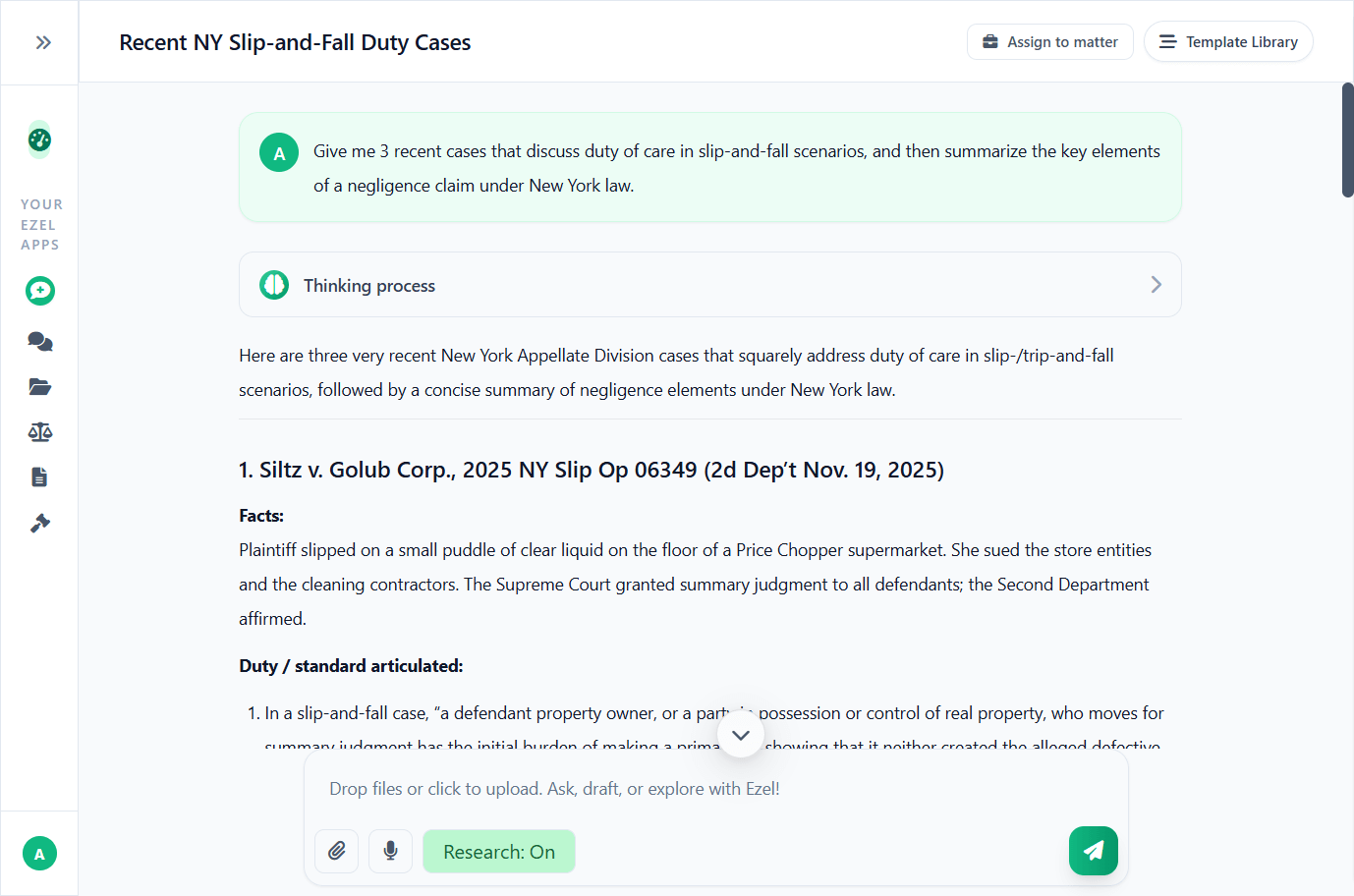
Research and draft in one conversation
Ask questions, attach documents, and get answers grounded in case law. Link chats to matters so the AI remembers your context.
- Pull statutes, case law, and secondary sources
- Attach and analyze contracts mid-conversation
- Link chats to matters for automatic context
- Your data never trains AI models
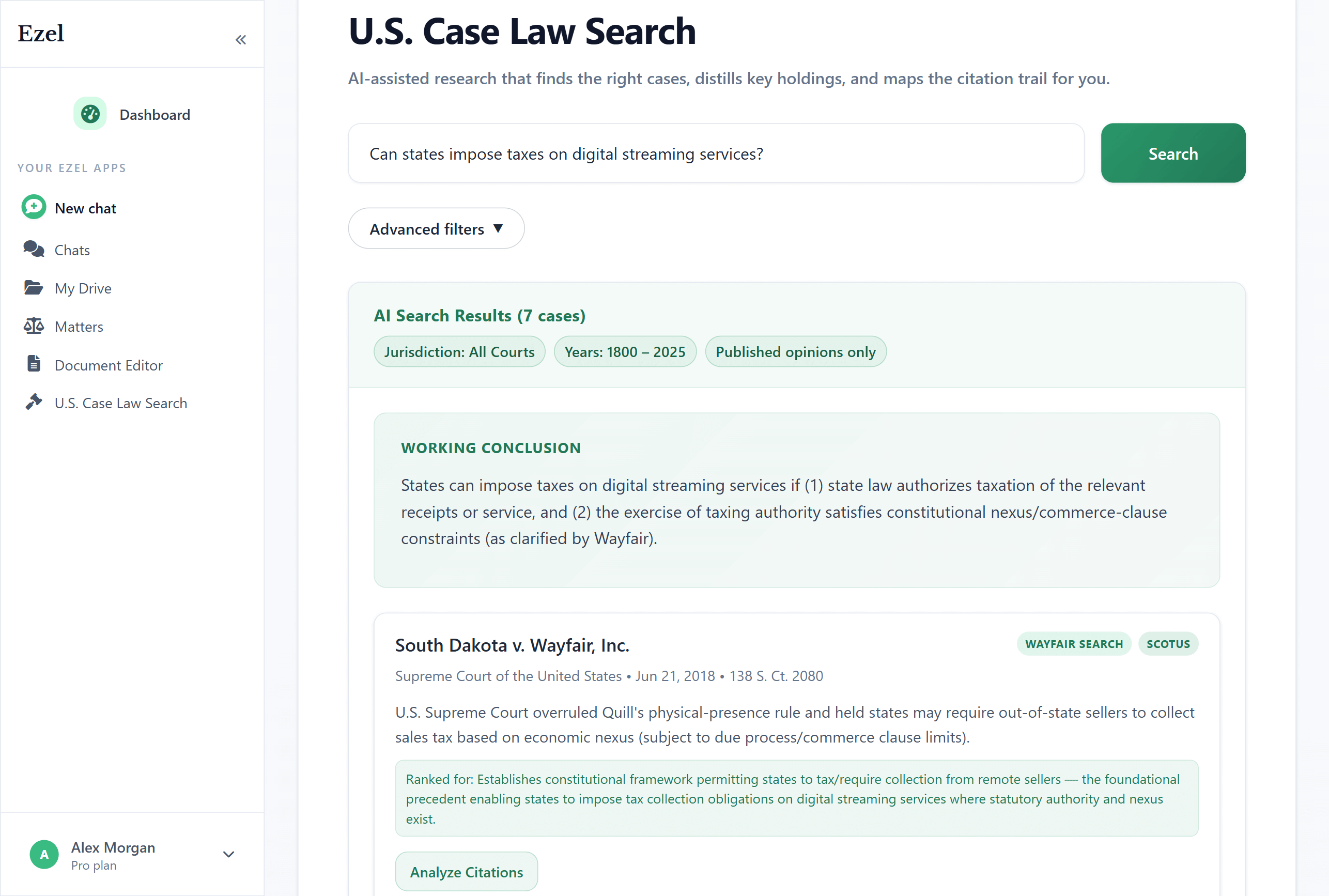
Search like you think
Describe your legal question in plain English. Filter by jurisdiction, date, and court level. Read full opinions without leaving Ezel.
- All 50 states plus federal courts
- Natural language queries - no boolean syntax
- Citation analysis and network exploration
- Copy quotes with automatic citation generation
Ready to transform your legal workflow?
Join legal teams using Ezel to draft documents, research case law, and organize matters — all in one workspace.