SPECIAL EDUCATION IEP AND 504 PLAN ADVOCACY GUIDE
A Parent's Guide to Getting Services for Your Child
WHAT IS THIS GUIDE FOR?
This guide helps parents navigate the special education system to get services for their child. It covers:
- The difference between IEPs and 504 Plans
- How to request an evaluation
- How to participate effectively in meetings
- What to do when you disagree with the school
UNDERSTANDING YOUR OPTIONS: IEP VS. 504 PLAN
IEP (Individualized Education Program)
Law: Individuals with Disabilities Education Act (IDEA)
Eligibility:
- Child has one of 13 disability categories
- Disability adversely affects educational performance
- Child needs specially designed instruction
What It Provides:
- Free Appropriate Public Education (FAPE)
- Specially designed instruction
- Related services (speech, OT, PT, counseling)
- Annual goals and progress monitoring
- Transition planning (starting at age 16)
- Extended school year (if needed)
13 IDEA Disability Categories:
1. Autism
2. Deaf-blindness
3. Deafness
4. Emotional disturbance
5. Hearing impairment
6. Intellectual disability
7. Multiple disabilities
8. Orthopedic impairment
9. Other health impairment
10. Specific learning disability
11. Speech or language impairment
12. Traumatic brain injury
13. Visual impairment
504 Plan
Law: Section 504 of the Rehabilitation Act
Eligibility:
- Child has physical or mental impairment
- Impairment substantially limits one or more major life activities
- Broader definition than IDEA
What It Provides:
- Equal access to education
- Accommodations and modifications
- May include some services
- Less formal than IEP
Common 504 Conditions:
- ADHD (if not eligible for IEP)
- Anxiety
- Depression
- Diabetes
- Allergies
- Asthma
- Temporary disabilities
Quick Comparison
| Feature | IEP | 504 Plan |
|---|---|---|
| Law | IDEA | Section 504 |
| Eligibility | Narrower (13 categories) | Broader (any disability) |
| Services | Specially designed instruction | Accommodations |
| Written Plan | Required, detailed | Less formal |
| Procedural Protections | Extensive | Limited |
| Funding | Federal funding to schools | No additional funding |
STEP 1: REQUESTING AN EVALUATION
If you suspect your child has a disability affecting their education, request an evaluation in writing.
Sample Evaluation Request Letter
Date: [__/__/____]
To: [Principal or Special Education Director Name]
[School Name]
[Address]
Re: Request for Special Education Evaluation
Student: [Child's Name]
Date of Birth: [__/__/____]
Grade: [____]
Dear [Name]:
I am writing to formally request that [Child's Name] be evaluated for special education services under the Individuals with Disabilities Education Act (IDEA) and/or for a 504 Plan under Section 504 of the Rehabilitation Act.
Concerns About My Child:
I have concerns in the following areas:
☐ Academic performance (reading, writing, math)
☐ Attention and focus
☐ Behavior
☐ Social skills
☐ Speech and language
☐ Motor skills
☐ Sensory processing
☐ Emotional regulation
☐ Other: [________________________________]
Specific Examples:
[Describe specific concerns with examples]
Evaluation Areas Requested:
I request a comprehensive evaluation in all areas of suspected disability, including:
☐ Academic achievement
☐ Cognitive/intellectual functioning
☐ Speech and language
☐ Occupational therapy
☐ Physical therapy
☐ Social-emotional/behavioral
☐ Functional behavior assessment
☐ Assistive technology
☐ Other: [________________________________]
Please send me the evaluation consent forms within 15 school days as required by law. I understand I have the right to an independent educational evaluation at public expense if I disagree with the school's evaluation.
Please contact me at [phone] or [email] to discuss next steps.
Sincerely,
[Your Signature]
[Your Name]
[Your Address]
[Your Phone]
[Your Email]
cc: [Keep a copy for your records]
After You Request an Evaluation
Timeline:
1. School has 15 school days to respond (varies by state)
2. You must give written consent before evaluation
3. Evaluation must be completed within 60 days of consent (or state timeline)
4. Eligibility meeting held to determine if child qualifies
Your Rights:
☐ Receive notice of evaluation procedures
☐ Give or withhold consent
☐ Request independent evaluation if you disagree
☐ Receive copy of evaluation report
STEP 2: THE ELIGIBILITY MEETING
After evaluation, the team meets to determine if your child is eligible.
Who Attends
- You (parent/guardian)
- Regular education teacher
- Special education teacher
- School administrator
- Person who can interpret evaluation results
- Other specialists as needed
- Anyone you invite (advocate, support person)
Preparing for the Meeting
☐ Request copies of all evaluation reports BEFORE the meeting
☐ Review reports carefully
☐ Write down questions
☐ Bring your documentation (report cards, work samples, outside evaluations)
☐ Consider bringing a support person or advocate
During the Meeting
☐ Take notes or record (notify school in advance if recording)
☐ Ask questions about anything unclear
☐ Share your observations and concerns
☐ Request written summary of decisions
☐ Don't feel pressured to agree on the spot
If Found Eligible
Proceed to IEP development (or 504 Plan meeting).
If Found Ineligible
You have options:
1. Request the decision in writing with reasons
2. Provide additional documentation
3. Request independent evaluation at public expense
4. File for mediation or due process
STEP 3: DEVELOPING THE IEP
If your child is eligible for special education, an IEP must be developed.
Required IEP Components
-
Present Levels of Performance
- How disability affects education
- Current academic and functional performance -
Annual Goals
- Measurable goals
- Benchmarks or short-term objectives (for some students) -
Special Education Services
- What services will be provided
- How often, how long, where -
Related Services
- Speech therapy, OT, PT, counseling, transportation, etc. -
Accommodations and Modifications
- Changes to how child learns or is tested -
Participation in General Education
- Extent child will be with non-disabled peers -
Assessment Participation
- How child will participate in state testing -
Transition Services (age 16+)
- Goals for after high school
- Services to help reach those goals
Preparing for the IEP Meeting
Before the Meeting:
☐ Request draft IEP in advance (if school prepares one)
☐ Review all evaluation data
☐ Write your goals for your child
☐ List services you believe child needs
☐ Gather supporting documentation
☐ Consider inviting an advocate
Questions to Ask:
- How will my child's progress be measured?
- How often will I receive progress reports?
- What happens if goals aren't met?
- What training do staff have?
- How will services be delivered (push-in, pull-out)?
- What accommodations will be provided for testing?
During the Meeting
☐ Share your perspective as the parent
☐ Ask questions about proposed goals and services
☐ Request data to support recommendations
☐ If you disagree, state your concerns clearly
☐ Request additional time if needed (you don't have to sign same day)
☐ Get everything in writing in the IEP
Signing the IEP
You can:
- Sign in agreement
- Sign with written exceptions (partial agreement)
- Decline to sign and request changes
- Request another meeting
Important: Never sign if you don't agree. Your signature means you consent.
STEP 4: MONITORING IMPLEMENTATION
Your job doesn't end when the IEP is signed.
Track Progress
☐ Request and review progress reports
☐ Keep copies of all work samples
☐ Communicate regularly with teachers
☐ Note any concerns in writing
If Services Aren't Being Provided
- Document specific concerns
- Request meeting with teacher/case manager
- Put concerns in writing to school administrator
- Request IEP meeting to address non-implementation
- Consider filing complaint if not resolved
Annual IEP Review
- IEP must be reviewed at least annually
- You can request a meeting at any time
- Three-year re-evaluation required (can waive if agree)
504 PLAN PROCESS
Requesting a 504 Plan
Send a written request similar to the IEP evaluation request.
504 Plan Meeting
- Less formal than IEP meeting
- Team determines eligibility and accommodations
- No specific timelines required by law (check district policy)
Common 504 Accommodations
Academic:
☐ Extended time on tests
☐ Preferential seating
☐ Reduced homework/classwork
☐ Breaks during class
☐ Copies of notes
☐ Use of calculator or word processor
☐ Modified assignments
Environmental:
☐ Quiet testing location
☐ Sensory breaks
☐ Access to water/snacks
☐ Use of fidget tools
Behavioral/Social:
☐ Check-ins with counselor
☐ Behavior plan
☐ Social skills support
☐ Scheduled movement breaks
WHEN YOU DISAGREE WITH THE SCHOOL
You have several options to resolve disputes:
Option 1: Informal Resolution
- Request meeting with teacher, administrator
- Put concerns in writing
- Try to work together
Option 2: IEP Facilitation
- Some states offer free facilitators
- Neutral person helps run the meeting
- Non-adversarial approach
Option 3: Mediation
- Free through your state
- Trained mediator helps reach agreement
- Voluntary for both parties
- Confidential
- Any agreement is binding
Option 4: State Complaint
- File written complaint with state education agency
- Allege violation of IDEA
- State investigates and issues findings within 60 days
- Can order corrective action and compensatory services
Option 5: Due Process Hearing
- Formal administrative hearing
- Like a mini-trial
- Impartial hearing officer decides
- Can present evidence and witnesses
- Decision is binding (can be appealed to court)
- Consider hiring an attorney
Resolution Session
If you file for due process, a resolution session is required:
- School must convene within 15 days
- Attempt to resolve dispute
- If resolved, agreement is binding
- If not resolved, proceed to hearing
SAMPLE CONCERN LETTER
Use this format to document concerns in writing:
Date: [__/__/____]
To: [Teacher/Administrator Name]
[School Name]
Re: Concerns About IEP Implementation
Student: [Child's Name]
Dear [Name]:
I am writing to express concerns about [Child's Name]'s education.
My Concerns:
-
[Specific concern with details and dates]
-
[Specific concern with details and dates]
What I Have Observed:
[Describe what you've seen at home, what your child has reported, etc.]
What I Am Requesting:
☐ Meeting to discuss concerns
☐ Review of current services
☐ Additional evaluation
☐ IEP amendment
☐ Other: [________________________________]
Please respond in writing within 5 school days.
Sincerely,
[Your Signature]
[Your Name]
[Your Phone]
[Your Email]
FREE RESOURCES AND HELP
Parent Training and Information Centers (PTIs)
Every state has at least one PTI providing free help to parents:
- Training on special education rights
- Help preparing for IEP meetings
- Information about the process
Find your PTI: www.parentcenterhub.org/find-your-center
Protection and Advocacy Organizations (P&As)
Free legal advocacy for people with disabilities:
- Advice and information
- May represent in disputes
Find your P&A: www.ndrn.org/about/ndrn-member-agencies
State Education Agency
Your state education department has:
- Special education information
- Complaint procedures
- Parent guides
Other Resources
- Center for Parent Information and Resources: www.parentcenterhub.org
- Wrightslaw: www.wrightslaw.com (special education law)
- Learning Disabilities Association: ldaamerica.org
DOCUMENTATION CHECKLIST
Keep organized records of everything:
Documents to Save
☐ All evaluation reports
☐ All IEPs (current and past)
☐ Progress reports
☐ Report cards
☐ Work samples
☐ All correspondence with school
☐ Meeting notices and summaries
☐ Discipline records
☐ Attendance records
☐ Outside evaluations and reports
☐ Medical/therapy records
Communication Log
| Date | Type | With Whom | Topic | Outcome | Follow-up Needed |
|---|---|---|---|---|---|
| [__/__/____] | [________________________________] | [________________________________] | [________________________________] | [________________________________] | [________________________________] |
| [__/__/____] | [________________________________] | [________________________________] | [________________________________] | [________________________________] | [________________________________] |
KEY DATES TRACKER
Evaluation
Evaluation requested: [__/__/____]
Consent given: [__/__/____]
Evaluation due: [__/__/____]
Eligibility meeting: [__/__/____]
IEP
Current IEP date: [__/__/____]
Annual review due: [__/__/____]
Three-year re-evaluation due: [__/__/____]
504 Plan
Current 504 date: [__/__/____]
Review due: [__/__/____]
SOURCES AND REFERENCES
- IDEA (Individuals with Disabilities Education Act): 20 U.S.C. § 1400 et seq.
- Section 504: 29 U.S.C. § 794
- Center for Parent Information and Resources: www.parentcenterhub.org
- U.S. Department of Education, IDEA: sites.ed.gov/idea
- Wrightslaw: www.wrightslaw.com
This guide is for informational purposes only and does not constitute legal advice. Special education law is complex. Free help is available through Parent Training and Information Centers and Protection and Advocacy organizations. For complex disputes, consider consulting with a special education attorney.
Do more with Ezel
This free template is just the beginning. See how Ezel helps legal teams draft, research, and collaborate faster.
AI that drafts while you watch
Tell the AI what you need and watch your document transform in real-time. No more copy-pasting between tools or manually formatting changes.
- Natural language commands: "Add a force majeure clause"
- Context-aware suggestions based on document type
- Real-time streaming shows edits as they happen
- Milestone tracking and version comparison
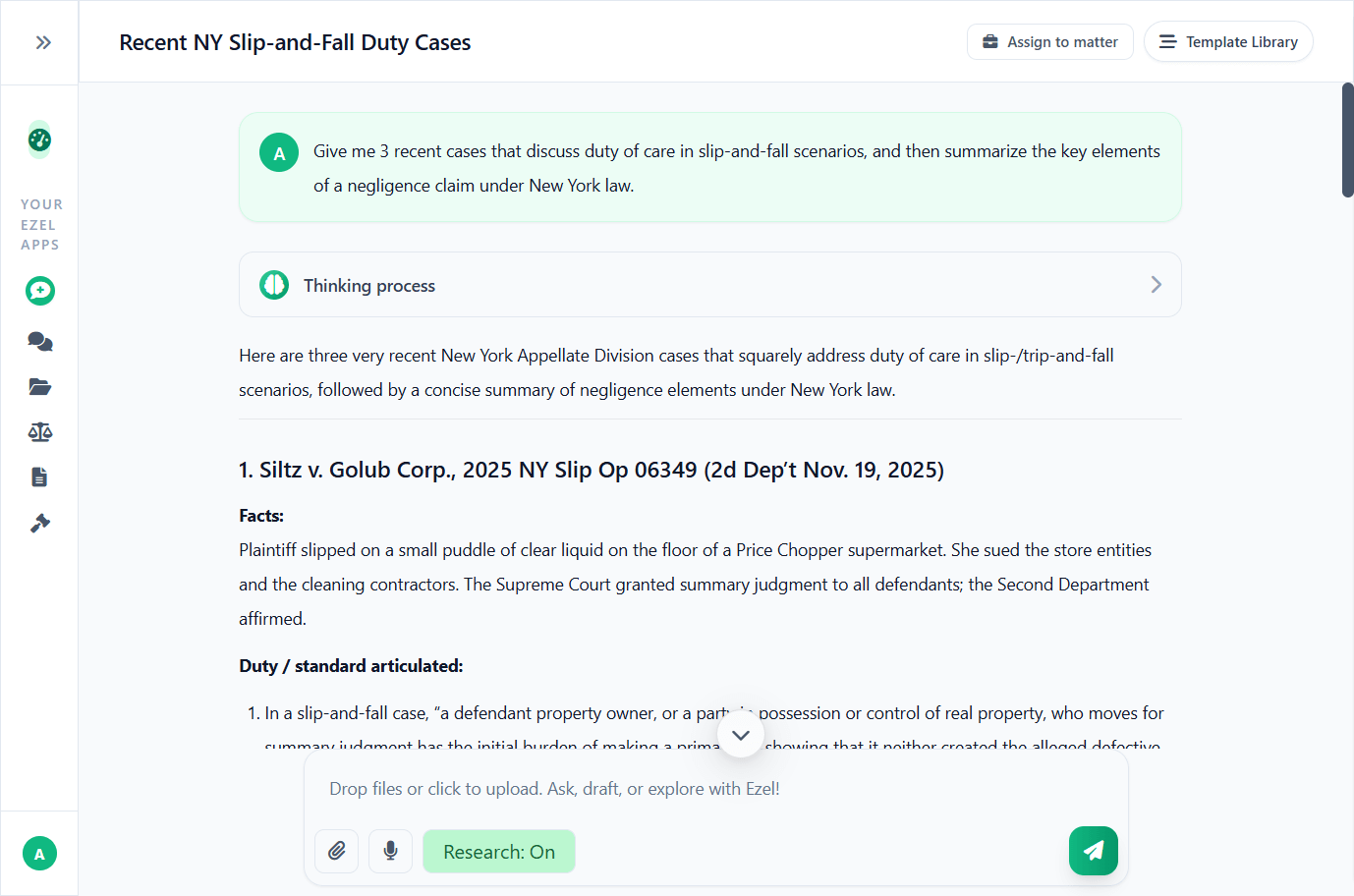
Research and draft in one conversation
Ask questions, attach documents, and get answers grounded in case law. Link chats to matters so the AI remembers your context.
- Pull statutes, case law, and secondary sources
- Attach and analyze contracts mid-conversation
- Link chats to matters for automatic context
- Your data never trains AI models
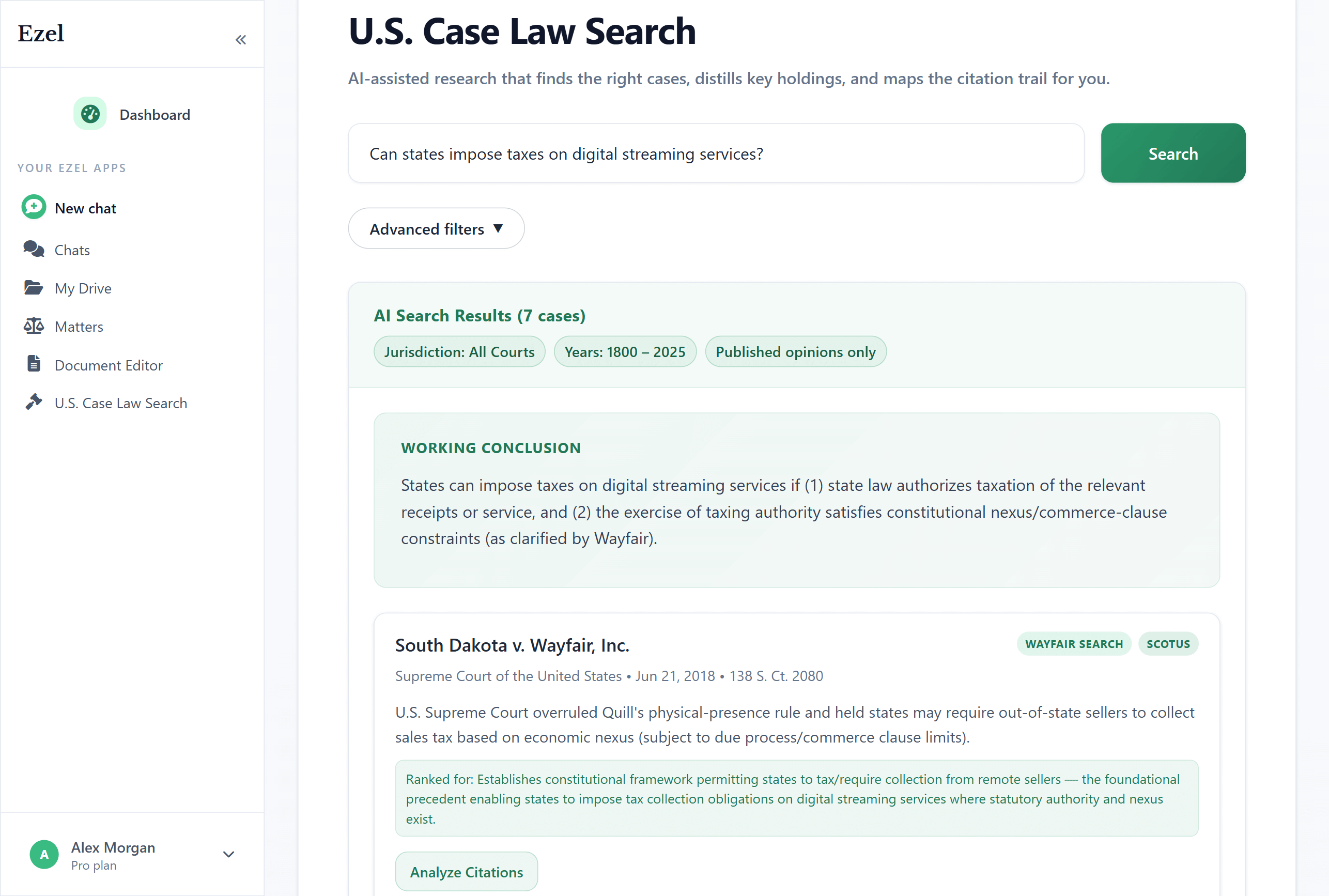
Search like you think
Describe your legal question in plain English. Filter by jurisdiction, date, and court level. Read full opinions without leaving Ezel.
- All 50 states plus federal courts
- Natural language queries - no boolean syntax
- Citation analysis and network exploration
- Copy quotes with automatic citation generation
Ready to transform your legal workflow?
Join legal teams using Ezel to draft documents, research case law, and organize matters — all in one workspace.