Opening Statement Outline
1. Introduction
- Greeting to judge/jury.
- Introduce yourself, co-counsel, and client.
- Briefly state nature of case and party you represent.
2. Theme and Theory
- Concise case theme: "This case is about…"
- Theory of liability/defense summarized in one or two sentences.
- Frame burden of proof and roadmap.
3. Overview of Evidence
A. Background Facts
- Key facts establishing setting and relationships.
- Chronological narrative of events leading to dispute.
B. Witness Highlights
- Preview testimony of each critical witness (no argument).
- Witness 1: [Name] will explain…
- Witness 2: [Name] will corroborate…
C. Documentary/Physical Evidence
- Identify significant exhibits: contracts, photos, emails, expert reports.
- Explain how evidence supports elements without arguing.
D. Expert Testimony (if applicable)
- Qualifications and expected opinions supporting theory.
4. Legal Elements
- Outline elements the jury/judge will be asked to decide.
- Explain how evidence will satisfy each element or fail to meet opponent’s burden.
5. Anticipate and Diffuse Weaknesses
- Acknowledge challenging facts succinctly.
- Provide context or alternative interpretation.
6. Damages/Relief
- Describe harms suffered or relief sought.
- Preview economic and non-economic damages evidence (or lack thereof for defense).
7. Conclusion
- Restate theme and request verdict/order.
- Thank factfinder for attention.
Delivery Notes
- Maintain eye contact and conversational tone.
- Use demonstratives sparingly and with court approval.
- Avoid argument, speculation, or personal opinion.
- Practice to ensure timing within allotted limit.
Checklist
- ☐ Confirm admissibility and availability of evidence referenced.
- ☐ Coordinate order of proof with co-counsel.
- ☐ Prepare visual aids, timeline, and exhibits for use during opening.
- ☐ Rehearse transitions and emphasis on key facts.
Opening statements should provide a clear, factual roadmap that earns credibility and prepares the factfinder for the evidence to come.
Do more with Ezel
This free template is just the beginning. See how Ezel helps legal teams draft, research, and collaborate faster.
AI that drafts while you watch
Tell the AI what you need and watch your document transform in real-time. No more copy-pasting between tools or manually formatting changes.
- Natural language commands: "Add a force majeure clause"
- Context-aware suggestions based on document type
- Real-time streaming shows edits as they happen
- Milestone tracking and version comparison
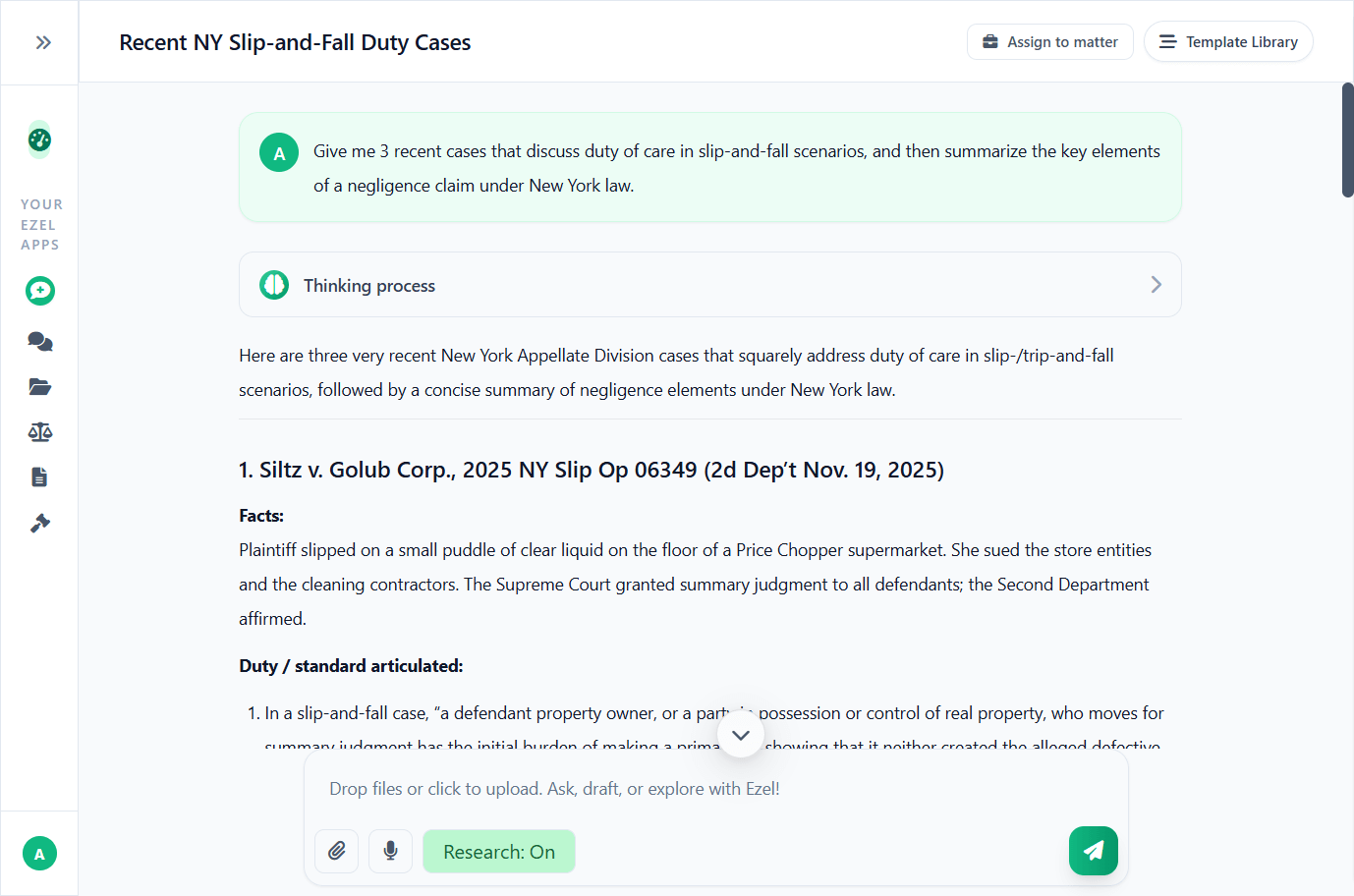
Research and draft in one conversation
Ask questions, attach documents, and get answers grounded in case law. Link chats to matters so the AI remembers your context.
- Pull statutes, case law, and secondary sources
- Attach and analyze contracts mid-conversation
- Link chats to matters for automatic context
- Your data never trains AI models
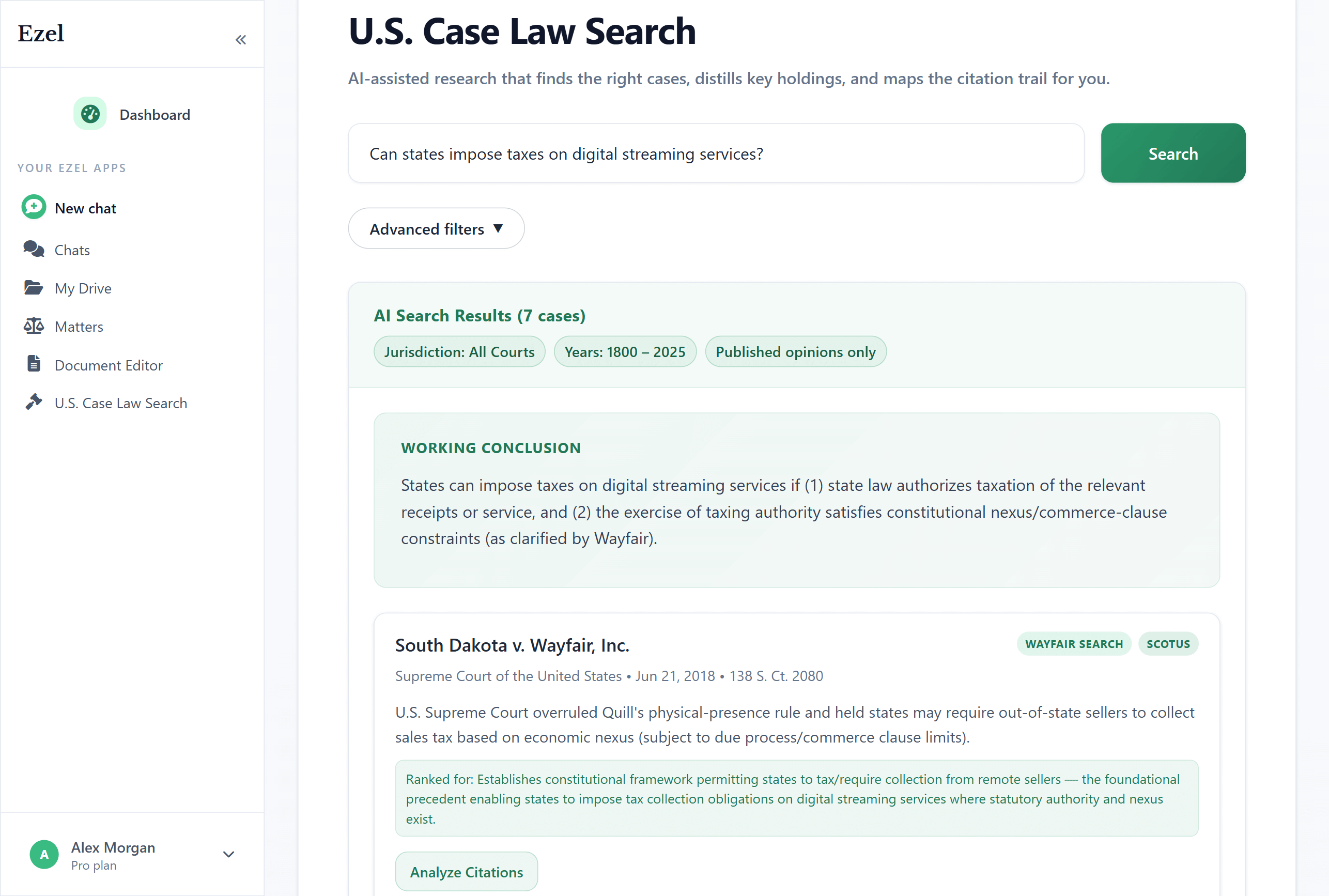
Search like you think
Describe your legal question in plain English. Filter by jurisdiction, date, and court level. Read full opinions without leaving Ezel.
- All 50 states plus federal courts
- Natural language queries - no boolean syntax
- Citation analysis and network exploration
- Copy quotes with automatic citation generation
Ready to transform your legal workflow?
Join legal teams using Ezel to draft documents, research case law, and organize matters — all in one workspace.