MOTION TO SEVER DEFENDANTS
COURT INFORMATION
Court Name: ________________________________________________
Case Number: ________________________________________________
Judge: ________________________________________________
Trial Date: ________________________________________________
DEFENDANT INFORMATION
Moving Defendant: ________________________________________________
Co-Defendant(s):
| Name | Counsel | Charges |
|---|---|---|
| _________________________ | _________________________ | _________________________ |
| _________________________ | _________________________ | _________________________ |
| _________________________ | _________________________ | _________________________ |
COUNSEL FOR MOVING DEFENDANT
Attorney Name: ________________________________________________
Bar Number: ________________________________________________
Address: ________________________________________________
Phone: ________________________________________________
Email: ________________________________________________
I. INTRODUCTION
COMES NOW Defendant _________________________, by and through undersigned counsel, and moves this Honorable Court pursuant to [Federal Rule of Criminal Procedure 14 / State Rule ___] for an Order severing Defendant's trial from that of co-defendant(s) _________________________. A joint trial would deprive Defendant of the constitutional right to a fair trial and would result in prejudice that cannot be cured by limiting instructions. In support thereof, Defendant states as follows:
II. PROCEDURAL BACKGROUND
☐ Defendant was indicted/charged on _____________ along with co-defendant(s)
☐ The indictment/information alleges _____________ count(s)
☐ Trial is currently scheduled for _____________
☐ Discovery has revealed the following evidence giving rise to this motion:
________________________________________________
________________________________________________
III. LEGAL STANDARD
A. Federal Rule of Criminal Procedure 14
Rule 14(a) provides: "If the joinder of offenses or defendants in an indictment, an information, or a consolidation for trial appears to prejudice a defendant or the government, the court may order separate trials of counts, sever the defendants' trials, or provide any other relief that justice requires."
B. Standard for Severance
While defendants who are indicted together are generally tried together, severance is required when a joint trial would:
☐ Violate the defendant's constitutional rights
☐ Result in prejudice that outweighs judicial economy
☐ Create a serious risk of compromising a defendant's specific trial right
C. The Bruton Rule
In Bruton v. United States, 391 U.S. 123 (1968), the Supreme Court held that admission of a non-testifying co-defendant's confession that incriminates the defendant violates the Confrontation Clause of the Sixth Amendment, even with limiting instructions.
The Court recognized that a jury cannot "segregate evidence into separate intellectual boxes" and that limiting instructions are insufficient to cure the prejudice from hearing a co-defendant's incriminating statement.
D. Samia v. United States (2023)
In Samia v. United States, 599 U.S. 635 (2023), the Supreme Court clarified that Bruton is violated only when the co-defendant's statement directly and explicitly names or identifies the defendant. Statements that merely implicitly incriminate through inference may be admitted with proper limiting instructions.
E. Options Under Bruton
When a Bruton issue arises, the prosecution must either:
☐ Sever the defendant's trial from the co-defendant's trial
☐ Exclude the co-defendant's statement from evidence
☐ Redact all references to the defendant ("sanitize" the statement)
☐ Have the co-defendant testify and submit to cross-examination
IV. GROUNDS FOR SEVERANCE
A. BRUTON VIOLATION
☐ Co-defendant _________________________ made a statement to law enforcement
☐ Date of statement: _____________
☐ The statement directly implicates this Defendant by:
☐ Naming Defendant explicitly
☐ Describing Defendant's role in the alleged offense
☐ Identifying Defendant by physical description, relationship, or other identifier
☐ Details: ________________________________________________
☐ The statement cannot be adequately redacted because:
☐ Redaction would render the statement nonsensical or grammatically awkward
☐ Redaction would obviously refer to this Defendant given other evidence
☐ The statement's meaning depends on reference to Defendant
☐ Details: ________________________________________________
☐ Co-defendant is expected ☐ not to testify / ☐ to invoke Fifth Amendment
☐ Defendant will be denied the right to cross-examine co-defendant
☐ Limiting instructions would be insufficient because:
________________________________________________
________________________________________________
Co-defendant's Statement (or summary):
________________________________________________
________________________________________________
________________________________________________
☐ Full statement attached as Exhibit ___
B. ANTAGONISTIC DEFENSES
☐ Defendant and co-defendant have mutually exclusive defenses
☐ Nature of Defendant's defense: ________________________________________________
☐ Nature of co-defendant's defense: ________________________________________________
☐ The defenses are antagonistic because:
☐ Each defendant blames the other for the crime
☐ Acceptance of one defense precludes acceptance of the other
☐ Each defendant's case depends on showing the other is guilty
☐ Details: ________________________________________________
☐ The conflict goes to the core of each defense
☐ The jury cannot logically accept both defenses
☐ A joint trial would force Defendant to defend against both the prosecution AND co-defendant
C. SPILLOVER PREJUDICE
☐ Evidence admissible only against co-defendant would unfairly prejudice Defendant
☐ Nature of prejudicial evidence:
☐ Co-defendant's prior criminal record
☐ Graphic evidence of co-defendant's conduct
☐ Evidence of co-defendant's other crimes
☐ Inflammatory statements by co-defendant
☐ Details: ________________________________________________
☐ The jury would likely be unable to compartmentalize this evidence
☐ Limiting instructions would be inadequate because:
________________________________________________
________________________________________________
D. DISPARITY IN EVIDENCE
☐ The evidence against co-defendant is substantially stronger than against Defendant
☐ There is a significant disparity in:
☐ Number of counts charged
☐ Severity of charges
☐ Strength of evidence
☐ Nature of alleged conduct
☐ Details: ________________________________________________
☐ Guilt by association would likely result
☐ The jury would have difficulty separating evidence and applying different standards
E. CO-DEFENDANT'S CONDUCT AT TRIAL
☐ Co-defendant's anticipated conduct at trial would prejudice Defendant
☐ Specific concerns:
☐ Co-defendant may make inflammatory statements
☐ Co-defendant may testify and implicate Defendant without proper cross-examination
☐ Co-defendant's demeanor/presentation may prejudice jury against all defendants
☐ Details: ________________________________________________
F. COMPLEXITY AND JURY CONFUSION
☐ The number of defendants creates unreasonable complexity
☐ Number of defendants: _____________
☐ Number of counts: _____________
☐ The jury would likely be confused about which evidence applies to which defendant
☐ The trial would be unreasonably long, prejudicing Defendant's ability to maintain jury attention
V. INADEQUACY OF ALTERNATIVE REMEDIES
A. Redaction Is Inadequate
☐ The government has proposed redacting co-defendant's statement
☐ Proposed redaction attached as Exhibit ___
☐ The redaction is inadequate because:
☐ It still obviously refers to Defendant
☐ It creates a grammatically awkward statement raising inference
☐ Combined with other evidence, the jury will understand the reference
☐ The statement loses meaning without reference to Defendant
☐ Details: ________________________________________________
B. Limiting Instructions Are Inadequate
☐ Limiting instructions cannot cure the prejudice because:
☐ The evidence is too powerful to be disregarded
☐ The instruction would highlight the prejudicial evidence
☐ Human nature makes compartmentalization impossible
☐ The trial will be lengthy, making adherence to instructions difficult
☐ Supreme Court recognized in Bruton that such instructions are often a "mere form"
C. Other Remedies Considered
☐ Empaneling separate juries: ☐ Not available / ☐ Impractical because: _____________
☐ Stipulations: ☐ Not available / ☐ Inadequate because: _____________
☐ Bench trial: ☐ Defendant does not waive jury trial right
VI. BALANCING OF INTERESTS
A. Defendant's Interest in Fair Trial
☐ Defendant has a constitutional right to a fair trial
☐ Defendant has a constitutional right to confront witnesses
☐ Joint trial would compromise these fundamental rights
☐ No interest in judicial economy outweighs constitutional rights
B. Judicial Economy
☐ The need for a fair trial outweighs concerns about judicial efficiency
☐ Separate trials would not significantly burden the court because:
________________________________________________
☐ Many witnesses would testify in both trials regardless
☐ Separate trials would actually be more efficient because:
________________________________________________
VII. EXHIBITS
☐ Exhibit A: Co-defendant's Statement
☐ Exhibit B: Proposed Government Redaction (if applicable)
☐ Exhibit C: Evidence of Antagonistic Defenses
☐ Exhibit D: Evidence Admissible Only Against Co-Defendant
☐ Exhibit E: Applicable Case Law
☐ Exhibit ___: ________________________________________________
VIII. CONCLUSION
A joint trial with co-defendant(s) would deprive Defendant _________________________ of the constitutional right to a fair trial. The prejudice arising from [Bruton violation / antagonistic defenses / spillover prejudice / other grounds] cannot be cured by limiting instructions or other alternative remedies.
WHEREFORE, Defendant respectfully requests that this Honorable Court:
-
Grant this Motion to Sever Defendants;
-
Order that Defendant be tried separately from co-defendant(s);
-
Set a separate trial date for Defendant; and
-
Grant such other relief as the Court deems just and proper.
Respectfully submitted,
________________________________________
Attorney for Defendant
Date: _______________________
CERTIFICATE OF SERVICE
I hereby certify that on _____________, a true and correct copy of the foregoing Motion to Sever Defendants was served upon:
_________________________ [Prosecuting Attorney]
_________________________
_________________________
_________________________ [Co-Defendant's Counsel]
_________________________
_________________________
By: ☐ Hand delivery ☐ First-class mail ☐ Electronic filing/service ☐ Fax
________________________________________
Attorney for Defendant
STATE-SPECIFIC VARIATIONS
Federal Courts (Rule 14)
- Severance within court's discretion
- Must show "real prejudice" not merely better chance of acquittal
- Zafiro: Mutually antagonistic defenses alone may not require severance
- Bruton applies but narrowed by Samia (2023)
California (Penal Code § 1098)
- Defendants jointly charged should be tried jointly
- Severance when "interests of justice" require
- People v. Aranda extends Bruton protections
New York (CPL § 200.40)
- Court may order severance "in the interest of justice"
- Defendant must show good cause
- Bruton followed with state variations
Texas (Code of Criminal Procedure Art. 36.09)
- Severance available upon defendant's motion
- Must show prejudice from joint trial
- Co-defendant's confession requires redaction or severance
Florida (Rule 3.152)
- Severance "to promote a fair determination of guilt or innocence"
- Must be requested before trial
- Antagonistic defenses may warrant severance
Illinois (725 ILCS 5/114-8)
- Severance when "prejudicial to defendant"
- Timing: Before or during trial
- People v. Bean extends Bruton
Pennsylvania (Pa.R.Crim.P. 583)
- Court may order separate trials
- Must show prejudice outweighs judicial economy
- Commonwealth v. Chester addresses Bruton
PRACTICE NOTES
Do more with Ezel
This free template is just the beginning. See how Ezel helps legal teams draft, research, and collaborate faster.
AI that drafts while you watch
Tell the AI what you need and watch your document transform in real-time. No more copy-pasting between tools or manually formatting changes.
- Natural language commands: "Add a force majeure clause"
- Context-aware suggestions based on document type
- Real-time streaming shows edits as they happen
- Milestone tracking and version comparison
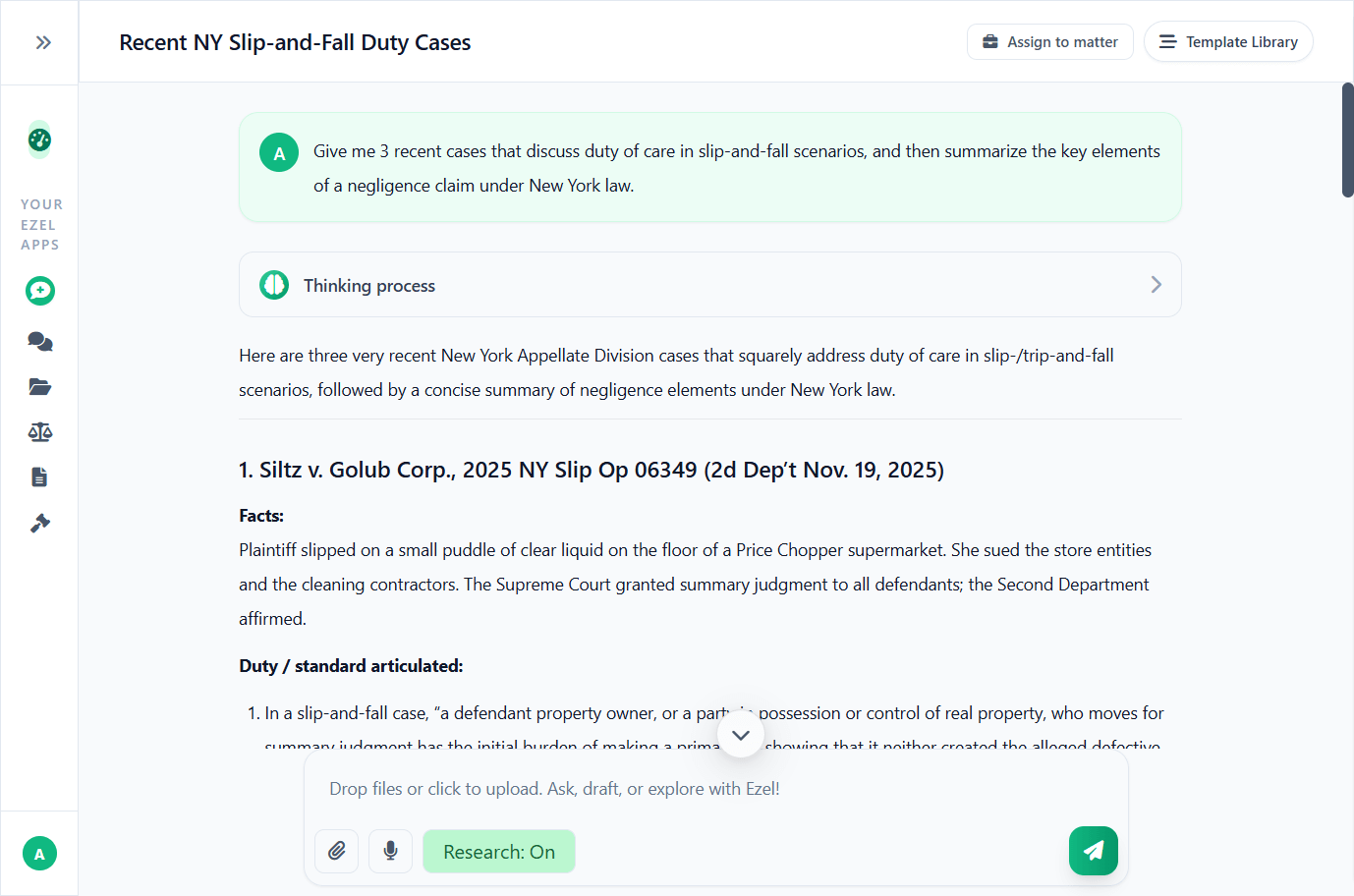
Research and draft in one conversation
Ask questions, attach documents, and get answers grounded in case law. Link chats to matters so the AI remembers your context.
- Pull statutes, case law, and secondary sources
- Attach and analyze contracts mid-conversation
- Link chats to matters for automatic context
- Your data never trains AI models
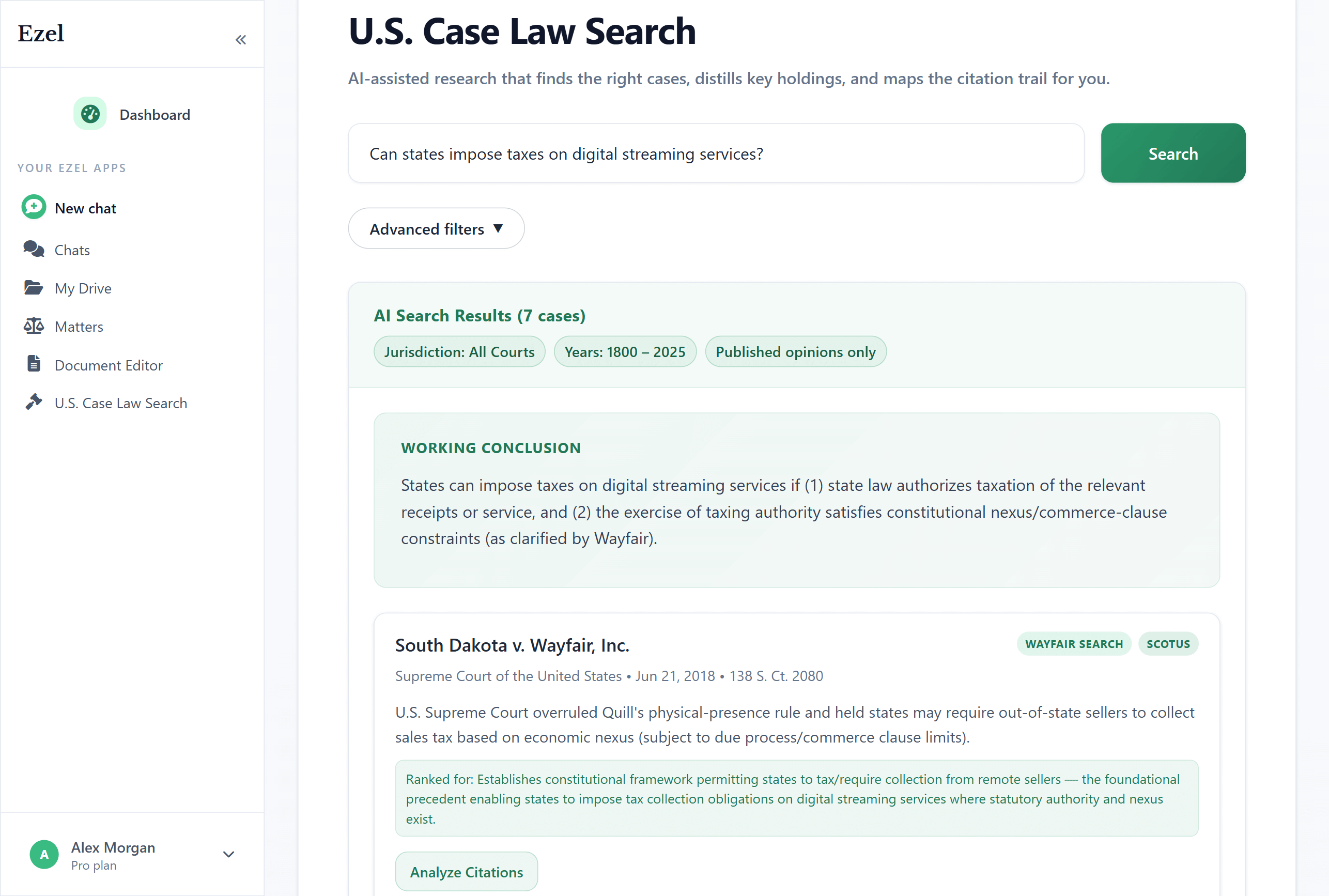
Search like you think
Describe your legal question in plain English. Filter by jurisdiction, date, and court level. Read full opinions without leaving Ezel.
- All 50 states plus federal courts
- Natural language queries - no boolean syntax
- Citation analysis and network exploration
- Copy quotes with automatic citation generation
Ready to transform your legal workflow?
Join legal teams using Ezel to draft documents, research case law, and organize matters — all in one workspace.