MEDIATION-ARBITRATION (MED-ARB) AGREEMENT
PARTIES
Effective Date: [DATE]
Party 1: [PARTY 1 FULL LEGAL NAME], a [STATE] [ENTITY TYPE/INDIVIDUAL], with its principal place of business at [ADDRESS] ("Party 1")
Party 2: [PARTY 2 FULL LEGAL NAME], a [STATE] [ENTITY TYPE/INDIVIDUAL], with its principal place of business at [ADDRESS] ("Party 2")
(Each a "Party" and collectively, the "Parties")
RECITALS
A. The Parties have entered into or contemplate entering into a business relationship governed by [UNDERLYING AGREEMENT NAME AND DATE] (the "Underlying Agreement").
B. The Parties desire to establish a comprehensive dispute resolution process that combines the benefits of both mediation and arbitration.
C. The Parties agree that disputes should first be addressed through mediation, with arbitration available if mediation does not result in a full settlement.
D. This Agreement establishes a binding Med-Arb process to efficiently and finally resolve any disputes.
NOW, THEREFORE, in consideration of the mutual covenants herein and for other good and valuable consideration, the Parties agree as follows:
ARTICLE 1: OVERVIEW OF MED-ARB PROCESS
1.1 Two-Step Process
The Parties agree to resolve all disputes through the following two-step process:
Step 1 - Mediation: The Parties shall first attempt to resolve disputes through mediation.
Step 2 - Arbitration: If mediation does not result in a complete settlement, the unresolved issues shall be submitted to binding arbitration.
1.2 Commitment
By signing this Agreement, each Party commits to participate in good faith in both the mediation and, if necessary, the arbitration phases of the dispute resolution process.
1.3 Governing Law
This Agreement is governed by the Federal Arbitration Act, 9 U.S.C. Sections 1-16, and the laws of the State of [STATE].
ARTICLE 2: SCOPE OF DISPUTES COVERED
2.1 Covered Disputes
This Agreement applies to any dispute, controversy, or claim arising out of or relating to:
(a) The Underlying Agreement or any amendments thereto;
(b) The breach, termination, enforcement, interpretation, or validity of the Underlying Agreement;
(c) The business relationship between the Parties;
(d) Any tort claims related to the foregoing;
(e) The scope or applicability of this Med-Arb Agreement.
2.2 Excluded Disputes
This Agreement does NOT apply to:
(a) Actions for temporary restraining orders or preliminary injunctive relief (which may be sought in court pending mediation/arbitration);
(b) Claims that cannot be arbitrated under applicable law;
(c) [OTHER EXCLUSIONS].
ARTICLE 3: NOTICE OF DISPUTE
3.1 Written Notice
Before initiating the Med-Arb process, the complaining Party shall provide written notice to the other Party describing:
(a) The nature of the dispute;
(b) The factual basis for the claim;
(c) The relief sought.
3.2 Informal Resolution Period
The Parties agree to attempt in good faith to resolve the dispute informally for [30] days following receipt of the notice before initiating mediation.
3.3 Initiation of Med-Arb
If the dispute is not resolved informally, either Party may initiate the Med-Arb process by filing a request with [AAA/JAMS/Other] and serving a copy on the other Party.
ARTICLE 4: MEDIATION PHASE
4.1 Mediation Process
The mediation shall be conducted in accordance with the following terms:
Administering Organization:
☐ American Arbitration Association (AAA) Mediation Procedures
☐ JAMS Mediation Rules
☐ Other: [SPECIFY]
Location: [CITY, STATE] or as agreed by the Parties
Timing: The mediation shall commence within [30-45] days of the initiation of the Med-Arb process.
4.2 Selection of Mediator
Med-Arb Model Selection:
☐ Same Neutral Model: The same individual shall serve as both mediator and arbitrator (if arbitration is required). [See Section 4.6 for special provisions]
☐ Different Neutral Model: Different individuals shall serve as mediator and arbitrator.
☐ Hybrid Model: The mediator may serve as arbitrator only if both Parties consent in writing after mediation concludes.
Mediator Selection Process:
(a) The administering organization shall provide a list of [5-7] potential mediators.
(b) Each Party may strike up to [2] names.
(c) The highest-ranked available candidate shall be appointed.
4.3 Mediator Qualifications
The mediator shall:
(a) Be a neutral with experience in [INDUSTRY/SUBJECT MATTER];
(b) Have training in mediation;
(c) Have no conflict of interest with either Party;
(d) Disclose any potential conflicts.
4.4 Mediation Session
(a) Each Party shall attend with a representative who has full settlement authority.
(b) Counsel may attend and participate.
(c) The initial mediation session shall last at least [4-8] hours unless the Parties and Mediator agree otherwise.
(d) Additional sessions may be scheduled if the Parties agree.
4.5 Confidentiality in Mediation
(a) All communications during mediation are confidential and privileged.
(b) No statements, admissions, or offers made during mediation may be used in any subsequent arbitration or other proceeding.
(c) The mediator shall not disclose information received in confidence from one Party to the other Party without authorization.
4.6 Same Neutral Provisions (If Same Neutral Model Selected)
IMPORTANT CONSIDERATIONS FOR SAME NEUTRAL MODEL:
If the same person serves as both mediator and arbitrator:
(a) Informed Consent: Each Party acknowledges understanding that information shared confidentially with the mediator may inform the arbitrator's decision if arbitration proceeds.
(b) Waiver of Objection: Each Party waives any objection to the neutral serving as arbitrator based on information obtained during mediation.
(c) Confidential Caucus Information:
☐ The neutral may NOT consider information shared in private caucus during arbitration unless the Party authorizes disclosure.
☐ The neutral MAY consider all information obtained during mediation when acting as arbitrator.
(d) Conversion Procedure: Before converting from mediation to arbitration, the neutral shall:
- Declare the mediation concluded;
- Confirm the Parties' continued consent to the same neutral serving as arbitrator;
- Allow any Party [5] business days to object and request a different arbitrator.
4.7 Mediation Costs
(a) Each Party shall pay an equal share of mediator fees and mediation administrative costs.
(b) Each Party shall bear its own attorneys' fees and costs.
4.8 Conclusion of Mediation
Mediation shall be deemed concluded upon:
(a) Execution of a written settlement agreement resolving all issues;
(b) Declaration by the mediator that an impasse has been reached;
(c) Written notice by any Party of withdrawal from mediation (after initial session);
(d) Expiration of [60] days from commencement of mediation without settlement.
ARTICLE 5: TRANSITION TO ARBITRATION
5.1 Trigger for Arbitration
If mediation does not result in a complete settlement of all disputes, the unresolved issues shall automatically proceed to binding arbitration.
5.2 Partial Settlement
If the Parties reach a partial settlement in mediation:
(a) The settled issues shall be memorialized in a written settlement agreement;
(b) Only the unresolved issues shall proceed to arbitration;
(c) The arbitrator shall have no authority to modify the settled issues.
5.3 Timing of Arbitration
Arbitration shall commence within [30] days of the conclusion of mediation, unless the Parties agree otherwise.
5.4 Preservation of Rights
Participation in mediation shall not waive any rights or defenses in the subsequent arbitration, except as expressly provided herein.
ARTICLE 6: ARBITRATION PHASE
6.1 Arbitration Rules
The arbitration shall be conducted in accordance with:
☐ AAA Commercial Arbitration Rules
☐ AAA Employment Arbitration Rules
☐ JAMS Comprehensive Arbitration Rules
☐ JAMS Employment Arbitration Rules
☐ Other: [SPECIFY]
6.2 Selection of Arbitrator
If Different Neutral Model:
(a) The arbitrator shall be selected through the administering organization's standard process.
(b) Each Party may strike and rank candidates from the provided list.
If Same Neutral Model:
(a) The mediator shall serve as arbitrator, subject to Section 4.6.
(b) Either Party may object within [5] days and request a new arbitrator.
6.3 Number of Arbitrators
☐ One (1) arbitrator for disputes under $[AMOUNT]
☐ Three (3) arbitrators for disputes of $[AMOUNT] or more
☐ As specified: [DESCRIBE]
6.4 Location
The arbitration shall be held in [CITY, STATE], or virtually as agreed.
6.5 Discovery
(a) Discovery shall be limited to documents and information directly relevant to the claims.
(b) Each Party may take up to [NUMBER] depositions.
(c) The arbitrator may authorize additional discovery upon showing of need.
6.6 Hearing
(a) The arbitration hearing shall be scheduled within [90] days of arbitrator appointment.
(b) Each Party shall have the right to present evidence, call witnesses, and cross-examine opposing witnesses.
6.7 Award
(a) The arbitrator shall issue a written, reasoned award.
(b) The award shall be issued within [30] days of the hearing.
(c) The award shall be final and binding.
(d) Judgment may be entered on the award in any court of competent jurisdiction.
6.8 Arbitration Costs
(a) Arbitrator fees shall be shared equally, unless the arbitrator allocates them differently in the award.
(b) The prevailing Party may be awarded attorneys' fees if authorized by the Underlying Agreement or applicable law.
ARTICLE 7: CONFIDENTIALITY
7.1 Confidential Proceedings
The entire Med-Arb process, including mediation and arbitration, shall be confidential except:
(a) As required by law;
(b) To enforce a settlement agreement or arbitration award;
(c) With mutual written consent.
7.2 Use of Mediation Information in Arbitration
☐ Strict Separation: No information from mediation (other than the fact that mediation occurred and did not result in settlement) may be used in arbitration.
☐ Same Neutral Exception: If the same neutral serves as mediator and arbitrator, the neutral may consider information from mediation as provided in Section 4.6.
ARTICLE 8: CLASS ACTION WAIVER
8.1 Individual Disputes Only
The Parties agree that any Med-Arb proceeding shall be conducted on an individual basis only. Neither Party may:
(a) Bring a class, collective, or representative action;
(b) Act as a class representative or class member;
(c) Consolidate proceedings with those of other parties without mutual consent.
ARTICLE 9: PROVISIONAL REMEDIES
9.1 Court Remedies
Either Party may seek provisional or interim relief from a court of competent jurisdiction without waiving the right to proceed with Med-Arb, including:
(a) Temporary restraining orders;
(b) Preliminary injunctions;
(c) Attachment or garnishment;
(d) Appointment of a receiver.
9.2 Emergency Arbitrator
Either Party may seek emergency relief through the administering organization's emergency procedures pending appointment of the arbitrator.
ARTICLE 10: GENERAL PROVISIONS
10.1 Waiver of Jury Trial
EACH PARTY KNOWINGLY AND VOLUNTARILY WAIVES ITS RIGHT TO A TRIAL BY JURY in any action arising out of or relating to this Agreement or the Underlying Agreement.
10.2 Survival
This Agreement shall survive termination of the Underlying Agreement and shall apply to disputes arising out of or relating to the Underlying Agreement.
10.3 Severability
If any provision of this Agreement is held invalid, the remaining provisions shall remain in effect. If the class action waiver is found unenforceable, the arbitration provision shall remain enforceable for individual claims.
10.4 Amendment
This Agreement may not be amended except by written agreement signed by both Parties.
10.5 Notices
All notices shall be in writing and delivered to:
Party 1:
[ADDRESS]
[EMAIL]
Party 2:
[ADDRESS]
[EMAIL]
10.6 Entire Agreement
This Agreement constitutes the entire agreement regarding dispute resolution and supersedes all prior dispute resolution agreements, except that this Agreement is supplemental to the Underlying Agreement.
10.7 Counterparts
This Agreement may be executed in counterparts. Electronic signatures are valid and binding.
ACKNOWLEDGMENT
EACH PARTY ACKNOWLEDGES THAT:
☐ It has read and understands this Med-Arb Agreement.
☐ It understands that by signing, it is agreeing to resolve disputes through mediation and, if necessary, binding arbitration.
☐ It is waiving its right to a jury trial and its right to participate in class actions.
☐ It has had the opportunity to consult with legal counsel.
☐ It enters into this Agreement voluntarily.
☐ [If Same Neutral Model:] It understands that the same person may serve as both mediator and arbitrator, and information shared in mediation may inform the arbitration decision.
EXECUTION
IN WITNESS WHEREOF, the Parties have executed this Med-Arb Agreement as of the Effective Date.
PARTY 1:
[PARTY 1 NAME]
By: ______________________________
Name: [AUTHORIZED SIGNATORY]
Title: [TITLE]
Date: _______________
PARTY 2:
[PARTY 2 NAME]
By: ______________________________
Name: [AUTHORIZED SIGNATORY]
Title: [TITLE]
Date: _______________
SCHEDULE A: MED-ARB PROCESS FLOWCHART
DISPUTE ARISES
|
v
WRITTEN NOTICE OF DISPUTE
|
v
30-DAY INFORMAL RESOLUTION PERIOD
|
v
RESOLVED? --YES--> END
|
NO
|
v
INITIATE MED-ARB PROCESS
|
v
MEDIATION (STEP 1)
- Select Mediator
- Exchange Position Statements
- Mediation Session(s)
|
v
SETTLED? --YES--> SETTLEMENT AGREEMENT --> END
|
NO (or partial)
|
v
TRANSITION TO ARBITRATION (STEP 2)
|
v
ARBITRATION
- Select Arbitrator (if different neutral)
- Discovery
- Hearing
|
v
FINAL BINDING AWARD
|
v
JUDGMENT (if necessary)
ADVANTAGES AND CONSIDERATIONS OF MED-ARB
Advantages:
- Encourages settlement through mediation
- Provides certainty of resolution through arbitration
- More efficient than sequential processes
- Preserves business relationships
- Confidential process
Considerations:
- Same neutral model: Risk of party withholding information in mediation
- Different neutral model: Additional cost and time
- Information sharing issues between phases
- Ensure informed consent from all parties
LEGAL REFERENCES:
- Federal Arbitration Act, 9 U.S.C. Sections 1-16
- AAA Commercial Mediation Procedures
- AAA Commercial Arbitration Rules
- JAMS Mediation Rules
- JAMS Comprehensive Arbitration Rules
- State mediation confidentiality statutes
Do more with Ezel
This free template is just the beginning. See how Ezel helps legal teams draft, research, and collaborate faster.
AI that drafts while you watch
Tell the AI what you need and watch your document transform in real-time. No more copy-pasting between tools or manually formatting changes.
- Natural language commands: "Add a force majeure clause"
- Context-aware suggestions based on document type
- Real-time streaming shows edits as they happen
- Milestone tracking and version comparison
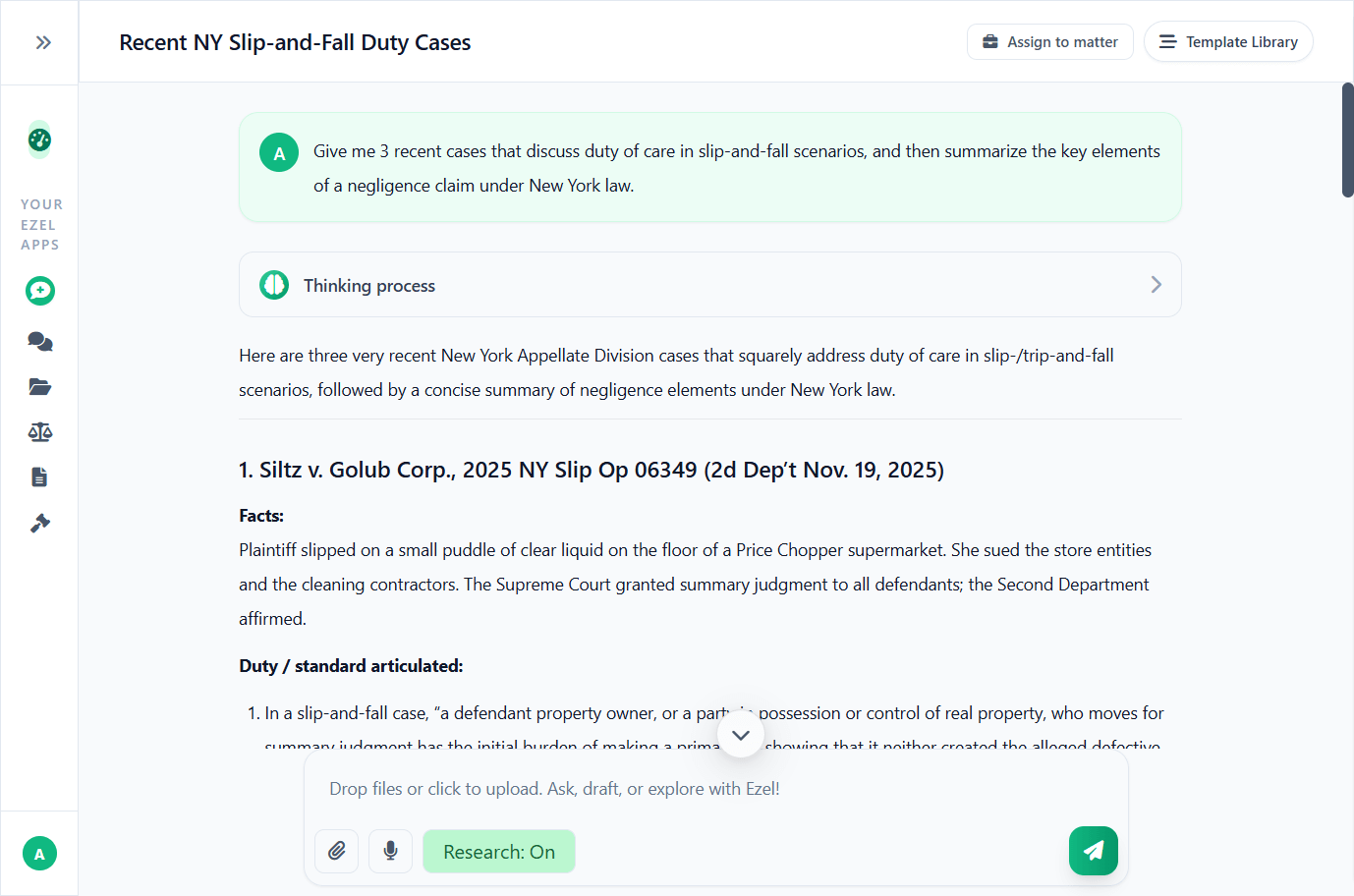
Research and draft in one conversation
Ask questions, attach documents, and get answers grounded in case law. Link chats to matters so the AI remembers your context.
- Pull statutes, case law, and secondary sources
- Attach and analyze contracts mid-conversation
- Link chats to matters for automatic context
- Your data never trains AI models
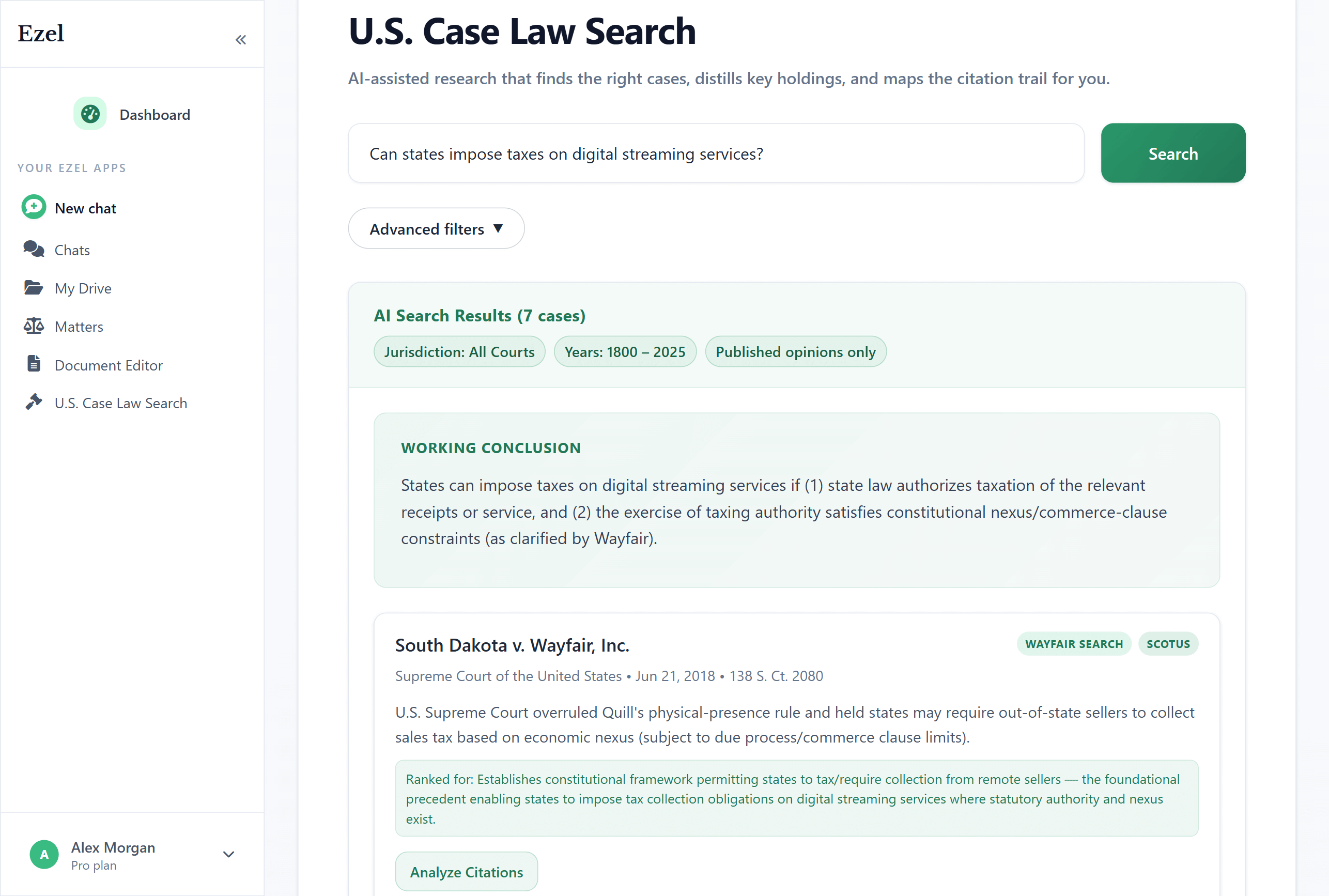
Search like you think
Describe your legal question in plain English. Filter by jurisdiction, date, and court level. Read full opinions without leaving Ezel.
- All 50 states plus federal courts
- Natural language queries - no boolean syntax
- Citation analysis and network exploration
- Copy quotes with automatic citation generation
Ready to transform your legal workflow?
Join legal teams using Ezel to draft documents, research case law, and organize matters — all in one workspace.