OPPOSITION TO MOTION FOR TRANSFER TO ADULT COURT
(Juvenile Waiver Opposition)
IN THE [FAMILY/JUVENILE] COURT OF [COUNTY] COUNTY
STATE OF [STATE]
In the Matter of:
[JUVENILE'S INITIALS]
A Minor Child
| Case No.: | [CASE NUMBER] |
| Motion Filed: | [DATE] |
| Transfer Hearing Date: | [DATE] |
| Hearing Time: | [TIME] |
| Courtroom: | [ROOM NUMBER] |
OPPOSITION TO MOTION FOR TRANSFER/WAIVER TO ADULT CRIMINAL COURT
I. INTRODUCTION
[JUVENILE INITIALS], through undersigned counsel, respectfully opposes the State's Motion to Transfer jurisdiction to adult criminal court. The Juvenile is [AGE] years old and is alleged to have committed [OFFENSE]. For the reasons set forth below, this Court should deny the Motion for Transfer and retain jurisdiction in the juvenile court system, which is best equipped to address the needs of this young person while protecting public safety.
II. PROCEDURAL BACKGROUND
| Event | Date |
|---|---|
| Date of Birth: | [DOB] |
| Age at Time of Alleged Offense: | [AGE] |
| Current Age: | [AGE] |
| Date of Alleged Offense: | [DATE] |
| Petition Filed: | [DATE] |
| Transfer Motion Filed: | [DATE] |
| Transfer Hearing Scheduled: | [DATE] |
Type of Transfer Mechanism Sought:
☐ Judicial Waiver (Discretionary)
☐ Prosecutorial Waiver/Direct File
☐ Statutory Exclusion (Seeking Reverse Waiver)
☐ Presumptive Waiver (Juvenile Must Rebut)
III. STATEMENT OF FACTS
A. Background of the Juvenile
[PROVIDE COMPREHENSIVE BACKGROUND INCLUDING:]
- Family history and circumstances
- Educational history and achievements
- Employment history (if any)
- Community involvement
- Mental health history
- Trauma history
- Strengths and positive attributes
B. Circumstances of the Alleged Offense
[DESCRIBE CIRCUMSTANCES, EMPHASIZING:]
- Role of the juvenile (primary/secondary actor)
- Presence of adult co-defendants
- Level of planning/premeditation (or lack thereof)
- Juvenile's understanding of consequences
- Influence of peers or adults
- Any mitigating circumstances
IV. LEGAL STANDARD
A. The Kent Factors
In Kent v. United States, 383 U.S. 541 (1966), the Supreme Court established that transfer decisions must consider the following factors:
- The seriousness of the alleged offense and whether protection of the community requires waiver
- Whether the alleged offense was committed in an aggressive, violent, premeditated, or willful manner
- Whether the alleged offense was against persons or property
- The prosecutive merit of the complaint
- The desirability of trial and disposition of the entire offense in one court where the juvenile's associates in the alleged offense are adults
- The sophistication and maturity of the juvenile
- The record and previous history of the juvenile
- The prospects for adequate protection of the public and rehabilitation of the juvenile using facilities, services, and procedures available to the juvenile court
B. Constitutional Framework for Juvenile Sentencing
The Supreme Court has repeatedly recognized the unique characteristics of youth:
- Roper v. Simmons (2005): Prohibited death penalty for juvenile offenders
- Graham v. Florida (2010): Prohibited LWOP for non-homicide juvenile offenses
- Miller v. Alabama (2012): Prohibited mandatory LWOP for juvenile homicide offenders
- Montgomery v. Louisiana (2016): Applied Miller retroactively
These cases establish that juveniles possess:
- Diminished culpability due to immaturity
- Greater susceptibility to negative influences
- Underdeveloped character with greater capacity for change
- Different brain development than adults
V. ARGUMENT
A. ANALYSIS UNDER THE KENT FACTORS
Factor 1: Seriousness of the Alleged Offense and Community Protection
☐ The alleged offense, while serious, does not require transfer to protect the community.
Supporting Arguments:
[ARGUE THAT:]
- The juvenile court has adequate resources to address the offense
- Appropriate dispositions are available within juvenile court
- Extended juvenile jurisdiction can provide sufficient oversight
- The juvenile does not present an ongoing threat requiring adult prosecution
Factor 2: Manner of the Alleged Offense
☐ The alleged offense was NOT committed in an aggressive, violent, premeditated, or willful manner.
Supporting Arguments:
[ARGUE FACTORS SUCH AS:]
- Lack of premeditation or planning
- Impulsive nature of the alleged conduct
- Role of peer pressure or coercion
- Lack of sophistication in the alleged offense
- Reactive rather than calculated behavior
Factor 3: Nature of the Offense (Persons vs. Property)
☐ Primarily property offense
☐ Persons offense with mitigating factors
Supporting Arguments:
[DESCRIBE THE NATURE OF THE OFFENSE AND MITIGATING FACTORS:]
- Extent of injury (if any)
- Intent to cause harm
- Actual vs. potential harm
- Comparative role if multiple participants
Factor 4: Prosecutive Merit
☐ The evidence supporting the charges is [weak/contested/circumstantial].
Supporting Arguments:
[ADDRESS STRENGTH OF THE STATE'S CASE:]
- Evidentiary issues
- Witness credibility concerns
- Constitutional challenges to evidence
- Alternative interpretations of facts
Factor 5: Adult Co-Defendants
☐ No adult co-defendants exist
☐ Adult co-defendants exist but should be handled separately
Supporting Arguments:
[ARGUE THAT:]
- The juvenile's case can be effectively handled separately
- The juvenile may have been influenced/manipulated by adults
- Adult co-defendants' cases can proceed independently
- Separate proceedings protect the juvenile's interests
Factor 6: Sophistication and Maturity
☐ The Juvenile lacks the sophistication and maturity to be tried as an adult.
Supporting Evidence:
[PRESENT EVIDENCE OF:]
- Chronological age
- Mental age/developmental stage
- Cognitive assessments
- Emotional maturity evaluations
- Educational functioning level
- Life experiences demonstrating immaturity
Expert Assessment Findings:
| Evaluator | Finding |
|---|---|
| Psychologist: | [NAME] - [SUMMARY OF FINDINGS] |
| Educational Specialist: | [NAME] - [SUMMARY OF FINDINGS] |
| Social Worker: | [NAME] - [SUMMARY OF FINDINGS] |
Factor 7: Prior Record and History
☐ The Juvenile has minimal or no prior record.
☐ The Juvenile's prior record does not support transfer.
| Prior Contact | Date | Outcome |
|---|---|---|
| [NONE or DESCRIBE] |
Supporting Arguments:
[ARGUE THAT:]
- Limited or no prior contacts with juvenile justice system
- Prior interventions were successful
- No pattern of escalating behavior
- Amenability to prior treatment/supervision
Factor 8: Prospects for Rehabilitation
☐ The Juvenile can be adequately rehabilitated within the juvenile system.
Available Juvenile Services and Programs:
| Service/Program | Availability | Appropriateness |
|---|---|---|
| Residential Treatment | ☐ Yes ☐ No | [EXPLAIN] |
| Mental Health Services | ☐ Yes ☐ No | [EXPLAIN] |
| Substance Abuse Treatment | ☐ Yes ☐ No | [EXPLAIN] |
| Educational Programs | ☐ Yes ☐ No | [EXPLAIN] |
| Vocational Training | ☐ Yes ☐ No | [EXPLAIN] |
| Family Therapy | ☐ Yes ☐ No | [EXPLAIN] |
| Cognitive Behavioral Therapy | ☐ Yes ☐ No | [EXPLAIN] |
| Extended Jurisdiction Option | ☐ Yes ☐ No | [EXPLAIN] |
Proposed Treatment/Rehabilitation Plan:
[OUTLINE A SPECIFIC PLAN DEMONSTRATING THE JUVENILE CAN BE REHABILITATED]
B. ADOLESCENT BRAIN DEVELOPMENT SCIENCE
Contemporary neuroscience establishes that the adolescent brain is not fully developed until the mid-20s. Key findings include:
-
Prefrontal Cortex Development: The area responsible for impulse control, judgment, and decision-making is the last to mature.
-
Risk Assessment: Adolescents process risk differently than adults and are more susceptible to peer influence.
-
Capacity for Change: The developing brain means juveniles have significantly greater capacity for rehabilitation than adults.
-
Transitory Nature: Adolescent behavior is not predictive of adult behavior; most juvenile offenders do not become adult offenders.
C. CONSEQUENCES OF ADULT PROSECUTION
Transfer to adult court would expose the Juvenile to:
| Consequence | Impact |
|---|---|
| Adult Criminal Record | Permanent public record affecting employment, housing, education |
| Adult Incarceration | Exposure to adult offenders; increased risk of victimization |
| Collateral Consequences | Loss of voting rights, professional licensing barriers |
| Loss of Juvenile Services | No access to juvenile treatment programs |
| Sentencing Disparity | Potential for lengthy mandatory minimum sentences |
| Sex Offender Registration | If applicable, lifelong registration requirements |
D. RACIAL AND ETHNIC DISPARITIES
Research demonstrates significant racial disparities in transfer decisions. Black youth are transferred to adult court at rates more than double those of white youth. This Court should be cognizant of these disparities and ensure its decision is based solely on the applicable legal factors.
STATE-SPECIFIC NOTES
California
- Welfare & Institutions Code 707 governs transfer
- Proposition 57 (2016) eliminated direct file for most offenses
- Court must find juvenile not amenable to rehabilitation
- Clear and convincing evidence standard for certain offenses
Texas
- Family Code 54.02 governs waiver/transfer
- Minimum age 14 for felony transfer
- Must find no reasonable expectation of rehabilitation
- Determinate sentencing as alternative to transfer
Florida
- 985.556 and 985.557 govern transfer mechanisms
- Direct file available for certain offenses (985.557)
- Reverse waiver available (985.56)
- 21-point criteria assessment for judicial waiver
New York
- Juvenile Offender Law in Criminal Procedure Law
- Raise the Age legislation (2017-2019) changed procedures
- Youth Part handles cases for 16-17 year olds
- Reverse waiver to Family Court available
VI. CONCLUSION
The State has failed to meet its burden of demonstrating that transfer to adult court is appropriate. Analysis of the Kent factors, contemporary neuroscience, and the available resources within the juvenile system all support retaining jurisdiction in juvenile court. [JUVENILE INITIALS] is a [AGE]-year-old child who, like all children, possesses diminished culpability and enhanced capacity for change.
Transfer to adult court would not serve the interests of justice, public safety, or the rehabilitation of this young person. The juvenile court system has the tools, resources, and expertise necessary to address this matter appropriately.
WHEREFORE, [JUVENILE INITIALS] respectfully requests that this Court:
- DENY the State's Motion for Transfer/Waiver to Adult Court
- RETAIN jurisdiction in juvenile court
- Schedule this matter for adjudication in juvenile court
- Order any additional evaluations deemed necessary
RESPECTFULLY SUBMITTED,
_________________________________
[ATTORNEY NAME]
Attorney for Juvenile
Bar No. [NUMBER]
[FIRM NAME]
[ADDRESS]
[PHONE]
[EMAIL]
Date: _______________
CERTIFICATE OF SERVICE
I hereby certify that a true and correct copy of this Opposition has been served upon all parties of record.
Date: _______________
_________________________________
[ATTORNEY NAME]
ATTACHMENTS
☐ Psychological/Psychiatric Evaluation
☐ Educational Records
☐ Risk Assessment Results
☐ Treatment Provider Recommendations
☐ Character Reference Letters
☐ Expert Report on Adolescent Development
☐ Proposed Treatment Plan
☐ Prior Court Orders/Records
☐ Other: [SPECIFY]
Do more with Ezel
This free template is just the beginning. See how Ezel helps legal teams draft, research, and collaborate faster.
AI that drafts while you watch
Tell the AI what you need and watch your document transform in real-time. No more copy-pasting between tools or manually formatting changes.
- Natural language commands: "Add a force majeure clause"
- Context-aware suggestions based on document type
- Real-time streaming shows edits as they happen
- Milestone tracking and version comparison
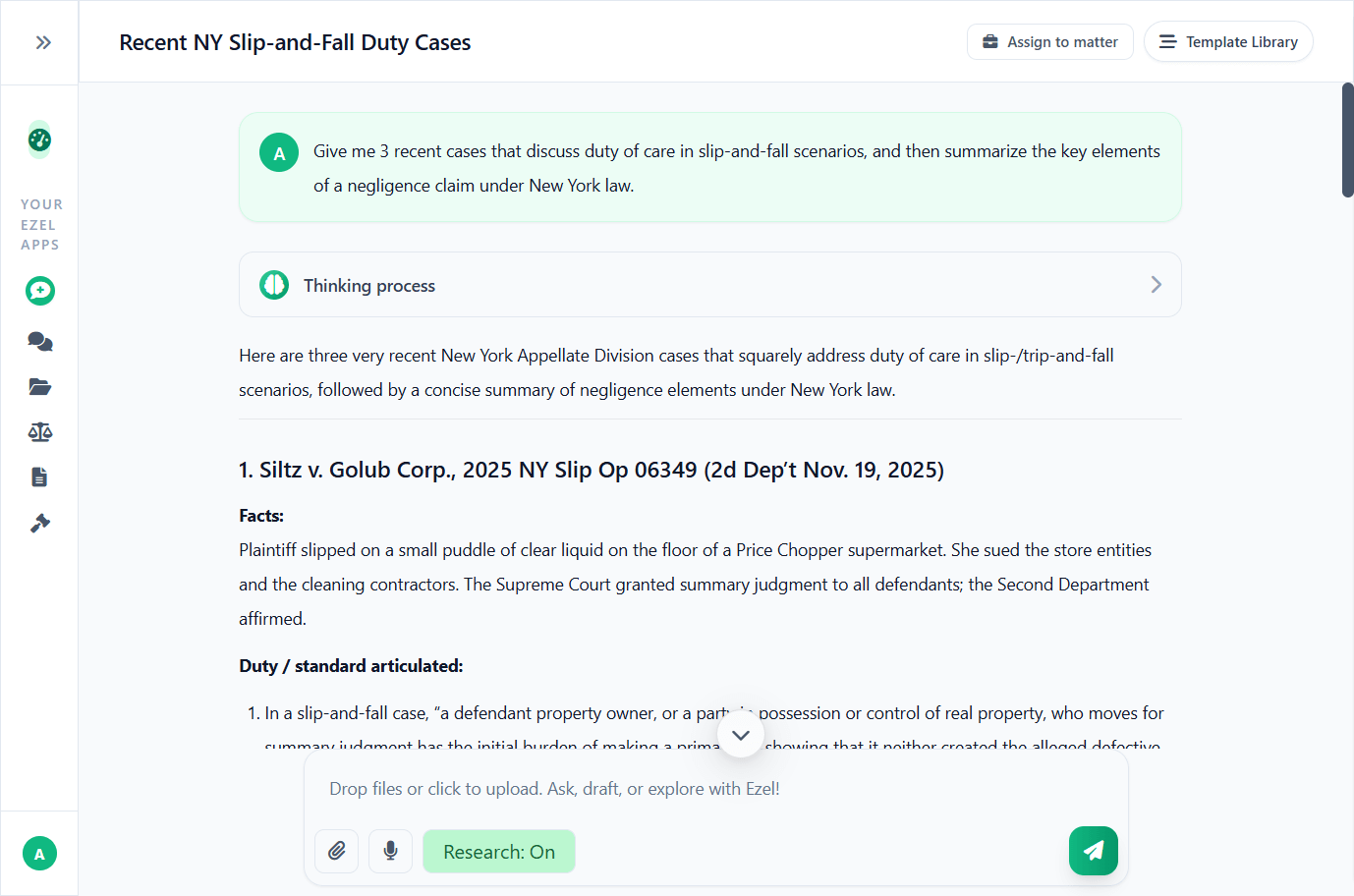
Research and draft in one conversation
Ask questions, attach documents, and get answers grounded in case law. Link chats to matters so the AI remembers your context.
- Pull statutes, case law, and secondary sources
- Attach and analyze contracts mid-conversation
- Link chats to matters for automatic context
- Your data never trains AI models
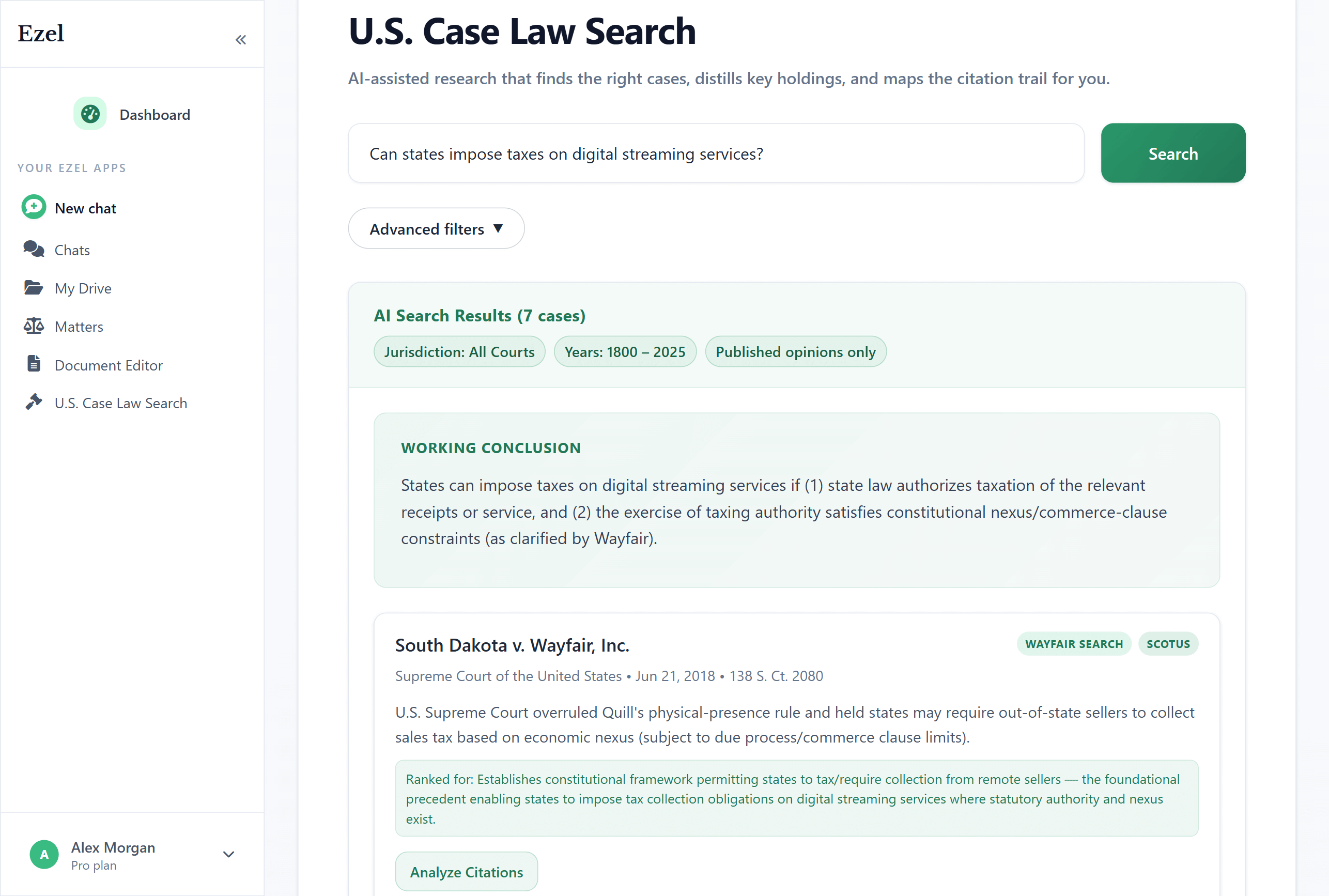
Search like you think
Describe your legal question in plain English. Filter by jurisdiction, date, and court level. Read full opinions without leaving Ezel.
- All 50 states plus federal courts
- Natural language queries - no boolean syntax
- Citation analysis and network exploration
- Copy quotes with automatic citation generation
Ready to transform your legal workflow?
Join legal teams using Ezel to draft documents, research case law, and organize matters — all in one workspace.