DECLARATION OF COVENANTS, CONDITIONS AND RESTRICTIONS
[COMMUNITY NAME]
[// GUIDANCE: This Declaration of CC&Rs is the foundational governing document for a homeowners association. It must be recorded with the county recorder to run with the land. Many states require specific disclosures and provisions. Consult state-specific HOA statutes before recording.]
TABLE OF CONTENTS
Article I. Recitals and Purpose
Article II. Definitions
Article III. Property Subject to Declaration
Article IV. Membership and Voting Rights
Article V. Property Rights and Easements
Article VI. Assessments
Article VII. Architectural Control
Article VIII. Use Restrictions
Article IX. Maintenance Responsibilities
Article X. Insurance
Article XI. Association Powers and Duties
Article XII. Board of Directors
Article XIII. Enforcement and Remedies
Article XIV. Dispute Resolution
Article XV. Amendment
Article XVI. General Provisions
Exhibit A - Legal Description of Property
Exhibit B - Plat Map
Exhibit C - Initial Assessment Schedule
ARTICLE I. RECITALS AND PURPOSE
1.1 Recording. This Declaration of Covenants, Conditions and Restrictions ("Declaration") is made this [DAY] day of [MONTH], [YEAR], by [DECLARANT LEGAL NAME], a [STATE] [ENTITY TYPE] ("Declarant"), and is recorded with the [COUNTY] County Recorder/Register of Deeds.
1.2 Property. Declarant is the owner of certain real property located in [COUNTY] County, [STATE], more particularly described in Exhibit A attached hereto and incorporated herein by reference (the "Property").
1.3 Purpose. Declarant desires to create a planned residential community with common areas and amenities, subject to covenants, conditions, and restrictions that will:
- (a) Preserve and enhance property values;
- (b) Establish a framework for community governance;
- (c) Provide for maintenance of common areas and facilities;
- (d) Create an aesthetically harmonious community; and
- (e) Protect the health, safety, and welfare of residents.
1.4 Declaration. NOW, THEREFORE, Declarant hereby declares that all of the Property shall be held, sold, conveyed, encumbered, leased, and otherwise transferred subject to the covenants, conditions, restrictions, easements, charges, and liens set forth herein, which shall run with the land and be binding on all parties having any right, title, or interest in the Property.
[// GUIDANCE: In California, the Davis-Stirling Act (Civ. Code 4250) requires specific language regarding the binding nature of CC&Rs. In Florida, Chapter 720.302 requires the Declaration to be recorded and the association to be incorporated.]
ARTICLE II. DEFINITIONS
The following terms shall have the meanings set forth below:
2.1 "Architectural Review Committee" or "ARC" means the committee established pursuant to Article VII to review and approve or disapprove architectural modifications.
2.2 "Articles" means the Articles of Incorporation of the Association, as may be amended.
2.3 "Assessment" means any Regular Assessment, Special Assessment, Individual Assessment, or other charge levied by the Association against an Owner pursuant to this Declaration.
2.4 "Association" means [ASSOCIATION NAME], a [STATE] nonprofit corporation formed to manage and operate the Community.
2.5 "Board" or "Board of Directors" means the governing body of the Association.
2.6 "Bylaws" means the Bylaws of the Association, as may be amended.
2.7 "Common Area" means all real property and improvements owned or maintained by the Association for the common use and enjoyment of Owners, including but not limited to:
- (a) Streets, sidewalks, and pathways not dedicated to a public entity;
- (b) Parks, recreational facilities, and open spaces;
- (c) Clubhouse and community center facilities;
- (d) Swimming pools, tennis courts, and other amenities;
- (e) Landscaped areas and entry monuments;
- (f) Storm water management facilities; and
- (g) Any other property designated as Common Area on the recorded plat.
2.8 "Community" means all of the Property, including all Lots and Common Areas.
2.9 "Declarant" means [DECLARANT LEGAL NAME] and its successors and assigns who acquire any portion of the Property for development purposes.
2.10 "Governing Documents" means this Declaration, the Articles, the Bylaws, and the Rules and Regulations, as may be amended.
2.11 "Lot" means any parcel of land within the Community shown on the recorded plat, together with all improvements thereon, designed and intended for independent ownership and residential use.
2.12 "Member" means every person or entity holding a membership in the Association as provided in Article IV.
2.13 "Mortgage" means any recorded mortgage, deed of trust, or other security instrument encumbering a Lot.
2.14 "Mortgagee" means the holder of any Mortgage.
2.15 "Owner" means the record owner of fee simple title to any Lot, excluding Mortgagees unless they have acquired title through foreclosure.
2.16 "Person" means an individual, corporation, partnership, limited liability company, trust, or other legal entity.
2.17 "Regular Assessment" means the annual or periodic charge against each Lot to fund the Association's operating expenses and reserves.
2.18 "Rules and Regulations" means the rules adopted by the Board pursuant to this Declaration and the Bylaws.
2.19 "Special Assessment" means a charge against Owners for capital improvements or extraordinary expenses as provided in Article VI.
ARTICLE III. PROPERTY SUBJECT TO DECLARATION
3.1 Initial Property. The Property initially subject to this Declaration is described in Exhibit A.
3.2 Annexation by Declarant. Declarant reserves the right to annex additional property to the Community by recording a Supplemental Declaration, without consent of Members, for a period of [TWENTY (20)] years from the date of recording of this Declaration.
3.3 Annexation by Association. After expiration of the Declarant's annexation rights, additional property may be annexed with the approval of two-thirds (2/3) of the voting power of the Association.
3.4 De-Annexation. Property may be removed from the Community only upon the affirmative vote of at least seventy-five percent (75%) of the total voting power and the written consent of the Declarant (during the Declarant Control Period).
ARTICLE IV. MEMBERSHIP AND VOTING RIGHTS
4.1 Membership. Every Owner shall be a Member of the Association. Membership is appurtenant to and may not be separated from ownership of a Lot.
4.2 Transfer of Membership. Membership automatically transfers upon conveyance of the Lot.
4.3 Voting Rights. Each Lot shall be entitled to one (1) vote on each matter submitted to a vote of the Members. If a Lot is owned by more than one Person, the vote shall be exercised as the co-owners determine among themselves.
4.4 Voting by Proxy. Members may vote by written proxy in accordance with the Bylaws and applicable state law.
[// GUIDANCE: California Civil Code 5100-5145 provides detailed election procedures including secret ballots and independent inspectors. Florida Statute 720.306 governs meetings and voting. Ensure compliance with state-specific requirements.]
4.5 Quorum. Unless otherwise specified in the Bylaws or required by law:
- (a) For election of directors: [TWENTY PERCENT (20%)] of the voting power;
- (b) For other matters: [TEN PERCENT (10%)] of the voting power.
4.6 Suspension of Voting Rights. The Board may suspend an Owner's voting rights during any period in which the Owner is delinquent in payment of Assessments, after notice and opportunity to be heard.
ARTICLE V. PROPERTY RIGHTS AND EASEMENTS
5.1 Owner's Easements. Every Owner has a nonexclusive easement for use and enjoyment of the Common Area, subject to:
- (a) The right of the Association to adopt reasonable rules governing use;
- (b) The right of the Association to suspend use privileges for violations;
- (c) The right of the Association to dedicate or transfer Common Area with Member approval; and
- (d) The right of the Association to charge reasonable fees for use of facilities.
5.2 Utility Easements. Easements for installation, maintenance, and repair of utilities, drainage, and cable/telecommunications are reserved over, under, and across the Community as shown on the plat or reasonably necessary for service.
5.3 Maintenance Easements. The Association has an easement over each Lot as reasonably necessary to perform maintenance and repairs required under this Declaration.
5.4 Ingress and Egress. Each Owner has easements for ingress and egress over streets and walkways within the Community.
5.5 Delegation of Use. An Owner may delegate use rights to tenants, guests, and invitees, subject to reasonable regulation by the Association and this Declaration.
ARTICLE VI. ASSESSMENTS
[// GUIDANCE: Assessment provisions are heavily regulated by state law. California Civ. Code 5600-5650 limits assessment increases and special assessments. Florida Statute 720.3085 governs liens. Texas Property Code 209.005-209.006 provides notice requirements. Review applicable state statutes.]
6.1 Creation of Lien. Each Owner, by acceptance of a deed, covenants and agrees to pay Assessments to the Association. Assessments, together with interest, late charges, costs, and attorney's fees, shall be a continuing lien upon the Lot.
6.2 Regular Assessments.
(a) Purpose. Regular Assessments shall fund the Association's operating expenses, including:
- Maintenance of Common Areas;
- Insurance premiums;
- Management fees;
- Utilities for Common Areas;
- Reserve fund contributions;
- Administrative expenses; and
- Such other expenses as the Board deems appropriate.
(b) Amount. The initial Regular Assessment shall be $[AMOUNT] per Lot per [MONTH/QUARTER/YEAR]. The Board may increase Regular Assessments annually by up to [FIVE PERCENT (5%)] without Member approval. Increases exceeding this amount require approval of a majority of the voting power.
[// GUIDANCE: California Civil Code 5605 limits assessment increases to 20% per year without member approval. Check state-specific limitations.]
(c) Due Date. Regular Assessments are due on the [FIRST] day of each [MONTH/QUARTER].
6.3 Special Assessments.
(a) Purpose. Special Assessments may be levied for capital improvements, emergency repairs, or other expenses not covered by Regular Assessments.
(b) Approval. Special Assessments exceeding [FIVE PERCENT (5%)] of the current annual budget require approval of a majority of the voting power.
[// GUIDANCE: California Civil Code 5605 requires member approval for special assessments exceeding 5% of budgeted gross expenses. Florida Statute 720.306(2)(d) requires special assessment approval procedures in bylaws.]
6.4 Individual Assessments. The Association may levy Individual Assessments against specific Owners for:
- (a) Costs to remedy violations of this Declaration after notice and opportunity to cure;
- (b) Damage to Common Areas caused by the Owner, residents, or guests;
- (c) Costs incurred due to Owner's failure to maintain the Lot; and
- (d) Fines imposed pursuant to this Declaration after proper hearing.
6.5 Reserves.
(a) The Association shall establish and maintain a reserve fund for major repair and replacement of Common Area components.
(b) Reserve funds shall not be used for routine maintenance without Member approval or Board resolution finding an emergency.
(c) The Board shall conduct a reserve study at least every [THREE (3)] years.
[// GUIDANCE: California Civil Code 5550-5560 requires detailed reserve study and disclosure. Many states have reserve study requirements.]
6.6 Delinquency and Collection.
(a) Late Charges. Assessments not paid within [FIFTEEN (15)] days of the due date are subject to a late charge of $[AMOUNT] or [TEN PERCENT (10%)] of the delinquent amount, whichever is [GREATER/LESSER].
(b) Interest. Delinquent Assessments bear interest at the rate of [TWELVE PERCENT (12%)] per annum, or the maximum rate permitted by law, whichever is less.
(c) Collection Costs. The Owner shall pay all costs of collection, including reasonable attorney's fees.
(d) Notice of Delinquency. Before recording a lien or commencing collection action, the Association shall provide written notice of the delinquency specifying the amount owed and the Owner's right to request a payment plan.
[// GUIDANCE: California Civil Code 5650-5675 requires pre-lien notices and IDR opportunity. Florida Statute 720.3085 requires specific lien notice content. Texas Property Code 209.0094 requires two notices before filing a lien. Comply with state-specific notice requirements.]
6.7 Lien for Assessments.
(a) Creation. The Association has a lien against each Lot for unpaid Assessments, interest, late charges, costs, and attorney's fees.
(b) Recording. The Association may record a claim of lien in the county records after providing required notices.
(c) Priority. The lien shall be subordinate to:
- (i) Real property taxes and special district assessments;
- (ii) First Mortgages recorded before the Assessment became due; and
- (iii) Such other liens as may have priority under state law.
(d) Foreclosure. The Association may foreclose its lien by judicial foreclosure or, where permitted by state law, nonjudicial foreclosure. The Association shall not foreclose a lien consisting solely of fines where prohibited by state law.
[// GUIDANCE: Texas Property Code 209.009 prohibits foreclosure of liens consisting solely of fines. California Civil Code 5720 limits nonjudicial foreclosure. Review state-specific foreclosure restrictions.]
6.8 Statement of Account (Estoppel Certificate). Upon written request by an Owner, prospective purchaser, or Mortgagee, the Association shall furnish a written statement of account showing the status of Assessments within [TEN (10)] business days. A reasonable fee may be charged.
ARTICLE VII. ARCHITECTURAL CONTROL
7.1 Architectural Review Committee.
(a) Establishment. The Architectural Review Committee ("ARC") shall consist of [THREE (3) TO FIVE (5)] members appointed by the Board.
(b) Authority. No improvement, alteration, excavation, landscaping, or change in exterior appearance shall be made without prior written approval of the ARC, except as provided herein.
7.2 Application Process.
(a) Submission. Owners shall submit a complete application including:
- ☐ Application form with Owner contact information
- ☐ Description of proposed improvement
- ☐ Site plan showing location and dimensions
- ☐ Architectural drawings or plans
- ☐ Material samples and color selections
- ☐ Landscaping plan (if applicable)
- ☐ Contractor information
- ☐ Estimated construction schedule
(b) Review Period. The ARC shall approve, approve with conditions, or disapprove the application within [THIRTY (30)] days of receipt of a complete application. Failure to respond within the review period shall constitute [APPROVAL/DISAPPROVAL].
[// GUIDANCE: California Civil Code 4765 requires approval unless disapproved within 60 days. Texas Property Code 202.004 limits restriction of solar panels and certain devices. Check state-specific requirements.]
7.3 Standards. The ARC shall consider:
- (a) Harmony with existing structures and surroundings;
- (b) Quality of materials and workmanship;
- (c) Compliance with this Declaration and design guidelines;
- (d) Impact on views and privacy of neighboring Lots;
- (e) Compliance with applicable building codes; and
- (f) Environmental impact.
7.4 Design Guidelines. The Board may adopt and publish Design Guidelines specifying materials, colors, styles, and other standards. Guidelines may be amended from time to time.
7.5 Variances. The ARC may grant variances from strict application of standards when:
- (a) The variance does not materially affect neighboring properties;
- (b) Special circumstances exist; and
- (c) The variance is consistent with the overall character of the Community.
7.6 Exempt Improvements. ARC approval is not required for:
- (a) Interior modifications not visible from outside;
- (b) Routine maintenance and repair using like materials and colors;
- (c) Seasonal decorations displayed for reasonable periods;
- (d) Solar energy systems to the extent protected by state law; and
- (e) Other improvements specifically exempted by the Design Guidelines.
7.7 Compliance. If an Owner makes improvements without required approval or in violation of approved plans, the ARC may require removal or modification at the Owner's expense.
ARTICLE VIII. USE RESTRICTIONS
[// GUIDANCE: Use restrictions must comply with state and federal fair housing laws, state HOA statutes, and constitutional protections. California Civil Code 4700-4755 limits certain restrictions. Texas Property Code 202 restricts certain prohibitions. Review applicable limitations.]
8.1 Residential Use. Lots shall be used for single-family residential purposes only. No business, trade, or commercial activity shall be conducted on any Lot, except that Owners may:
- (a) Maintain a home office without external signage, customer visits, or employees;
- (b) Conduct activities permitted by applicable zoning laws; and
- (c) Engage in activities expressly permitted by state law.
8.2 Occupancy.
- (a) Lots shall be occupied only by a single family and their household.
- (b) Maximum occupancy shall comply with applicable housing codes.
- (c) Occupants shall not create unreasonable noise or nuisances.
8.3 Leasing and Rentals.
- (a) Owners may lease their Lots subject to the following conditions:
- (i) Minimum lease term of [TWELVE (12)] months;
- (ii) Lease must be in writing;
- (iii) Lease must require tenant compliance with Governing Documents;
- (iv) Owner must provide Association with tenant contact information;
- (v) Owner remains responsible for all Assessments and violations.
- (b) Short-term rentals (less than [THIRTY (30)] days) are [PROHIBITED/PERMITTED WITH RESTRICTIONS].
[// GUIDANCE: Rental restrictions are subject to increasing state regulation. California Civil Code 4740-4741 limits rental restrictions. Check current state law before implementing rental limitations.]
8.4 Vehicles.
- (a) No recreational vehicles, boats, trailers, commercial vehicles, or inoperable vehicles shall be stored on Lots where visible from streets or neighboring properties, except within enclosed garages.
- (b) Vehicles shall be parked only in garages, driveways, or designated parking areas.
- (c) Vehicle repair and maintenance is prohibited except for minor repairs completed within twenty-four (24) hours.
- (d) Electric vehicle charging stations are permitted subject to ARC approval of installation location.
[// GUIDANCE: California Civil Code 4745 protects electric vehicle charging stations. Texas Property Code 202.007 limits vehicle restrictions. Review state-specific vehicle provisions.]
8.5 Pets.
- (a) Customary household pets (dogs, cats, caged birds, fish) are permitted.
- (b) No more than [TWO (2)] dogs or [TWO (2)] cats per Lot.
- (c) Pets shall not create nuisances or disturb neighbors.
- (d) Owners shall immediately clean up after pets.
- (e) Dangerous breeds or exotic animals may be prohibited by the Rules and Regulations.
- (f) Service animals and assistance animals required under fair housing laws are not subject to pet restrictions.
8.6 Signs. No signs shall be displayed except:
- (a) One "For Sale" or "For Rent" sign not exceeding [EIGHTEEN (18)] inches by [TWENTY-FOUR (24)] inches;
- (b) Political signs during election periods as protected by state law;
- (c) Security system signs;
- (d) Signs required by law; and
- (e) Seasonal decorations for reasonable periods.
[// GUIDANCE: Many states protect political and for-sale sign rights. California Civil Code 4710 and Texas Property Code 202.009 protect certain signs. Review state-specific sign requirements.]
8.7 Exterior Appearance.
- (a) Lots shall be maintained in a clean, neat, and attractive condition.
- (b) No exterior storage of garbage, debris, or unsightly materials.
- (c) Exterior lighting shall not unreasonably illuminate neighboring properties.
- (d) Antennas, satellite dishes, and similar devices are permitted subject to federal law and reasonable aesthetic guidelines.
[// GUIDANCE: Federal Telecommunications Act (47 U.S.C. 303) and FCC rules (47 C.F.R. 1.4000) limit restrictions on satellite dishes under one meter. Ensure compliance.]
8.8 Environmental Compliance.
- (a) No hazardous materials shall be stored, used, or disposed of on any Lot except customary household chemicals.
- (b) Owners shall comply with all environmental laws and regulations.
- (c) Water-efficient landscaping is encouraged and may be required by the Design Guidelines.
[// GUIDANCE: California Civil Code 4735 protects water-efficient landscaping. Texas Property Code 202.007 limits restrictions on drought-resistant landscaping. Review state-specific requirements.]
8.9 Prohibited Activities.
- (a) No illegal activities;
- (b) No activities that unreasonably interfere with others' quiet enjoyment;
- (c) No outdoor storage of hazardous materials;
- (d) No accumulation of rubbish or debris;
- (e) No burning of trash or debris;
- (f) No firearms discharge except in lawful self-defense;
- (g) No activities that increase insurance rates; and
- (h) No violation of applicable laws or regulations.
ARTICLE IX. MAINTENANCE RESPONSIBILITIES
9.1 Owner Responsibilities. Each Owner shall maintain:
- (a) All structures and improvements on the Lot;
- (b) All landscaping on the Lot;
- (c) Driveways, walkways, and patios;
- (d) Fences on the Lot (or shared with adjacent Owner);
- (e) Utility connections from the Lot to the main lines; and
- (f) The Lot in compliance with all codes and this Declaration.
9.2 Association Responsibilities. The Association shall maintain:
- (a) All Common Areas;
- (b) Entry features and monuments;
- (c) Community streets not dedicated to a public entity;
- (d) Community lighting;
- (e) Recreational facilities;
- (f) Storm water management facilities; and
- (g) Such other areas as designated in this Declaration or the plat.
9.3 Failure to Maintain. If an Owner fails to maintain their Lot in accordance with this Declaration:
- (a) The Association shall provide written notice specifying the violation and a reasonable cure period (not less than [THIRTY (30)] days);
- (b) If the Owner fails to cure, the Association may enter the Lot and perform necessary maintenance;
- (c) The cost of such maintenance shall be an Individual Assessment against the Lot; and
- (d) The Association's entry shall be at reasonable times with reasonable notice except in emergencies.
ARTICLE X. INSURANCE
10.1 Association Insurance. The Association shall obtain and maintain:
- (a) Property insurance on Common Area improvements for full replacement value;
- (b) General liability insurance of at least [$1,000,000] per occurrence and [$2,000,000] aggregate;
- (c) Directors and officers liability insurance;
- (d) Fidelity bond or employee dishonesty coverage;
- (e) Workers' compensation insurance as required by law; and
- (f) Such other insurance as the Board deems appropriate.
10.2 Owner Insurance. Each Owner shall maintain:
- (a) Property insurance on improvements on the Lot;
- (b) Personal liability insurance; and
- (c) Such other insurance as may be required by a Mortgagee.
10.3 Insurance Proceeds. Insurance proceeds for damage to Common Areas shall be used to repair or replace the damaged property unless a majority of voting power approves otherwise.
10.4 Waiver of Subrogation. All policies shall include a waiver of subrogation against Owners and the Association.
ARTICLE XI. ASSOCIATION POWERS AND DUTIES
11.1 Powers. The Association shall have the power to:
- (a) Adopt and enforce Governing Documents;
- (b) Levy, collect, and enforce Assessments;
- (c) Maintain, repair, and improve Common Areas;
- (d) Employ managers, agents, and contractors;
- (e) Obtain insurance;
- (f) Sue and be sued;
- (g) Enter into contracts;
- (h) Grant easements over Common Areas for utilities and maintenance;
- (i) Borrow money and grant security interests (with Member approval as required);
- (j) Impose reasonable charges for use of facilities;
- (k) Suspend privileges and impose fines after notice and hearing; and
- (l) Exercise all powers of a nonprofit corporation under state law.
11.2 Duties. The Association shall:
- (a) Maintain Common Areas in good condition;
- (b) Operate within an adopted annual budget;
- (c) Maintain adequate reserves;
- (d) Maintain financial records and make them available to Members;
- (e) Prepare annual financial statements;
- (f) Hold annual meetings;
- (g) Enforce Governing Documents uniformly and without discrimination; and
- (h) Comply with all applicable laws.
ARTICLE XII. BOARD OF DIRECTORS
12.1 Composition. The Board shall consist of [THREE (3) TO SEVEN (7)] directors elected by the Members.
12.2 Qualifications. Directors shall be Members or representatives of entity Members, except during the Declarant Control Period.
12.3 Terms. Directors shall serve [TWO (2)]-year staggered terms.
12.4 Removal. Directors may be removed with or without cause by a majority vote of the voting power at a meeting called for that purpose.
12.5 Vacancies. Vacancies may be filled by the remaining directors until the next election.
12.6 Meetings. The Board shall meet at least [QUARTERLY]. Board meetings are open to Members except for executive sessions permitted by law.
[// GUIDANCE: California Civil Code 4900-4955 has detailed open meeting requirements. Florida Statute 720.303 requires notice and member access. Review state-specific meeting requirements.]
12.7 Action Without Meeting. The Board may act by unanimous written consent without a meeting.
ARTICLE XIII. ENFORCEMENT AND REMEDIES
13.1 Violation Notice. Before imposing fines or other penalties (except in emergencies), the Association shall:
- (a) Provide written notice of the alleged violation;
- (b) Specify the provision allegedly violated;
- (c) Allow a reasonable opportunity to cure (at least [FOURTEEN (14)] days); and
- (d) Provide an opportunity for hearing if requested.
[// GUIDANCE: Due process requirements vary by state. California Civil Code 5855 requires 10-15 days notice and hearing opportunity. Florida Statute 720.305 requires 14-day notice and committee hearing. Texas Property Code 209.006 requires written notice. Comply with state-specific requirements.]
13.2 Hearing Procedures.
- (a) Hearings shall be conducted by the Board or a hearing committee;
- (b) The Owner may attend, present evidence, and be represented by counsel;
- (c) The Association shall provide written notice of the decision within [FIFTEEN (15)] days; and
- (d) The Owner may appeal as provided in the Bylaws.
13.3 Fines. The Board may impose fines of up to $[100] per violation or per day for continuing violations, up to a maximum of $[1,000] for any single violation or related series of violations.
[// GUIDANCE: Fine amounts are limited by state law. California Civil Code 5850(a) limits routine fines to $100 per violation (2025+). Florida Statute 720.305 limits fines to $100 per day, $1,000 maximum. Review state-specific fine limitations.]
13.4 Suspension of Privileges. The Association may suspend an Owner's rights to use Common Area facilities (but not ingress/egress rights) for up to [THIRTY (30)] days for rule violations.
13.5 Legal Action. The Association may pursue legal remedies including:
- (a) Injunctive relief;
- (b) Action for damages;
- (c) Lien foreclosure; and
- (d) Other remedies available at law or equity.
13.6 Costs of Enforcement. The prevailing party in any enforcement action shall be entitled to recover reasonable attorney's fees and costs.
13.7 No Waiver. Failure to enforce any provision shall not constitute a waiver of the right to enforce that or any other provision.
13.8 Cumulative Remedies. All remedies are cumulative and not exclusive.
ARTICLE XIV. DISPUTE RESOLUTION
[// GUIDANCE: Many states require internal dispute resolution (IDR) or alternative dispute resolution (ADR) before litigation. California Civil Code 5900-5920 requires IDR/ADR. Review state-specific requirements.]
14.1 Internal Dispute Resolution. Before filing suit, parties shall attempt to resolve disputes through:
- (a) Written request for meet-and-confer within [TEN (10)] days;
- (b) Good faith negotiation; and
- (c) If requested, mediation with a neutral mediator.
14.2 Mediation. If informal resolution fails, either party may request mediation. The parties shall share mediation costs equally.
14.3 Arbitration (Optional). [INCLUDE IF ARBITRATION DESIRED]
- (a) Disputes not resolved through mediation may be submitted to binding arbitration;
- (b) Arbitration shall be conducted under the rules of [JAMS/AAA];
- (c) The arbitrator's decision shall be final and binding; and
- (d) Judgment on the award may be entered in any court of competent jurisdiction.
14.4 Litigation. If dispute resolution fails, either party may file suit in a court of competent jurisdiction.
14.5 Governing Law. This Declaration shall be governed by the laws of the State of [STATE].
14.6 Venue. Exclusive venue for litigation shall be in [COUNTY] County, [STATE].
ARTICLE XV. AMENDMENT
15.1 By Members. This Declaration may be amended by the affirmative vote of at least [SIXTY-SEVEN PERCENT (67%)] of the total voting power.
15.2 Mortgagee Consent. Amendments materially affecting Mortgagee rights require approval of at least [FIFTY-ONE PERCENT (51%)] of first Mortgagees.
15.3 Declarant Consent. During the Declarant Control Period, amendments require Declarant's written consent unless they do not adversely affect Declarant's rights.
15.4 Recording. Amendments shall be effective upon recording with the county recorder.
15.5 Prohibited Amendments. No amendment shall:
- (a) Discriminate on the basis of race, religion, sex, familial status, disability, national origin, or other protected class;
- (b) Impair the rights of Mortgagees without their consent; or
- (c) Violate applicable law.
ARTICLE XVI. GENERAL PROVISIONS
16.1 Severability. If any provision is held invalid, the remaining provisions remain in full force.
16.2 Notices. Notices shall be in writing and delivered by:
- (a) Personal delivery;
- (b) First-class mail;
- (c) Certified mail, return receipt requested; or
- (d) Email (if Owner has consented to electronic notice).
16.3 Headings. Headings are for convenience only.
16.4 Gender and Number. Words of any gender include all genders; singular includes plural and vice versa.
16.5 Perpetuities. If any provision violates the rule against perpetuities, it shall terminate twenty-one (21) years after the death of the last survivor of the now-living descendants of [NAMED INDIVIDUAL].
16.6 Duration. This Declaration shall run with the land in perpetuity unless terminated by:
- (a) Agreement of at least [EIGHTY PERCENT (80%)] of voting power and all Mortgagees; or
- (b) Operation of law.
16.7 FHA/VA Compliance. If required for FHA or VA approval, this Declaration is deemed amended to comply with applicable requirements.
EXECUTION
IN WITNESS WHEREOF, Declarant has executed this Declaration as of the date first written above.
DECLARANT:
[DECLARANT LEGAL NAME]
By: ______________________________
Name: [AUTHORIZED SIGNATORY NAME]
Title: [TITLE]
Date: ______________________________
ACKNOWLEDGMENT
State of [STATE]
County of [COUNTY]
On this [DAY] day of [MONTH], [YEAR], before me, the undersigned Notary Public, personally appeared [SIGNATORY NAME], known to me (or proved to me on the basis of satisfactory evidence) to be the person whose name is subscribed to the within instrument and acknowledged that [he/she/they] executed the same in [his/her/their] authorized capacity, and that by [his/her/their] signature on the instrument, the person or entity upon behalf of which the person acted, executed the instrument.
WITNESS my hand and official seal.
______________________________
Notary Public
My Commission Expires: _______________
[NOTARY SEAL]
EXHIBIT A - LEGAL DESCRIPTION
[INSERT COMPLETE LEGAL DESCRIPTION OF PROPERTY]
EXHIBIT B - PLAT MAP
[ATTACH RECORDED PLAT MAP]
EXHIBIT C - INITIAL ASSESSMENT SCHEDULE
| Lot Type | Annual Assessment | Monthly Equivalent |
|---|---|---|
| Standard Lot | $[AMOUNT] | $[AMOUNT] |
| Premium Lot | $[AMOUNT] | $[AMOUNT] |
| Corner Lot | $[AMOUNT] | $[AMOUNT] |
Assessment Effective Date: [DATE]
CONSENT OF MORTGAGEE (IF APPLICABLE)
[NAME OF MORTGAGEE], holder of a mortgage recorded at [BOOK/PAGE OR INSTRUMENT NUMBER], consents to the recording of this Declaration.
By: ______________________________
Name: [AUTHORIZED SIGNATORY]
Title: [TITLE]
Date: ______________________________
[// GUIDANCE:
1. This Declaration must be reviewed by counsel licensed in the applicable state.
2. Many provisions must be customized for state-specific requirements.
3. Consider attaching Design Guidelines as an exhibit or incorporating by reference.
4. Ensure recording information is completed after recording.
5. Provide copies to all initial purchasers as required by applicable disclosure laws.
6. California associations must provide Davis-Stirling disclosures (Civ. Code 4525-4545).
7. Florida associations must provide prospective purchaser disclosures (F.S. 720.401).]
End of Document
Do more with Ezel
This free template is just the beginning. See how Ezel helps legal teams draft, research, and collaborate faster.
AI that drafts while you watch
Tell the AI what you need and watch your document transform in real-time. No more copy-pasting between tools or manually formatting changes.
- Natural language commands: "Add a force majeure clause"
- Context-aware suggestions based on document type
- Real-time streaming shows edits as they happen
- Milestone tracking and version comparison
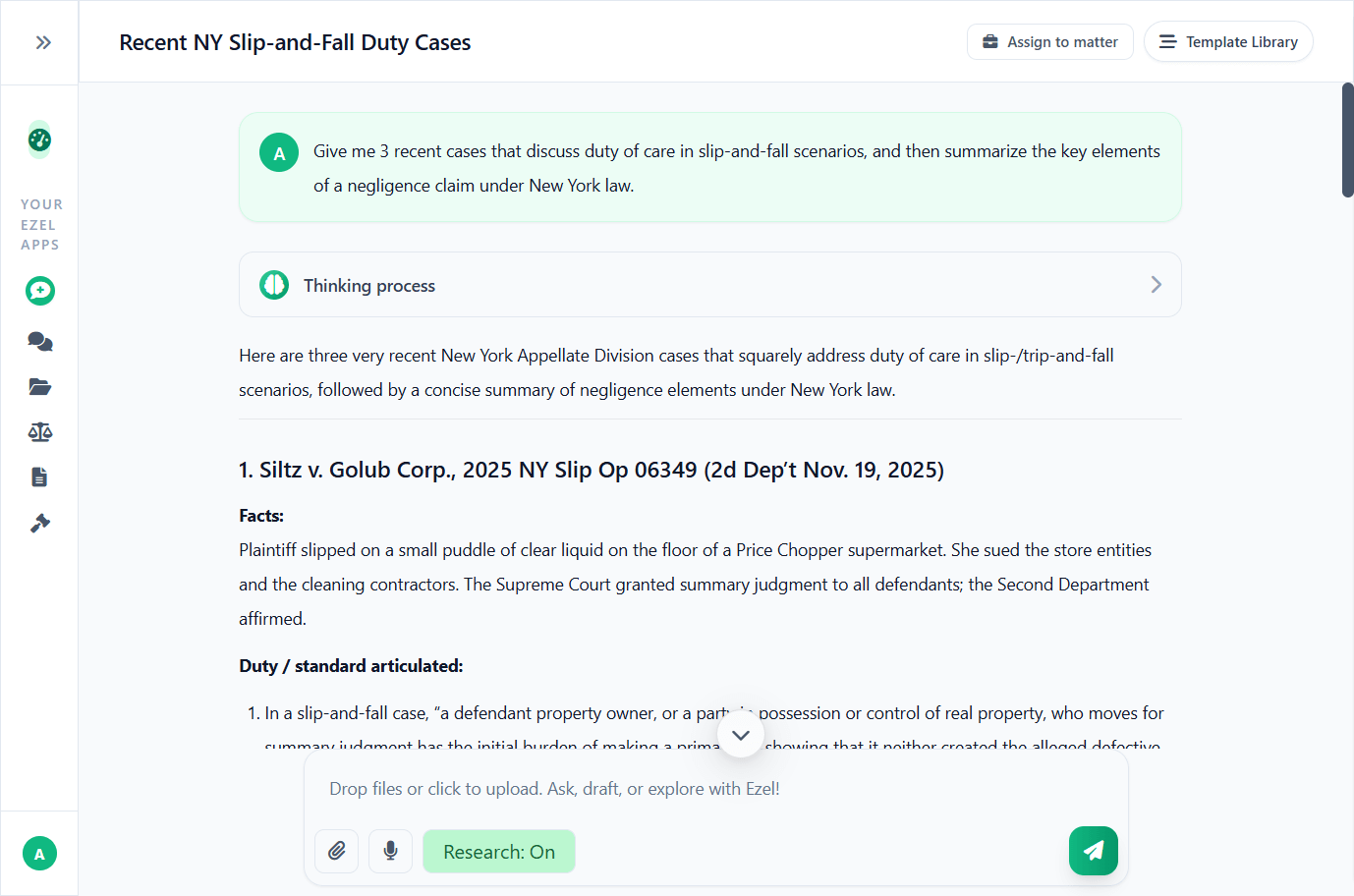
Research and draft in one conversation
Ask questions, attach documents, and get answers grounded in case law. Link chats to matters so the AI remembers your context.
- Pull statutes, case law, and secondary sources
- Attach and analyze contracts mid-conversation
- Link chats to matters for automatic context
- Your data never trains AI models
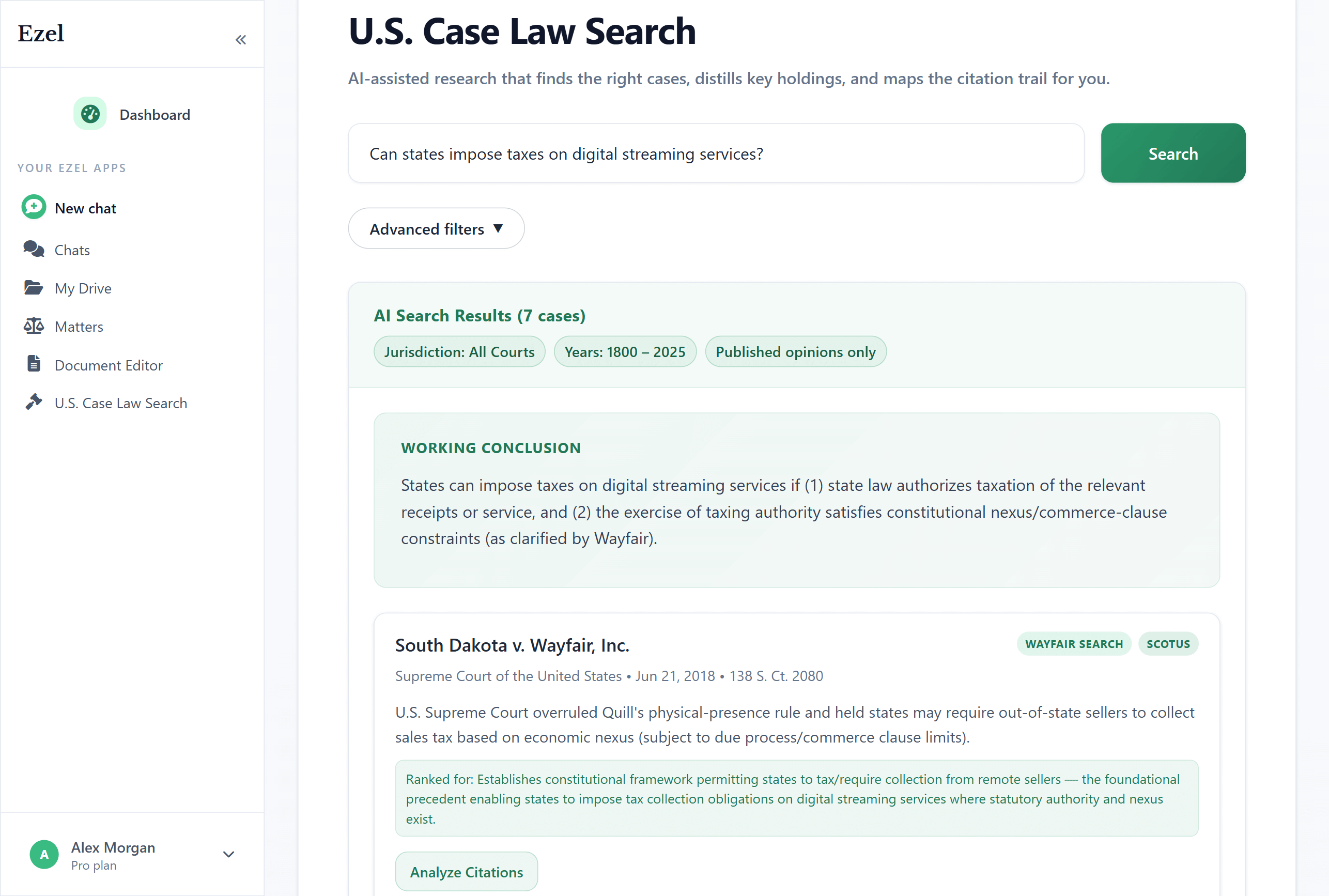
Search like you think
Describe your legal question in plain English. Filter by jurisdiction, date, and court level. Read full opinions without leaving Ezel.
- All 50 states plus federal courts
- Natural language queries - no boolean syntax
- Citation analysis and network exploration
- Copy quotes with automatic citation generation
Ready to transform your legal workflow?
Join legal teams using Ezel to draft documents, research case law, and organize matters — all in one workspace.