HIPAA PRIVACY POLICY
PROTECTED HEALTH INFORMATION PRIVACY POLICIES AND PROCEDURES
ORGANIZATION INFORMATION
Organization Name: [________________________________]
Address: [________________________________]
City, State, ZIP: [________________________________]
Phone: [________________________________]
Fax: [________________________________]
Website: [________________________________]
POLICY ADMINISTRATION
Policy Effective Date: [__/__/____]
Last Reviewed: [__/__/____]
Next Review Date: [__/__/____]
Version Number: [____]
Privacy Officer: [________________________________]
Privacy Officer Contact: [________________________________]
SECTION 1: PURPOSE AND SCOPE
1.1 Purpose
This Privacy Policy establishes the policies and procedures of [________________________________] ("Organization") for the use and disclosure of Protected Health Information ("PHI") in compliance with the Health Insurance Portability and Accountability Act of 1996 ("HIPAA") and its implementing regulations, the Health Information Technology for Economic and Clinical Health Act ("HITECH Act"), and applicable state privacy laws.
1.2 Scope
This policy applies to:
☐ All workforce members, including employees, volunteers, trainees, and other persons whose conduct is under the direct control of the Organization
☐ All PHI in any form (paper, electronic, or oral)
☐ All departments, locations, and affiliates of the Organization
☐ All business associates and their subcontractors
1.3 Policy Statement
The Organization is committed to protecting the privacy of PHI and will:
☐ Use and disclose PHI only as permitted or required by law
☐ Maintain appropriate administrative, technical, and physical safeguards
☐ Train all workforce members on privacy policies and procedures
☐ Respect the rights of individuals regarding their PHI
☐ Comply with all applicable federal and state privacy laws
SECTION 2: DEFINITIONS
Protected Health Information (PHI): Individually identifiable health information transmitted or maintained in any form or medium that relates to the past, present, or future physical or mental health condition of an individual; the provision of health care to an individual; or payment for health care.
Treatment: The provision, coordination, or management of health care and related services by one or more health care providers.
Payment: Activities undertaken to obtain or provide reimbursement for health care, including billing, claims management, and collection activities.
Health Care Operations: Administrative, financial, legal, and quality improvement activities of a covered entity.
Minimum Necessary: The principle that PHI used, disclosed, or requested should be limited to the minimum amount necessary to accomplish the intended purpose.
Designated Record Set: A group of records maintained by or for a covered entity that includes medical records, billing records, enrollment, payment, claims adjudication, and case management records.
SECTION 3: PERMITTED USES AND DISCLOSURES
3.1 Uses and Disclosures for Treatment, Payment, and Health Care Operations (TPO)
The Organization may use and disclose PHI without individual authorization for:
Treatment:
☐ Providing, coordinating, or managing health care services
☐ Consultations between health care providers
☐ Referrals to other providers
☐ Prescription management
Payment:
☐ Billing and collection activities
☐ Claims processing
☐ Eligibility and coverage determinations
☐ Medical necessity reviews
☐ Utilization review
Health Care Operations:
☐ Quality assessment and improvement
☐ Outcomes evaluation and development of clinical guidelines
☐ Protocol development
☐ Competency assurance activities
☐ Conducting training programs
☐ Accreditation, licensing, and credentialing
☐ Medical review, legal services, and auditing functions
☐ Business planning, development, and management
☐ Compliance programs
3.2 Uses and Disclosures Requiring Opportunity to Agree or Object
The Organization will provide individuals with the opportunity to agree or object to:
☐ Facility directories (name, location in facility, general condition, religious affiliation)
☐ Disclosures to family members, relatives, or close personal friends involved in care
☐ Disclosures for notification purposes (disaster relief)
3.3 Uses and Disclosures Without Authorization or Opportunity to Object
The Organization may use or disclose PHI without authorization in the following circumstances:
☐ As required by law
☐ For public health activities
☐ For reporting victims of abuse, neglect, or domestic violence
☐ For health oversight activities
☐ For judicial and administrative proceedings
☐ For law enforcement purposes (as permitted by law)
☐ For decedents (to coroners, medical examiners, funeral directors)
☐ For cadaveric organ, eye, or tissue donation
☐ For research (with IRB/Privacy Board approval and appropriate safeguards)
☐ To avert a serious threat to health or safety
☐ For specialized government functions (military, national security, protective services)
☐ For workers' compensation
3.4 Uses and Disclosures Requiring Authorization
The following uses and disclosures require a valid written authorization from the individual:
☐ Psychotherapy notes (with limited exceptions)
☐ Marketing communications (with limited exceptions)
☐ Sale of PHI
☐ Any other use or disclosure not permitted or required by the Privacy Rule
SECTION 4: MINIMUM NECESSARY STANDARD
4.1 Policy
The Organization shall make reasonable efforts to limit PHI to the minimum necessary to accomplish the intended purpose of the use, disclosure, or request.
4.2 Exceptions
The minimum necessary standard does not apply to:
☐ Disclosures to or requests by a health care provider for treatment
☐ Uses or disclosures made to the individual
☐ Uses or disclosures made pursuant to a valid authorization
☐ Disclosures made to the Secretary of HHS
☐ Uses or disclosures required by law
☐ Uses or disclosures required for HIPAA compliance
4.3 Implementation
For Internal Uses:
| Role/Position | Categories of PHI Accessible | Conditions of Access |
|---|---|---|
| [________________________________] | [________________________________] | [________________________________] |
| [________________________________] | [________________________________] | [________________________________] |
| [________________________________] | [________________________________] | [________________________________] |
For Routine Disclosures:
The Organization has established protocols for routine and recurring disclosures that limit PHI to the minimum necessary.
For Non-Routine Disclosures:
Non-routine disclosures require case-by-case review by the Privacy Officer or designee.
For Requests:
When requesting PHI from other covered entities, the Organization will limit requests to the minimum necessary.
SECTION 5: INDIVIDUAL RIGHTS
5.1 Right to Access
Individuals have the right to:
☐ Inspect and obtain a copy of their PHI in a Designated Record Set
☐ Request access in a specific form and format (if readily producible)
☐ Direct transmission of PHI to a third party
☐ Receive a response within 30 days (extendable by 30 days with written notice)
Fees:
The Organization may charge a reasonable, cost-based fee for copies, including:
- Labor for copying
- Supplies
- Postage (if applicable)
- Preparation of an explanation or summary (if agreed to by individual)
Denial of Access:
Access may be denied in limited circumstances as provided by 45 CFR § 164.524(a)(2) and (a)(3).
5.2 Right to Amend
Individuals have the right to:
☐ Request amendment of PHI in a Designated Record Set
☐ Receive a response within 60 days (extendable by 30 days with written notice)
☐ Submit a statement of disagreement if amendment is denied
5.3 Right to an Accounting of Disclosures
Individuals have the right to:
☐ Receive an accounting of disclosures of PHI made in the six years prior to the request
☐ Request a shorter time period
☐ Receive a response within 60 days (extendable by 30 days with written notice)
Exceptions:
The accounting does not include disclosures:
- For treatment, payment, and health care operations
- To the individual
- Incident to a permitted use or disclosure
- Pursuant to an authorization
- For facility directories or to persons involved in care
- For national security or intelligence purposes
- To correctional institutions or law enforcement officials
5.4 Right to Request Restrictions
Individuals have the right to:
☐ Request restrictions on uses and disclosures for treatment, payment, or health care operations
☐ Request restrictions on disclosures to family members or others involved in care
☐ Have restrictions honored for disclosures to health plans for services paid out-of-pocket in full
Note: The Organization is not required to agree to restriction requests (except for the mandatory restriction regarding services paid out-of-pocket in full).
5.5 Right to Request Confidential Communications
Individuals have the right to:
☐ Request receipt of communications by alternative means or at alternative locations
☐ Have reasonable requests accommodated without requiring an explanation
5.6 Right to Notice of Privacy Practices
Individuals have the right to:
☐ Receive the Organization's Notice of Privacy Practices
☐ Receive a revised notice if there are material changes
5.7 Right to Complain
Individuals have the right to:
☐ Complain to the Organization about privacy practices
☐ Complain to the Secretary of HHS
☐ Not be retaliated against for filing a complaint
SECTION 6: ADMINISTRATIVE REQUIREMENTS
6.1 Privacy Officer Designation
The Organization designates the following individual as Privacy Officer:
Name: [________________________________]
Title: [________________________________]
Address: [________________________________]
Phone: [________________________________]
Email: [________________________________]
Responsibilities:
☐ Development and implementation of privacy policies and procedures
☐ Oversight of privacy compliance program
☐ Workforce training on privacy
☐ Receiving and responding to complaints
☐ Conducting privacy investigations
☐ Reporting to organizational leadership
6.2 Contact Person for Complaints
Name: [________________________________]
Title: [________________________________]
Phone: [________________________________]
Email: [________________________________]
6.3 Workforce Training
The Organization shall:
☐ Train all workforce members on privacy policies and procedures
☐ Provide training to new workforce members within [____] days of hire
☐ Provide training when policies or procedures materially change
☐ Document all training provided
Training Topics:
☐ Overview of HIPAA Privacy Rule
☐ Organization's privacy policies and procedures
☐ Permitted uses and disclosures
☐ Individual rights
☐ Minimum necessary standard
☐ Safeguarding PHI
☐ Reporting violations
☐ Sanctions for non-compliance
6.4 Safeguards
The Organization shall maintain appropriate administrative, technical, and physical safeguards to protect PHI, including:
Administrative Safeguards:
☐ Access management policies
☐ Workforce training
☐ Sanctions policy
☐ Information system activity review
Physical Safeguards:
☐ Facility access controls
☐ Workstation security
☐ Device and media controls
Technical Safeguards (for ePHI):
☐ Access controls
☐ Audit controls
☐ Integrity controls
☐ Transmission security
6.5 Complaints Process
Filing a Complaint:
Individuals may file complaints regarding the Organization's privacy practices by:
☐ Contacting the Privacy Officer or designated contact person
☐ Submitting a written complaint to: [________________________________]
☐ Filing a complaint with the Secretary of HHS
Complaint Handling:
☐ All complaints will be documented
☐ Complaints will be investigated promptly
☐ Findings and actions taken will be documented
☐ No retaliation against individuals filing complaints
6.6 Sanctions
The Organization shall apply appropriate sanctions against workforce members who fail to comply with privacy policies and procedures.
Sanction Levels:
| Violation Level | Examples | Potential Sanctions |
|---|---|---|
| Minor | Unintentional, first-time violations | Verbal warning, retraining |
| Moderate | Repeated minor violations, negligent conduct | Written warning, suspension |
| Severe | Intentional violations, unauthorized access | Termination, referral to law enforcement |
6.7 Mitigation
The Organization shall mitigate, to the extent practicable, any harmful effect of a use or disclosure of PHI in violation of its policies or the Privacy Rule.
6.8 Non-Retaliation and Non-Intimidation
The Organization shall not:
☐ Retaliate against any individual for exercising HIPAA rights
☐ Retaliate against any individual for filing a complaint
☐ Retaliate against any workforce member for reporting a privacy violation
☐ Intimidate any person to discourage the exercise of HIPAA rights
6.9 Documentation and Record Retention
The Organization shall:
☐ Maintain written privacy policies and procedures
☐ Document required actions, activities, and designations
☐ Retain documentation for six (6) years from the date of creation or the date last in effect, whichever is later
SECTION 7: BUSINESS ASSOCIATE MANAGEMENT
7.1 Business Associate Agreements
The Organization shall:
☐ Identify all business associates that create, receive, maintain, or transmit PHI
☐ Enter into written Business Associate Agreements before disclosing PHI
☐ Include all required provisions in Business Associate Agreements
☐ Monitor business associates for compliance
7.2 Business Associate Non-Compliance
If the Organization learns of a pattern of activity or practice of a business associate that constitutes a material breach or violation of the business associate's obligations, the Organization shall:
☐ Take reasonable steps to cure the breach or end the violation
☐ If such steps are unsuccessful, terminate the agreement if feasible
☐ If termination is not feasible, report the problem to the Secretary of HHS
SECTION 8: POLICY REVIEW AND UPDATE
This policy shall be reviewed:
☐ Annually
☐ When there are changes to HIPAA regulations
☐ When there are changes to organizational operations
☐ Following any privacy incident
APPROVAL AND SIGNATURES
Prepared by:
Name: [________________________________]
Title: [________________________________]
Date: [__/__/____]
Signature: [________________________________]
Reviewed by:
Name: [________________________________]
Title: [________________________________]
Date: [__/__/____]
Signature: [________________________________]
Approved by:
Name: [________________________________]
Title: [________________________________]
Date: [__/__/____]
Signature: [________________________________]
REVISION HISTORY
| Version | Date | Description of Changes | Author |
|---|---|---|---|
| [____] | [__/__/____] | [________________________________] | [________________________________] |
| [____] | [__/__/____] | [________________________________] | [________________________________] |
| [____] | [__/__/____] | [________________________________] | [________________________________] |
SOURCES AND REFERENCES
Do more with Ezel
This free template is just the beginning. See how Ezel helps legal teams draft, research, and collaborate faster.
AI that drafts while you watch
Tell the AI what you need and watch your document transform in real-time. No more copy-pasting between tools or manually formatting changes.
- Natural language commands: "Add a force majeure clause"
- Context-aware suggestions based on document type
- Real-time streaming shows edits as they happen
- Milestone tracking and version comparison
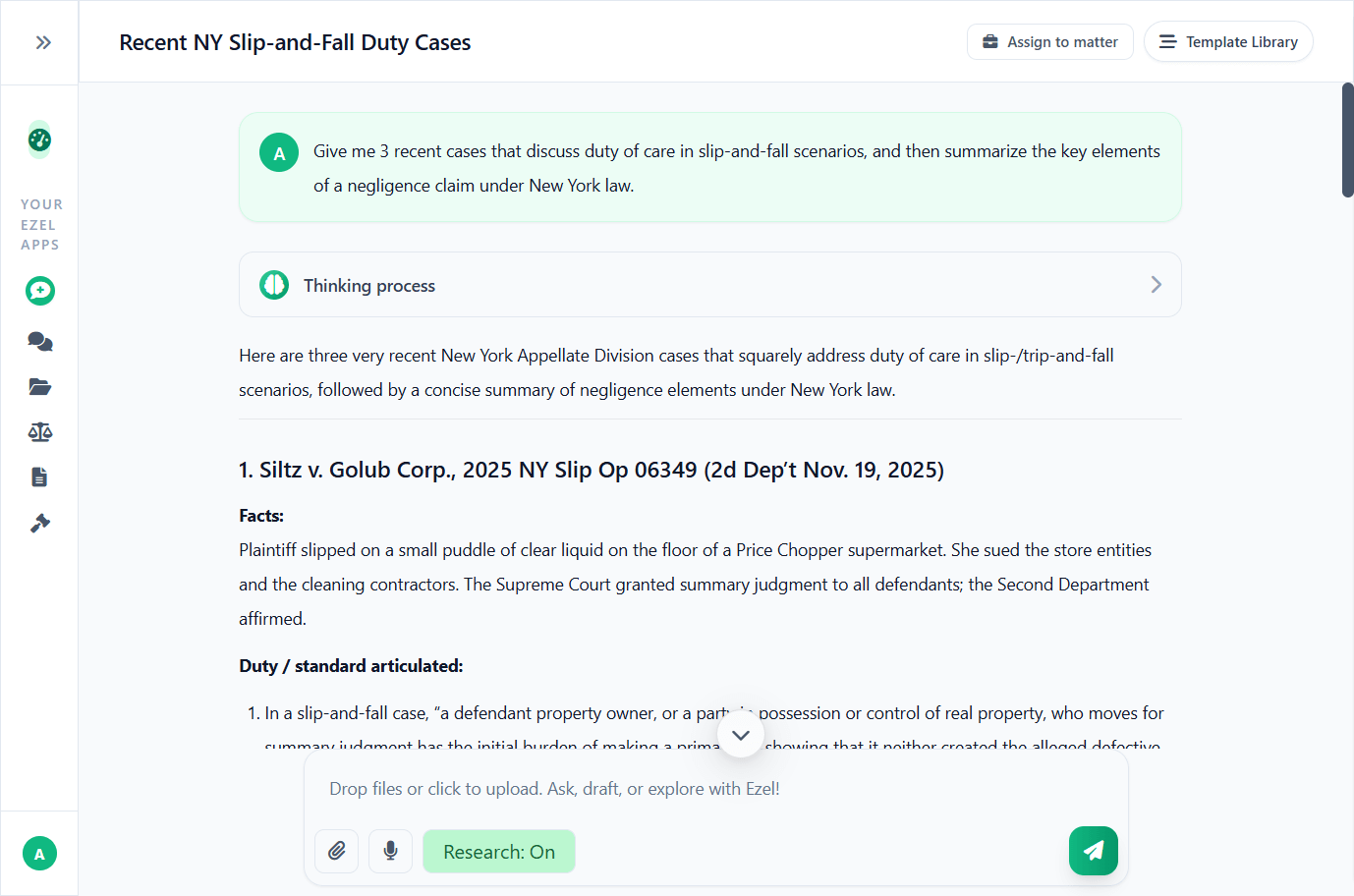
Research and draft in one conversation
Ask questions, attach documents, and get answers grounded in case law. Link chats to matters so the AI remembers your context.
- Pull statutes, case law, and secondary sources
- Attach and analyze contracts mid-conversation
- Link chats to matters for automatic context
- Your data never trains AI models
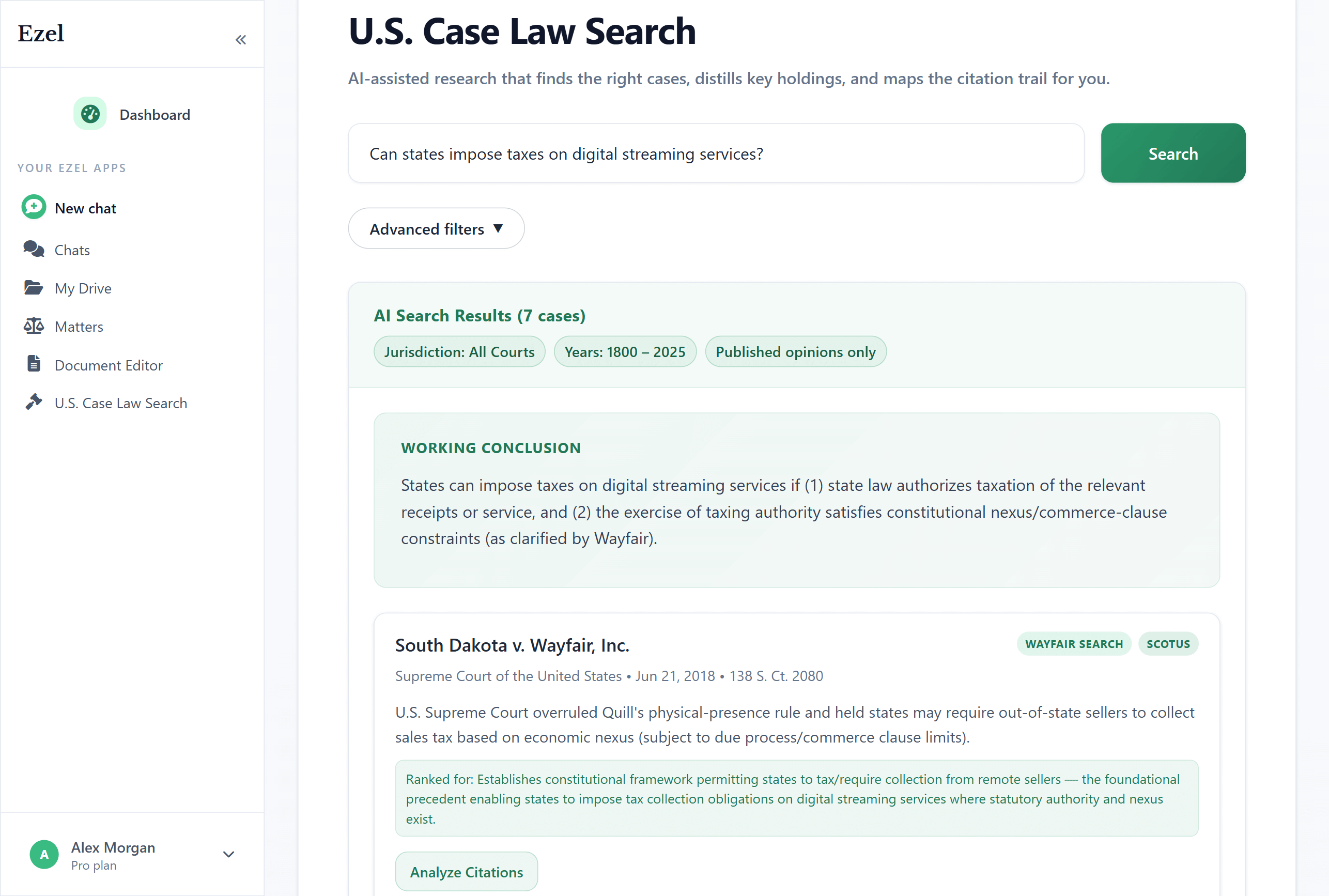
Search like you think
Describe your legal question in plain English. Filter by jurisdiction, date, and court level. Read full opinions without leaving Ezel.
- All 50 states plus federal courts
- Natural language queries - no boolean syntax
- Citation analysis and network exploration
- Copy quotes with automatic citation generation
Ready to transform your legal workflow?
Join legal teams using Ezel to draft documents, research case law, and organize matters — all in one workspace.