NEW HAMPSHIRE RIGHT-TO-KNOW LAW PUBLIC RECORDS REQUEST
(RSA Chapter 91-A)
TABLE OF CONTENTS
- Overview of New Hampshire's Right-to-Know Law
- Public Records Request Letter Template
- Records Description Guidance
- Fee Provisions
- Response Timeline
- Exemptions Overview
- Appeal Procedures
- Appeal Letter Template
- Enforcement Mechanisms
- Follow-Up Letter Template
- Fee Waiver Request Template
- Documentation Checklist
- Key Differences from Federal FOIA
- State-Specific Notes
- Sources and References
1. OVERVIEW OF NEW HAMPSHIRE'S RIGHT-TO-KNOW LAW {#1-overview}
1.1 Name and Citation
New Hampshire's public records law is officially known as the Right-to-Know Law, codified at RSA Chapter 91-A (Access to Governmental Records and Meetings). The law was originally enacted in 1967 and has been amended multiple times, most recently with the creation of the Office of the Right-to-Know Ombudsman in 2022.
1.2 Purpose and Policy
The Right-to-Know Law is founded on the principle that the activities of government are the people's business and that openness in government is essential to a free society. RSA 91-A:1 states that "openness in the conduct of public business is essential to a democratic society" and that the chapter shall be "liberally construed to promote transparency in government."
1.3 Key Features
- Broad Applicability: Applies to all levels of state and local government, including municipalities, school districts, and state agencies
- Liberal Construction: Courts construe the law broadly in favor of disclosure and narrowly construe exemptions
- No Purpose Requirement: Requesters need not provide a reason for seeking records
- Oral or Written Requests: The law does not mandate written requests, though written requests are strongly recommended
- Five Business Day Response: Agencies must respond within five (5) business days of receiving a request
- Right-to-Know Ombudsman: A quasi-judicial state office created in 2022 to resolve complaints as an alternative to Superior Court litigation
- No Residency Requirement: Any person may request records; requests are not limited to New Hampshire residents
- No Fee for Inspection: Inspection of records in person is free; fees may be charged only for copies
1.4 Who May Request Records
Any person — individual, corporation, partnership, association, or other legal entity — may make a request under RSA 91-A. There is no citizenship or residency requirement and no requirement to state a purpose for the request.
1.5 Records Covered
The Right-to-Know Law applies to all "governmental records" as defined in RSA 91-A:1-a, III, which includes any information created, accepted, or obtained by, or on behalf of, any public body, or a quorum or majority thereof, or any public agency in furtherance of its official function. This includes records in any format — paper, electronic, audio, video, or digital.
1.6 Agencies Covered
The law covers all public bodies and public agencies, including:
- State executive branch agencies and departments
- The Governor's office
- The Legislature (with some limitations)
- Municipal and county governments
- School boards and school districts
- Planning boards, zoning boards, and other local boards
- Any entity created by law that expends public funds
2. PUBLIC RECORDS REQUEST LETTER TEMPLATE {#2-request-letter}
[Right-to-Know Request Under RSA Chapter 91-A]
Date: [__/__/____]
TO:
[________________________________]
(Name of Records Custodian or Designated Official)
[________________________________]
(Name of Public Body or Agency)
[________________________________]
(Street Address)
[________________________________]
(City, State, ZIP Code)
Email: [________________________________]
FROM:
[________________________________]
(Requester Full Legal Name)
[________________________________]
(Organization, if applicable)
[________________________________]
(Street Address)
[________________________________]
(City, State, ZIP Code)
Telephone: [________________________________]
Email: [________________________________]
RE: Right-to-Know Request Under RSA Chapter 91-A
Dear Records Custodian:
Pursuant to New Hampshire's Right-to-Know Law, RSA Chapter 91-A, I am requesting access to and/or copies of the following governmental records:
Description of Records Requested
[________________________________]
[________________________________]
[________________________________]
[________________________________]
[________________________________]
Scope and Time Period
This request covers records created, received, or maintained during the period from [__/__/____] to [__/__/____], inclusive.
Format of Records Requested
I request that responsive records be provided in the following format:
☐ Paper copies
☐ Electronic copies (PDF format preferred)
☐ Electronic copies via email to: [________________________________]
☐ Electronic copies on portable media (USB drive, CD/DVD)
☐ Inspection of originals at a mutually convenient time
If the records exist in electronic format, I request that they be provided electronically, as this will reduce both the cost and the time needed to fulfill the request.
Fee Provisions
Pursuant to RSA 91-A:4, IV, I understand that no fee may be charged for inspection of records. If copies are requested, I understand that the agency may charge the actual cost of providing copies.
☐ I am willing to pay reasonable copying costs up to $[____].
☐ Please notify me before incurring any costs that would exceed $[____].
☐ I request a fee waiver as described in the attached Fee Waiver Request (see Section 11).
Response Deadline
Pursuant to RSA 91-A:4, IV, I respectfully request that you respond to this request within five (5) business days of receipt, which would be no later than [__/__/____]. If the records are immediately available, I request that they be provided promptly.
If you are unable to fulfill this request within five business days, please provide a written explanation of the time reasonably necessary to comply, as required by RSA 91-A:4, IV.
Partial Disclosure
If any portion of the requested records is exempt from disclosure under RSA 91-A:5, I request that the exempt portions be redacted and that the non-exempt portions be provided, along with a written statement identifying which specific exemption applies to each redacted portion.
Legal Authority
I call your attention to RSA 91-A:4, I, which provides that every citizen during the regular or business hours of all public bodies or agencies has the right to inspect all governmental records in the possession, custody, or control of such public bodies or agencies. I further note that RSA 91-A is to be broadly construed in favor of disclosure.
Contact Information
If you have questions about this request or need any clarification, please contact me at the telephone number or email address listed above. I am happy to discuss ways to narrow or clarify this request to facilitate a timely response.
Thank you for your prompt attention to this matter.
Respectfully submitted,
[________________________________]
(Signature)
[________________________________]
(Printed Name)
Date: [__/__/____]
3. RECORDS DESCRIPTION GUIDANCE {#3-records-description}
3.1 Tips for Describing Records
An effective records request should be specific enough that the agency can identify and locate the responsive documents. Consider including:
- Subject Matter: Identify the topic, project, program, or issue
- Date Range: Specify start and end dates for the relevant time period
- Persons or Entities Involved: Name specific individuals, companies, or organizations
- Department or Office: Identify the specific office or division likely to hold the records
- Record Type: Specify whether you seek emails, reports, contracts, meeting minutes, correspondence, etc.
- File or Reference Numbers: Include any known case numbers, contract numbers, or other identifiers
3.2 Sample Records Descriptions
Government Contracts and Spending:
"All contracts, purchase orders, invoices, and payment records between [Agency Name] and [Vendor Name] from January 1, 20[____] through December 31, 20[____], including any amendments, change orders, and associated correspondence."
Personnel and Employment:
"All job postings, applications received, interview notes, and selection criteria for the position of [Job Title] in [Department Name] posted on or about [Date], excluding any information exempt under RSA 91-A:5, IV."
Meeting Records:
"All minutes, agendas, notices, recordings, and supporting materials for meetings of the [Board/Commission Name] held between [Start Date] and [End Date], including any non-public session minutes that have been subsequently released."
Land Use and Development:
"All applications, permits, site plans, correspondence, staff reports, and decision documents related to the proposed development at [Property Address/Tax Map/Lot Number] submitted to the [Planning Board/Zoning Board] during [Time Period]."
Law Enforcement:
"All incident reports, arrest records, booking photographs, and dispatch logs related to incident number [Case Number] occurring on or about [Date] at [Location], excluding information exempt under RSA 91-A:5, IV."
Environmental and Health:
"All inspection reports, violation notices, compliance orders, and correspondence related to [Facility Name/Address] maintained by [Agency Name] from [Start Date] to [End Date]."
Email Communications:
"All emails sent or received by [Official Name/Title] containing the terms '[Search Term 1]' or '[Search Term 2]' during the period from [Start Date] to [End Date]."
Financial Records:
"The complete annual budget, expenditure reports, and audit reports for [Agency/Municipality Name] for fiscal years [Year] through [Year]."
4. FEE PROVISIONS {#4-fee-provisions}
4.1 General Fee Rules
Under RSA 91-A:4, IV, the following fee rules apply:
- Inspection: There is no fee for inspecting public records in person
- Copies: Agencies may charge the actual cost of providing copies, which includes the cost of paper, toner, and similar materials
- No Search Fees: Agencies may not charge for the time spent searching for or retrieving records
- No Labor Fees: Agencies may not charge for staff time spent reviewing or redacting records
- Electronic Records: When records exist in electronic format, agencies should provide them electronically at minimal or no cost
- Advance Payment: Agencies may require advance payment before producing copies if the estimated cost exceeds a reasonable threshold
4.2 Reasonable Costs
The law limits fees to the "actual cost" of providing copies. Agencies may not use fees as a mechanism to discourage requests. Typical per-page copy charges range from $0.10 to $0.25 for standard letter-size black-and-white copies.
4.3 Electronic Records
When records are maintained electronically, agencies should provide electronic copies whenever possible. The cost of providing electronic copies (e.g., emailing PDF files) is generally minimal or zero and should be charged accordingly.
4.4 Fee Disputes
If you believe an agency is charging unreasonable fees, you may:
- Request an itemized breakdown of the fee
- Negotiate the fee with the records custodian
- Offer to inspect records in person rather than obtaining copies
- File a complaint with the Right-to-Know Ombudsman (RSA 91-A:7-a)
- File a petition in Superior Court (RSA 91-A:7)
5. RESPONSE TIMELINE {#5-response-timeline}
5.1 Statutory Deadline
Under RSA 91-A:4, IV, the agency must respond within five (5) business days of receiving a request. The response must take one of the following forms:
| Response Type | Description |
|---|---|
| Immediate Production | If records are immediately available, they must be produced promptly |
| Production Within 5 Days | Records produced within the 5-business-day period |
| Acknowledgment + Time Estimate | Written acknowledgment explaining the time reasonably necessary to comply |
| Denial | Written denial stating the specific exemption(s) relied upon |
| Partial Denial | Production of non-exempt records with written explanation of redactions |
5.2 Extensions
The statute does not provide for formal extensions beyond the initial five business days. However, if an agency cannot comply within five business days, it must provide a written statement of the time reasonably necessary to comply. Courts have found that what constitutes a reasonable time depends on the volume of records, the complexity of the request, and the agency's resources.
5.3 Constructive Denial
If an agency fails to respond within five business days and does not provide a written time estimate, the failure to respond may be treated as a constructive denial, which triggers the right to file a complaint with the Ombudsman or a petition in Superior Court.
5.4 Calculating Business Days
Business days exclude Saturdays, Sundays, and New Hampshire state holidays. The five-day period begins on the first business day after the request is received.
5.5 Best Practices for Requesters
- Send requests by email with a read receipt or by certified mail to establish the date of receipt
- Note the date of receipt and calculate the five-business-day deadline
- Follow up in writing if no response is received by the deadline
- Document all communications with the agency
6. EXEMPTIONS OVERVIEW {#6-exemptions}
6.1 General Principles
Exemptions under RSA 91-A:5 are to be narrowly construed by courts. The burden of proving that an exemption applies rests on the governmental body, not the requester. If an agency invokes an exemption, it must identify the specific statutory provision and explain how it applies to the withheld records.
6.2 Statutory Exemptions (RSA 91-A:5)
RSA 91-A:5, I — Grand and Petit Jury Records
Records of grand juries and petit juries are exempt from disclosure.
RSA 91-A:5, I-a — Master Jury List
The master jury list as defined in RSA 500-A:1, IV is exempt.
RSA 91-A:5, II — Parole and Pardon Board Records
Records of the adult parole board and the pardon process are exempt.
RSA 91-A:5, III — Student Records
Personal school records of students, including the name of the parent or legal guardian and any specific reasons disclosed to school officials for objection to assessment under RSA 193-C:6.
RSA 91-A:5, IV — Multi-Factor Exemption (Primary Exemption)
This is the most commonly invoked exemption and covers multiple categories:
- (a) Internal Personnel Practices: Records pertaining to internal personnel practices of a public body, including disciplinary investigations and internal reviews
- (b) Confidential, Commercial, or Financial Information: Confidential commercial or financial information given to a government body on a confidential basis
- (c) Test Questions and Examination Data: Test questions, scoring keys, and other examination data used to administer licensing examinations, employment examinations, or academic examinations
- (d) Personnel Files: Personnel files whose disclosure would constitute an invasion of privacy
- (e) Medical Records: Medical files and records whose disclosure would constitute an invasion of privacy
- (f) Welfare Records: Welfare records whose disclosure would constitute an invasion of privacy
- (g) Library User Records: Library user records, including borrowing history and patron information
- (h) Videotape Sale or Rental Records: Records of videotape sales or rentals
- (i) Other Invasion of Privacy: Any other files whose disclosure would constitute an invasion of privacy
RSA 91-A:5, V — Unique Pupil Identification
Unique pupil identification information collected in accordance with RSA 193-E:5.
RSA 91-A:5, VIII — Personal Notes
Notes or other materials made for personal use that do not have an official purpose, including notes and materials made prior to, during, or after a governmental proceeding.
RSA 91-A:5, IX — Preliminary Drafts
Preliminary drafts, notes, and memoranda and other documents not in their final form and not disclosed, circulated, or available to a quorum or majority of the members of a public body.
RSA 91-A:5, X — Body-Worn Camera Recordings
Video and audio recordings made by a law enforcement officer using a body-worn camera pursuant to RSA 105-D, except recordings depicting: (a) use of force by an officer; (b) an encounter about which a complaint has been filed; or (c) an encounter that led to a citation or arrest.
RSA 91-A:5, XI — Youth Development Center Records
Records of the Youth Development Center claims administration and the YDC settlement fund pursuant to RSA 21-M:11-a, with exceptions for settlement agreements and records whose release would not violate the law or invade a claimant's privacy.
6.3 Other Confidentiality Provisions
In addition to RSA 91-A:5, numerous other New Hampshire statutes designate specific categories of records as confidential, including but not limited to:
- Tax return information (RSA 21-J:14)
- Adoption records (RSA 170-B:19)
- Abuse and neglect investigation records (RSA 169-C:25)
- Communicable disease records (RSA 141-C:10)
- Domestic violence victim information (RSA 173-B:9)
- Voter checklist challenge information
6.4 Privacy Balancing Test
For exemptions based on invasion of privacy under RSA 91-A:5, IV, New Hampshire courts apply a three-part balancing test:
- Whether there is a privacy interest at stake that would be invaded by disclosure
- Whether there is a public interest in disclosure
- Whether the public interest in disclosure outweighs the privacy interest
The burden is on the government to demonstrate that the privacy interest outweighs the public interest.
7. APPEAL PROCEDURES {#7-appeal-procedures}
7.1 Two Avenues for Relief
New Hampshire provides two avenues for challenging a denial of records:
Option A: Right-to-Know Ombudsman (RSA 91-A:7-a)
- Created by Laws 2022, Ch. 250
- Free, faster alternative to court litigation
- Quasi-judicial process with binding orders
- No attorney required
Option B: Superior Court Petition (RSA 91-A:7)
- Traditional judicial remedy
- Petition filed in the Superior Court of the county where the records are located
- Attorney recommended but not required
- Court costs and potential attorney's fees
7.2 Right-to-Know Ombudsman Process
Filing a Complaint:
- Any person may file a written complaint with the Office of the Right-to-Know Ombudsman
- The complaint must describe the alleged violation of RSA 91-A
- There is no filing fee
- The complaint should be filed promptly after the denial or failure to respond
Investigation and Hearing:
- The Ombudsman investigates the complaint
- Both parties have the opportunity to present evidence and arguments
- The Ombudsman may hold hearings and issue subpoenas
- The process is designed to be faster and less expensive than court
Ombudsman's Authority:
- Order disclosure of records
- Order access to meetings
- Award attorney's fees to the complainant if the public body knew or should have known its conduct violated RSA 91-A
- Impose civil penalties of up to $2,000
- Order remedial training for the public body
- Order the complainant to pay attorney's fees if the complaint was frivolous or filed in bad faith
Appeal of Ombudsman's Decision:
- Either party may appeal the Ombudsman's order to the Superior Court under RSA 91-A:7-a
- The appeal must be filed within 30 days of the Ombudsman's order
7.3 Superior Court Petition (RSA 91-A:7)
Filing Requirements:
- File a petition in the Superior Court of the county where the records are located
- The petition should describe the request, the agency's response, and the basis for the claim
- Filing fees apply as with any Superior Court civil action
Court Review:
- The court reviews the matter de novo
- The court may review the records in camera (privately)
- The burden is on the agency to prove that an exemption applies
Timeline:
- RSA 91-A:7 requires the court to give priority to Right-to-Know cases
- The court should hold a hearing promptly after the petition is filed
Remedies:
- Order production of records
- Award attorney's fees if the agency knew or should have known its conduct violated RSA 91-A
- Award costs
- Impose civil penalties
7.4 Attorney's Fees
Under RSA 91-A:8, the court (or Ombudsman) may award reasonable attorney's fees to the prevailing requester if:
- The public body or agency knew or should have known that its conduct violated RSA 91-A
- The denial was not supported by a reasonable basis in law
Attorney's fees may also be awarded against a complainant if the court or Ombudsman finds the complaint was frivolous or brought in bad faith.
7.5 Statute of Limitations
There is no express statute of limitations for filing a Right-to-Know complaint or petition, but claims should be brought promptly. Unreasonable delay may be considered by the court.
8. APPEAL LETTER TEMPLATE {#8-appeal-letter}
8.1 Appeal to the Right-to-Know Ombudsman
Date: [__/__/____]
TO:
Office of the Right-to-Know Ombudsman
State of New Hampshire
[________________________________]
(Current Mailing Address)
[________________________________]
(City, NH ZIP Code)
FROM:
[________________________________]
(Complainant Full Legal Name)
[________________________________]
(Street Address)
[________________________________]
(City, State, ZIP Code)
Telephone: [________________________________]
Email: [________________________________]
RE: Complaint Under RSA 91-A:7-a — Denial of Right-to-Know Request
Dear Right-to-Know Ombudsman:
I hereby file this complaint pursuant to RSA 91-A:7-a regarding the denial of my Right-to-Know request submitted to [________________________________] (Name of Public Body or Agency) on [__/__/____].
Background
- On [__/__/____], I submitted a written Right-to-Know request to [________________________________] (Name of Public Body or Agency) seeking the following records:
[________________________________]
[________________________________]
[________________________________]
- On [__/__/____], the agency responded by:
☐ Denying my request in whole, citing the following exemption(s): [________________________________]
☐ Denying my request in part, redacting portions and citing: [________________________________]
☐ Failing to respond within the five (5) business day period required by RSA 91-A:4, IV
☐ Charging excessive or unreasonable fees of $[____]
☐ Other: [________________________________]
- A copy of my original request is attached as Exhibit A.
- A copy of the agency's response (if any) is attached as Exhibit B.
Basis for Complaint
I respectfully submit that the agency's response violates RSA 91-A for the following reasons:
[________________________________]
[________________________________]
[________________________________]
Relief Requested
I respectfully request that the Ombudsman:
☐ Order the agency to disclose the requested records
☐ Order the agency to disclose non-exempt portions with appropriate redactions
☐ Award reasonable attorney's fees and costs
☐ Impose civil penalties pursuant to RSA 91-A:8
☐ Order remedial training for the agency
☐ Other: [________________________________]
Attachments
☐ Exhibit A: Copy of original Right-to-Know request
☐ Exhibit B: Copy of agency's response (if any)
☐ Exhibit C: Copies of all follow-up correspondence
☐ Exhibit D: [________________________________]
Thank you for your attention to this matter.
Respectfully submitted,
[________________________________]
(Signature)
[________________________________]
(Printed Name)
Date: [__/__/____]
8.2 Petition to Superior Court
9. ENFORCEMENT MECHANISMS {#9-enforcement}
9.1 Civil Penalties
Under RSA 91-A:8, the court or the Right-to-Know Ombudsman may impose the following sanctions:
| Penalty | Amount/Description |
|---|---|
| Civil Penalty | Up to $2,000 per violation |
| Attorney's Fees | Reasonable attorney's fees to the prevailing requester if the agency knew or should have known its conduct violated the law |
| Costs | Court costs and expenses |
| Remedial Training | Order the public body to undergo Right-to-Know training |
| Injunctive Relief | Order production of records and/or future compliance |
9.2 Criminal Penalties (RSA 91-A:9)
Any person who knowingly destroys governmental records for the purpose of preventing them from being disclosed under RSA 91-A is guilty of a misdemeanor. This applies to the willful destruction, alteration, mutilation, or concealment of records.
9.3 Individual Liability
Public officials who willfully and knowingly violate RSA 91-A may be personally liable for civil penalties and attorney's fees.
9.4 Pattern of Violations
Courts may consider a pattern of violations when determining the appropriate penalty, including whether the agency has been previously found to have violated the Right-to-Know Law.
10. FOLLOW-UP LETTER TEMPLATE {#10-follow-up-letter}
Date: [__/__/____]
TO:
[________________________________]
(Name of Records Custodian)
[________________________________]
(Name of Public Body or Agency)
[________________________________]
(Street Address)
[________________________________]
(City, State, ZIP Code)
Email: [________________________________]
FROM:
[________________________________]
(Requester Full Legal Name)
[________________________________]
(Street Address)
[________________________________]
(City, State, ZIP Code)
Telephone: [________________________________]
Email: [________________________________]
RE: Follow-Up — Right-to-Know Request Dated [__/__/____]
Dear Records Custodian:
On [__/__/____], I submitted a Right-to-Know request under RSA Chapter 91-A to your office seeking the following records:
[________________________________]
[________________________________]
[________________________________]
As of the date of this letter, more than five (5) business days have elapsed since my request was received, and I have not received:
☐ The requested records
☐ A written denial with a specific exemption cited
☐ A written acknowledgment with a time estimate for compliance
Pursuant to RSA 91-A:4, IV, a public body or agency must respond to a Right-to-Know request within five (5) business days. The failure to respond within this timeframe may constitute a constructive denial of my request.
I respectfully request that you:
- Provide the requested records immediately, or
- Provide a written response explaining the reason for any denial or delay within three (3) business days of this letter.
Please be advised that if I do not receive a satisfactory response, I intend to file a complaint with the Office of the Right-to-Know Ombudsman pursuant to RSA 91-A:7-a and/or a petition in Superior Court pursuant to RSA 91-A:7.
Thank you for your prompt attention to this matter.
Respectfully submitted,
[________________________________]
(Signature)
[________________________________]
(Printed Name)
Date: [__/__/____]
11. FEE WAIVER REQUEST TEMPLATE {#11-fee-waiver}
Date: [__/__/____]
TO:
[________________________________]
(Name of Records Custodian)
[________________________________]
(Name of Public Body or Agency)
[________________________________]
(Street Address)
[________________________________]
(City, State, ZIP Code)
FROM:
[________________________________]
(Requester Full Legal Name)
[________________________________]
(Street Address)
[________________________________]
(City, State, ZIP Code)
RE: Request for Fee Waiver — Right-to-Know Request Dated [__/__/____]
Dear Records Custodian:
In connection with my Right-to-Know request dated [__/__/____], I respectfully request a waiver or reduction of any copying fees for the following reasons:
Basis for Fee Waiver Request
☐ Public Interest: The records requested will be used to inform the public about government operations and will contribute significantly to public understanding of [________________________________].
☐ Non-Commercial Use: The records are not being sought for commercial purposes. I am requesting the records for:
☐ Personal research
☐ Journalistic purposes
☐ Academic research
☐ Civic or community purposes
☐ Other non-commercial purpose: [________________________________]
☐ Indigence/Financial Hardship: I am unable to pay the requested fees due to financial hardship.
☐ Government Accountability: The records concern potential government misconduct, waste, or abuse, and disclosure will serve the public interest in government accountability.
☐ Small Volume: The volume of records requested is small and the cost of processing the fee would exceed the fee itself.
Additional Information
[________________________________]
[________________________________]
[________________________________]
Thank you for your consideration.
Respectfully submitted,
[________________________________]
(Signature)
[________________________________]
(Printed Name)
Date: [__/__/____]
12. DOCUMENTATION CHECKLIST {#12-checklist}
12.1 Before Submitting a Request
☐ Identified the specific agency or public body that holds the records
☐ Determined the name and contact information of the records custodian
☐ Drafted a clear and specific description of the records sought
☐ Specified the preferred format for receiving records (paper, electronic, inspection)
☐ Determined whether a fee waiver request is appropriate
☐ Set a maximum fee amount you are willing to pay
☐ Made a copy of the request for your files
☐ Noted the date of submission and calculated the five-business-day response deadline
☐ Chose a delivery method that creates a record of receipt (email with read receipt, certified mail, hand delivery with receipt)
12.2 After Submitting a Request
☐ Confirmed receipt by the agency (delivery confirmation, read receipt, or acknowledgment)
☐ Noted the response deadline on your calendar (five business days from receipt)
☐ Received an acknowledgment from the agency
☐ Received a fee estimate (if applicable)
☐ Approved or negotiated the fee estimate
☐ Received responsive records
☐ Reviewed records for completeness
☐ Identified any redactions and verified that a specific exemption was cited for each
☐ Determined whether the response was adequate or whether an appeal is warranted
12.3 If Filing an Appeal
☐ Decided whether to file with the Ombudsman or Superior Court
☐ Gathered all documentation (original request, agency response, follow-up correspondence)
☐ Drafted the complaint or petition
☐ Filed the complaint or petition within a reasonable time
☐ Served copies on all parties as required
☐ Retained copies of all filings for your records
☐ Calendared any response deadlines or hearing dates
☐ Consulted with an attorney if filing in Superior Court
12.4 Ongoing Records Management
☐ Maintained a log of all requests, responses, and outcomes
☐ Preserved all correspondence in chronological order
☐ Backed up electronic records received
☐ Noted any issues or patterns for future reference
13. KEY DIFFERENCES FROM FEDERAL FOIA {#13-federal-differences}
| Feature | Federal FOIA (5 U.S.C. § 552) | NH Right-to-Know Law (RSA 91-A) |
|---|---|---|
| Name | Freedom of Information Act | Right-to-Know Law |
| Response Time | 20 business days | 5 business days |
| Request Format | Must be in writing | Oral or written (written recommended) |
| Fee Categories | Commercial, educational, news media, other | Actual cost of copies only |
| Search Fees | Allowed for some categories | Not allowed |
| Review Fees | Allowed for commercial requesters | Not allowed |
| Fee Waiver | Statutory provision for fee waivers | No statutory fee waiver; discretionary |
| Administrative Appeal | Required before filing suit | Not required (Ombudsman is optional) |
| Enforcement | Federal district court | Superior Court or Ombudsman |
| Penalties | Disciplinary action for officials | Up to $2,000 civil penalty; criminal penalty for destruction |
| Attorney's Fees | Available to substantially prevailing party | Available if agency knew or should have known of violation |
| Expedited Processing | Available for compelling need | No formal expedited processing provision |
| Privacy Exemption | Exemption 6 and 7(C) | Balancing test under RSA 91-A:5, IV |
| Residency Requirement | None (any person) | None (any person) |
| Agencies Covered | Federal executive branch agencies | All state and local government bodies |
14. STATE-SPECIFIC NOTES {#14-state-notes}
14.1 Right-to-Know Ombudsman
New Hampshire created the Office of the Right-to-Know Ombudsman in 2022 (Laws 2022, Ch. 250, codified at RSA 91-A:7-a). This is a significant development that provides a free, quasi-judicial alternative to Superior Court litigation for resolving Right-to-Know disputes. The Ombudsman can order disclosure, award attorney's fees, and impose civil penalties of up to $2,000.
14.2 Non-Public Sessions and Meeting Minutes
Under RSA 91-A:3, public bodies may enter non-public session only for specific enumerated reasons (e.g., personnel matters, litigation strategy, consideration of real property acquisitions). Minutes of non-public sessions must be kept and must be made available to the public unless sealed by a two-thirds vote. Sealed minutes must be reviewed periodically and released when the reason for sealing no longer exists.
14.3 Electronic Records and Metadata
New Hampshire courts have held that electronic records, including metadata, may be governmental records subject to disclosure under RSA 91-A. Agencies should not strip metadata from electronic records before producing them unless the metadata itself contains exempt information.
14.4 "Governmental Records" Definition
RSA 91-A:1-a, III defines "governmental records" broadly to include any information created, accepted, or obtained by, or on behalf of, any public body or agency in furtherance of its official function, regardless of physical form. This includes emails, text messages, social media posts made in an official capacity, and other electronic communications.
14.5 Right to Inspect vs. Right to Copies
The Right-to-Know Law distinguishes between the right to inspect records (which is free) and the right to obtain copies (for which the agency may charge actual costs). Requesters may always inspect records in person at no charge.
14.6 No Requirement to Create Records
Agencies are not required to create new records or compile information to respond to a request. The Right-to-Know Law only applies to records that already exist at the time of the request.
14.7 Third-Party Records
Records held by a government agency that were provided by a third party (such as a contractor or vendor) may still be governmental records subject to disclosure, unless they fall within a specific exemption such as the confidential commercial information exemption.
14.8 Retention Requirements
Public records must be maintained in accordance with New Hampshire's records retention schedules. Destruction of records in violation of retention schedules — or for the purpose of avoiding disclosure — is a criminal offense under RSA 91-A:9.
14.9 Recent Legislative Developments
In 2022, the Legislature created the Office of the Right-to-Know Ombudsman, providing citizens with a simpler and less expensive mechanism for enforcing their rights under RSA 91-A. Subsequent legislative sessions have considered additional amendments, including proposals regarding residency requirements for requesters and fee structures.
14.10 Key Case Law
- Union Leader Corp. v. City of Nashua (2003): The New Hampshire Supreme Court established the three-part balancing test for privacy exemptions.
- Lamy v. New Hampshire Public Utilities Commission (2007): Clarified the definition of "governmental records" to include records held by agencies regardless of their source.
- Green v. SAU #55 (2014): Addressed the scope of the preliminary drafts exemption under RSA 91-A:5, IX.
15. SOURCES AND REFERENCES {#15-sources}
15.1 Statutory Authority
- RSA Chapter 91-A — Access to Governmental Records and Meetings: https://www.gencourt.state.nh.us/rsa/html/VI/91-A/91-A-mrg.htm
- RSA 91-A:1 — Preamble and Purpose
- RSA 91-A:1-a — Definitions
- RSA 91-A:2 — Meetings Open to the Public
- RSA 91-A:3 — Non-Public Sessions
- RSA 91-A:4 — Minutes and Records Available for Public Inspection
- RSA 91-A:5 — Exemptions
- RSA 91-A:7 — Enforcement — Violation of Chapter
- RSA 91-A:7-a — Office of the Right-to-Know Ombudsman
- RSA 91-A:8 — Remedies
- RSA 91-A:9 — Destruction of Certain Records
15.2 Government Resources
- New Hampshire Department of State — Right to Know Requests: https://www.dos.nh.gov/services-resources/right-know-requests-nh-rsa-91
- New Hampshire Judicial Branch — Right-to-Know Ombudsman: https://www.courts.nh.gov/our-courts/superior-court/civil/right-know-registration-andor-appeal-ombudsmans-order-rsa-91-a7
- New Hampshire Municipal Association — Right to Know Law: https://www.nhmunicipal.org/right-know-law
15.3 Research Guides
- New Hampshire Law Library — Right-to-Know (RSA 91-A) Guide: https://courts-state-nh-us.libguides.com/righttoknowNH
- New England First Amendment Coalition — NH Public Records Law FAQs: https://nefac.org/newhampshire-public-records/
- Citizens Count — Right-to-Know and Transparency: https://www.citizenscount.org/issues/right-know-and-transparency
15.4 Attorney General Resources
- New Hampshire Attorney General's Office — Memorandum on Right-to-Know Law: https://www.nashuanh.gov/DocumentCenter/View/212/Attorney-Generals-Memorandum-on-NHs-Right-to-Know-Law-PDF
This template is provided for informational purposes only and does not constitute legal advice. New Hampshire's Right-to-Know Law and its interpretation by courts may change over time. Always consult with a qualified attorney licensed in New Hampshire for advice on specific legal situations. This template was last updated on 2026-02-24.
Do more with Ezel
This free template is just the beginning. See how Ezel helps legal teams draft, research, and collaborate faster.
AI that drafts while you watch
Tell the AI what you need and watch your document transform in real-time. No more copy-pasting between tools or manually formatting changes.
- Natural language commands: "Add a force majeure clause"
- Context-aware suggestions based on document type
- Real-time streaming shows edits as they happen
- Milestone tracking and version comparison
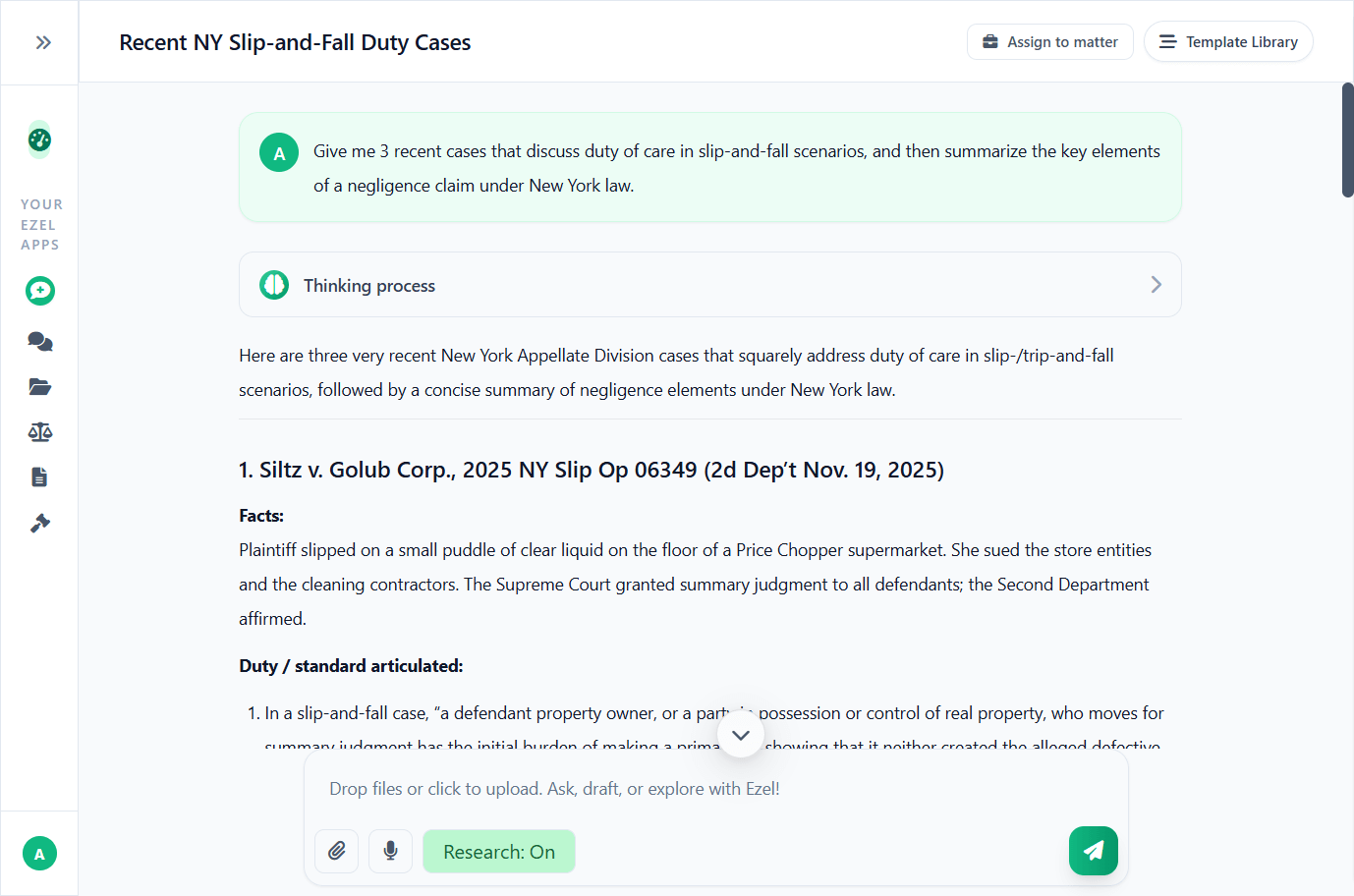
Research and draft in one conversation
Ask questions, attach documents, and get answers grounded in case law. Link chats to matters so the AI remembers your context.
- Pull statutes, case law, and secondary sources
- Attach and analyze contracts mid-conversation
- Link chats to matters for automatic context
- Your data never trains AI models
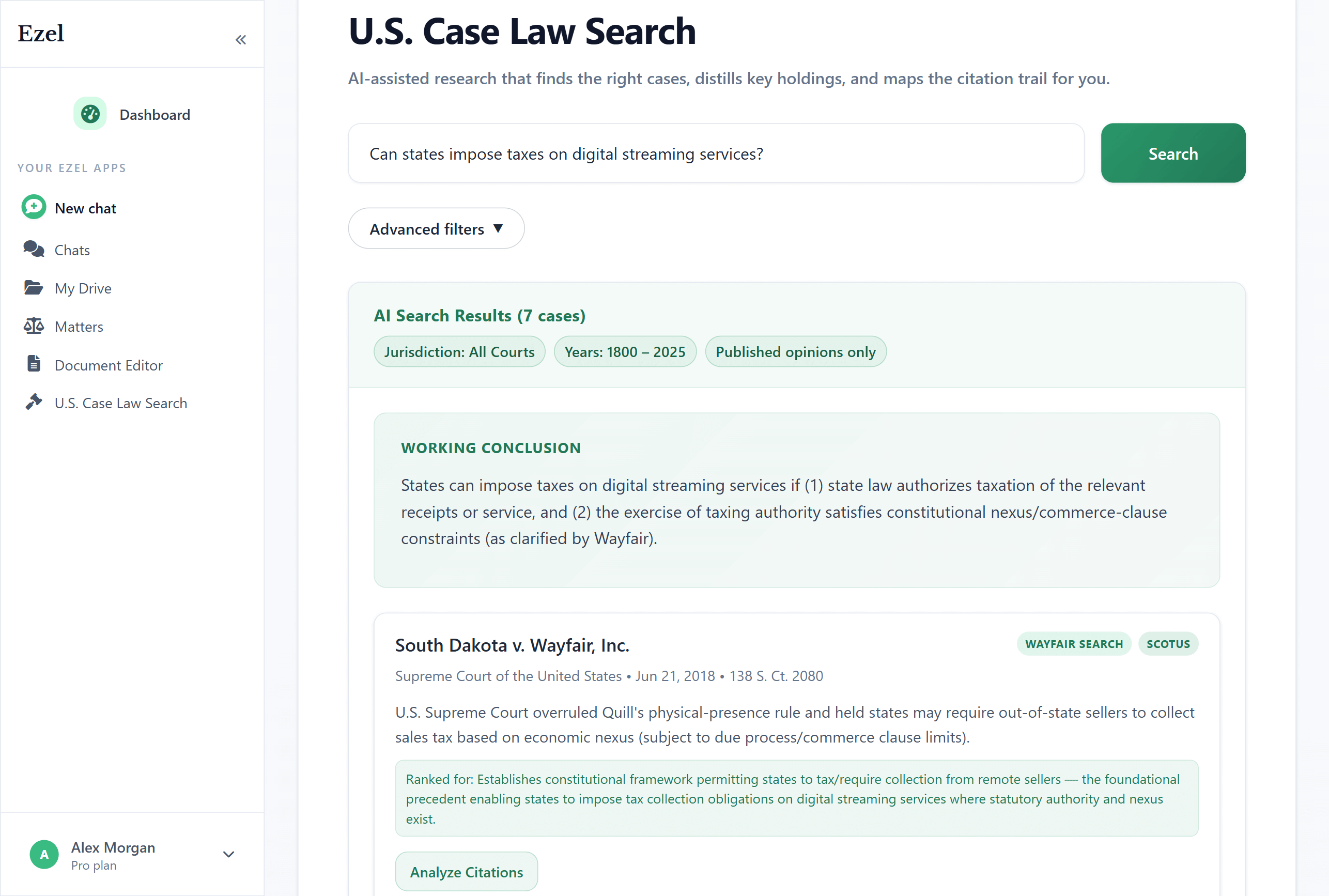
Search like you think
Describe your legal question in plain English. Filter by jurisdiction, date, and court level. Read full opinions without leaving Ezel.
- All 50 states plus federal courts
- Natural language queries - no boolean syntax
- Citation analysis and network exploration
- Copy quotes with automatic citation generation
Ready to transform your legal workflow?
Join legal teams using Ezel to draft documents, research case law, and organize matters — all in one workspace.