ENVIRONMENTAL IMPACT ASSESSMENT
PROJECT IDENTIFICATION
| Field | Information |
|---|---|
| Project Name: | _________________________________ |
| Project ID/Reference: | _________________________________ |
| Project Proponent: | _________________________________ |
| Project Location: | _________________________________ |
| Assessment Date: | _________________________________ |
| Assessment Prepared By: | _________________________________ |
| Assessment Reviewed By: | _________________________________ |
EXECUTIVE SUMMARY
Project Overview
[Provide a brief summary of the proposed project, its purpose, and key components]
_________________________________________________________________________________
_________________________________________________________________________________
_________________________________________________________________________________
Key Environmental Issues
[Summarize the main environmental issues identified]
| Issue | Significance | Mitigation Feasibility |
|---|---|---|
| ☐ High ☐ Med ☐ Low | ☐ High ☐ Med ☐ Low | |
| ☐ High ☐ Med ☐ Low | ☐ High ☐ Med ☐ Low | |
| ☐ High ☐ Med ☐ Low | ☐ High ☐ Med ☐ Low |
Overall Assessment
☐ No Significant Impact: Project may proceed with standard controls
☐ Moderate Impact: Project may proceed with mitigation measures
☐ Significant Impact: Project requires substantial mitigation or redesign
☐ Unacceptable Impact: Project should not proceed as proposed
Key Recommendations
- _____________________________________________________________________________
- _____________________________________________________________________________
- _____________________________________________________________________________
SECTION 1: PROJECT DESCRIPTION
1.1 Project Purpose and Need
Purpose:
[Describe why the project is being proposed]
_________________________________________________________________________________
_________________________________________________________________________________
Need:
[Describe the need the project addresses]
_________________________________________________________________________________
_________________________________________________________________________________
1.2 Project Location
Site Description:
| Field | Information |
|---|---|
| Address/Coordinates | |
| Total Project Area | |
| Land Use (Current) | |
| Land Use (Proposed) | |
| Zoning | |
| Property Ownership |
Site Map:
[Attach site location map showing project boundaries and surrounding area]
1.3 Project Components
Physical Components:
| Component | Description | Size/Capacity |
|---|---|---|
Supporting Infrastructure:
☐ Roads and access
☐ Utilities (power, water, sewer)
☐ Stormwater management
☐ Waste management facilities
☐ Other: _________________________
1.4 Project Activities
Construction Phase:
| Activity | Duration | Equipment/Methods |
|---|---|---|
| Site preparation | ||
| Excavation | ||
| Construction | ||
| Commissioning |
Operational Phase:
| Activity | Description | Frequency |
|---|---|---|
Decommissioning Phase (if applicable):
[Describe end-of-life activities]
_________________________________________________________________________________
1.5 Project Schedule
| Phase | Start Date | End Date | Duration |
|---|---|---|---|
| Planning/Permitting | |||
| Construction | |||
| Operation | |||
| Decommissioning |
1.6 Alternatives Considered
Alternative 1: No Action/No Build
[Describe environmental effects if project does not proceed]
_________________________________________________________________________________
Alternative 2: [Description]
[Describe alternative and why it was not selected]
_________________________________________________________________________________
Alternative 3: [Description]
[Describe alternative and why it was not selected]
_________________________________________________________________________________
Preferred Alternative Rationale:
[Explain why the proposed project was selected]
_________________________________________________________________________________
SECTION 2: ENVIRONMENTAL BASELINE
2.1 Physical Environment
2.1.1 Climate
| Parameter | Value/Description |
|---|---|
| Average Temperature | |
| Annual Precipitation | |
| Prevailing Winds | |
| Climate Zone | |
| Climate Change Projections |
2.1.2 Topography and Geology
| Parameter | Description |
|---|---|
| Elevation | |
| Slope | |
| Geology | |
| Soil Types | |
| Seismic Zone | |
| Erosion Potential |
2.1.3 Hydrology and Water Resources
Surface Water:
| Water Body | Type | Distance | Use/Classification |
|---|---|---|---|
Groundwater:
| Parameter | Description |
|---|---|
| Aquifer | |
| Depth to Groundwater | |
| Groundwater Quality | |
| Drinking Water Source | ☐ Yes ☐ No |
Watershed:
| Parameter | Description |
|---|---|
| Watershed Name | |
| Drainage Area | |
| Impervious Surface |
2.1.4 Air Quality
| Parameter | Baseline Level | Attainment Status |
|---|---|---|
| PM2.5 | ☐ Attainment ☐ Non-attainment | |
| PM10 | ☐ Attainment ☐ Non-attainment | |
| Ozone | ☐ Attainment ☐ Non-attainment | |
| NOx | ☐ Attainment ☐ Non-attainment | |
| SO2 | ☐ Attainment ☐ Non-attainment | |
| CO | ☐ Attainment ☐ Non-attainment |
2.2 Biological Environment
2.2.1 Vegetation
| Habitat Type | Area | Condition | Sensitivity |
|---|---|---|---|
| ☐ Good ☐ Fair ☐ Poor | ☐ High ☐ Med ☐ Low | ||
| ☐ Good ☐ Fair ☐ Poor | ☐ High ☐ Med ☐ Low |
Significant Vegetation:
☐ Wetlands
☐ Riparian areas
☐ Old-growth forest
☐ Native grassland
☐ Other sensitive habitats: _________________________
2.2.2 Wildlife
| Species Group | Common Species | Protected/Special Status |
|---|---|---|
| Mammals | ||
| Birds | ||
| Reptiles/Amphibians | ||
| Fish | ||
| Invertebrates |
Protected/Sensitive Species:
| Species | Status | Potential Occurrence |
|---|---|---|
| ☐ Endangered ☐ Threatened ☐ Special Concern | ☐ Confirmed ☐ Likely ☐ Possible | |
| ☐ Endangered ☐ Threatened ☐ Special Concern | ☐ Confirmed ☐ Likely ☐ Possible |
2.2.3 Protected Areas
| Protected Area | Type | Distance | Potential Impact |
|---|---|---|---|
2.3 Socioeconomic Environment
2.3.1 Population and Demographics
| Parameter | Value |
|---|---|
| Population (within project area) | |
| Population (surrounding area) | |
| Population Trend | |
| Vulnerable Populations |
2.3.2 Land Use
| Land Use Type | Area | Percentage |
|---|---|---|
| Residential | ||
| Commercial | ||
| Industrial | ||
| Agricultural | ||
| Open Space | ||
| Other |
2.3.3 Cultural Resources
☐ Archaeological sites identified
☐ Historic structures
☐ Traditional cultural properties
☐ Sacred sites
☐ No significant cultural resources
2.3.4 Indigenous Peoples
☐ Indigenous communities present
☐ Traditional territories affected
☐ FPIC process required
☐ Not applicable
SECTION 3: IMPACT ASSESSMENT
3.1 Impact Assessment Methodology
Methods Used:
☐ Literature review
☐ Field surveys
☐ Modeling (specify): _________________________
☐ Stakeholder consultation
☐ Expert judgment
☐ GIS analysis
☐ Other: _________________________
Significance Criteria:
| Factor | Criteria |
|---|---|
| Magnitude | Scale of change from baseline |
| Extent | Geographic area affected |
| Duration | Temporary, short-term, long-term, permanent |
| Reversibility | Ability to return to baseline |
| Probability | Likelihood of occurrence |
| Sensitivity | Receptor vulnerability |
3.2 Air Quality Impacts
Construction Phase:
| Source | Pollutant | Impact Level | Duration |
|---|---|---|---|
| Dust generation | PM | ☐ High ☐ Med ☐ Low | Temporary |
| Equipment exhaust | NOx, CO, PM | ☐ High ☐ Med ☐ Low | Temporary |
Operational Phase:
| Source | Pollutant | Impact Level | Duration |
|---|---|---|---|
| ☐ High ☐ Med ☐ Low | |||
| ☐ High ☐ Med ☐ Low |
Cumulative Impacts:
[Assess in context of other projects/sources]
_________________________________________________________________________________
3.3 Water Resource Impacts
Surface Water:
| Impact | Phase | Significance | Mitigation |
|---|---|---|---|
| Sediment runoff | Construction | ☐ High ☐ Med ☐ Low | |
| Stormwater quality | Operation | ☐ High ☐ Med ☐ Low | |
| Flow alteration | Operation | ☐ High ☐ Med ☐ Low |
Groundwater:
| Impact | Phase | Significance | Mitigation |
|---|---|---|---|
| Contamination risk | ☐ High ☐ Med ☐ Low | ||
| Dewatering impacts | ☐ High ☐ Med ☐ Low | ||
| Recharge reduction | ☐ High ☐ Med ☐ Low |
3.4 Noise Impacts
Construction Phase:
| Source | Noise Level (dBA) | Receptor | Impact Level |
|---|---|---|---|
| ☐ High ☐ Med ☐ Low | |||
| ☐ High ☐ Med ☐ Low |
Operational Phase:
| Source | Noise Level (dBA) | Receptor | Impact Level |
|---|---|---|---|
| ☐ High ☐ Med ☐ Low | |||
| ☐ High ☐ Med ☐ Low |
3.5 Soil and Land Impacts
| Impact | Area Affected | Significance | Reversibility |
|---|---|---|---|
| Soil disturbance | ☐ High ☐ Med ☐ Low | ☐ Yes ☐ Partial ☐ No | |
| Erosion | ☐ High ☐ Med ☐ Low | ☐ Yes ☐ Partial ☐ No | |
| Contamination risk | ☐ High ☐ Med ☐ Low | ☐ Yes ☐ Partial ☐ No | |
| Habitat loss | ☐ High ☐ Med ☐ Low | ☐ Yes ☐ Partial ☐ No |
3.6 Biodiversity Impacts
Habitat:
| Habitat Type | Area Affected | Significance | Duration |
|---|---|---|---|
| ☐ High ☐ Med ☐ Low | |||
| ☐ High ☐ Med ☐ Low |
Species:
| Species/Group | Impact Type | Significance | Mitigation |
|---|---|---|---|
| ☐ High ☐ Med ☐ Low | |||
| ☐ High ☐ Med ☐ Low |
Protected Species Assessment:
☐ No protected species affected
☐ Protected species may be affected (specify): _________________________
☐ Consultation with wildlife agencies required
3.7 Climate and GHG Impacts
GHG Emissions:
| Source | Phase | Emissions (tCO2e/yr) | Significance |
|---|---|---|---|
| Construction | ☐ High ☐ Med ☐ Low | ||
| Operation | ☐ High ☐ Med ☐ Low |
Climate Vulnerability:
| Climate Risk | Relevance | Project Resilience |
|---|---|---|
| Sea level rise | ☐ High ☐ Med ☐ Low ☐ N/A | |
| Flooding | ☐ High ☐ Med ☐ Low ☐ N/A | |
| Drought | ☐ High ☐ Med ☐ Low ☐ N/A | |
| Extreme heat | ☐ High ☐ Med ☐ Low ☐ N/A | |
| Storms | ☐ High ☐ Med ☐ Low ☐ N/A |
3.8 Socioeconomic Impacts
| Impact | Positive/Negative | Significance | Duration |
|---|---|---|---|
| Employment | ☐ Positive ☐ Negative | ☐ High ☐ Med ☐ Low | |
| Local economy | ☐ Positive ☐ Negative | ☐ High ☐ Med ☐ Low | |
| Traffic | ☐ Positive ☐ Negative | ☐ High ☐ Med ☐ Low | |
| Visual/Aesthetic | ☐ Positive ☐ Negative | ☐ High ☐ Med ☐ Low | |
| Property values | ☐ Positive ☐ Negative | ☐ High ☐ Med ☐ Low | |
| Community character | ☐ Positive ☐ Negative | ☐ High ☐ Med ☐ Low |
3.9 Cultural Resource Impacts
☐ No cultural resources affected
☐ Cultural resources may be affected (specify): _________________________
☐ Consultation with relevant authorities required
☐ Archaeological survey required
☐ Mitigation plan required
3.10 Cumulative Impacts
Past, Present, and Reasonably Foreseeable Projects:
| Project | Type | Status | Cumulative Effects |
|---|---|---|---|
| ☐ Past ☐ Present ☐ Future | |||
| ☐ Past ☐ Present ☐ Future |
Cumulative Impact Assessment:
| Resource | Cumulative Impact | Significance |
|---|---|---|
| Air quality | ☐ High ☐ Med ☐ Low | |
| Water quality | ☐ High ☐ Med ☐ Low | |
| Habitat/biodiversity | ☐ High ☐ Med ☐ Low | |
| GHG emissions | ☐ High ☐ Med ☐ Low |
SECTION 4: IMPACT SUMMARY MATRIX
| Environmental Factor | Construction | Operation | Decommissioning | Cumulative |
|---|---|---|---|---|
| Air Quality | ☐ + ☐ 0 ☐ - | ☐ + ☐ 0 ☐ - | ☐ + ☐ 0 ☐ - | ☐ + ☐ 0 ☐ - |
| Water Resources | ☐ + ☐ 0 ☐ - | ☐ + ☐ 0 ☐ - | ☐ + ☐ 0 ☐ - | ☐ + ☐ 0 ☐ - |
| Noise | ☐ + ☐ 0 ☐ - | ☐ + ☐ 0 ☐ - | ☐ + ☐ 0 ☐ - | ☐ + ☐ 0 ☐ - |
| Soil/Land | ☐ + ☐ 0 ☐ - | ☐ + ☐ 0 ☐ - | ☐ + ☐ 0 ☐ - | ☐ + ☐ 0 ☐ - |
| Biodiversity | ☐ + ☐ 0 ☐ - | ☐ + ☐ 0 ☐ - | ☐ + ☐ 0 ☐ - | ☐ + ☐ 0 ☐ - |
| Climate/GHG | ☐ + ☐ 0 ☐ - | ☐ + ☐ 0 ☐ - | ☐ + ☐ 0 ☐ - | ☐ + ☐ 0 ☐ - |
| Socioeconomic | ☐ + ☐ 0 ☐ - | ☐ + ☐ 0 ☐ - | ☐ + ☐ 0 ☐ - | ☐ + ☐ 0 ☐ - |
| Cultural Resources | ☐ + ☐ 0 ☐ - | ☐ + ☐ 0 ☐ - | ☐ + ☐ 0 ☐ - | ☐ + ☐ 0 ☐ - |
(+ = Positive, 0 = Neutral/Negligible, - = Negative)
SECTION 5: MITIGATION MEASURES
5.1 Mitigation Hierarchy
Mitigation follows the hierarchy of:
1. Avoid - Eliminate impacts through design changes
2. Minimize - Reduce impacts that cannot be avoided
3. Restore - Rehabilitate affected areas
4. Offset - Compensate for residual impacts
5.2 Mitigation Plan
| Impact | Mitigation Measure | Responsible Party | Timeline | Residual Impact |
|---|---|---|---|---|
| ☐ High ☐ Med ☐ Low ☐ Negligible | ||||
| ☐ High ☐ Med ☐ Low ☐ Negligible | ||||
| ☐ High ☐ Med ☐ Low ☐ Negligible | ||||
| ☐ High ☐ Med ☐ Low ☐ Negligible | ||||
| ☐ High ☐ Med ☐ Low ☐ Negligible |
5.3 Best Management Practices
Construction BMPs:
☐ Erosion and sediment control plan
☐ Dust suppression measures
☐ Spill prevention and response
☐ Noise and vibration controls
☐ Traffic management plan
☐ Waste management plan
Operational BMPs:
☐ Stormwater management
☐ Pollution prevention
☐ Energy efficiency measures
☐ Water conservation
☐ Waste minimization
SECTION 6: MONITORING PLAN
6.1 Environmental Monitoring
| Parameter | Location | Frequency | Method | Responsible |
|---|---|---|---|---|
6.2 Compliance Monitoring
| Requirement | Monitoring Method | Frequency | Reporting |
|---|---|---|---|
6.3 Adaptive Management
[Describe how monitoring results will be used to adjust mitigation measures]
_________________________________________________________________________________
_________________________________________________________________________________
SECTION 7: STAKEHOLDER CONSULTATION
7.1 Consultation Activities
| Stakeholder Group | Date | Method | Key Issues Raised |
|---|---|---|---|
| ☐ Meeting ☐ Survey ☐ Public hearing | |||
| ☐ Meeting ☐ Survey ☐ Public hearing | |||
| ☐ Meeting ☐ Survey ☐ Public hearing |
7.2 Response to Concerns
| Concern | Response/Mitigation |
|---|---|
SECTION 8: CONCLUSIONS AND RECOMMENDATIONS
8.1 Conclusions
[Summarize key findings and overall assessment]
_________________________________________________________________________________
_________________________________________________________________________________
_________________________________________________________________________________
8.2 Recommendations
Design Modifications:
1. _____________________________________________________________________________
2. _____________________________________________________________________________
Mitigation Requirements:
1. _____________________________________________________________________________
2. _____________________________________________________________________________
Monitoring Requirements:
1. _____________________________________________________________________________
2. _____________________________________________________________________________
Permit Requirements:
1. _____________________________________________________________________________
2. _____________________________________________________________________________
8.3 Assessment Determination
☐ Finding of No Significant Impact (FONSI): The project, with proposed mitigation, will not have significant environmental impacts.
☐ Environmental Impact Statement (EIS) Required: Significant impacts are likely; a full EIS is recommended.
☐ Conditional Approval: The project may proceed with the following conditions:
_________________________________________________________________________________
☐ Not Recommended: The project should not proceed as proposed due to:
_________________________________________________________________________________
CERTIFICATION
I certify that this Environmental Impact Assessment has been prepared in accordance with applicable standards and that the information contained herein is accurate to the best of my knowledge.
Prepared By:
Signature: _________________________________
Printed Name: _____________________________
Title/Qualifications: _________________________
Date: ____________________________________
Reviewed By:
Signature: _________________________________
Printed Name: _____________________________
Title/Qualifications: _________________________
Date: ____________________________________
Project Proponent Acknowledgment:
Signature: _________________________________
Printed Name: _____________________________
Title: ____________________________________
Date: ____________________________________
APPENDICES
Appendix A: Site Maps and Figures
Appendix B: Technical Studies and Data
Appendix C: Stakeholder Consultation Records
Appendix D: Regulatory Correspondence
Appendix E: Species Lists
Appendix F: Mitigation Plan Details
Appendix G: Monitoring Plan Details
NOTICE: This template is provided for informational purposes only and does not constitute legal advice. Environmental impact assessment requirements vary by jurisdiction and project type. Organizations should consult with qualified environmental professionals and legal counsel to ensure compliance with applicable federal, state, and local requirements. The NEPA regulatory framework has undergone significant changes in 2025, and agencies now have individual implementation procedures.
Do more with Ezel
This free template is just the beginning. See how Ezel helps legal teams draft, research, and collaborate faster.
AI that drafts while you watch
Tell the AI what you need and watch your document transform in real-time. No more copy-pasting between tools or manually formatting changes.
- Natural language commands: "Add a force majeure clause"
- Context-aware suggestions based on document type
- Real-time streaming shows edits as they happen
- Milestone tracking and version comparison
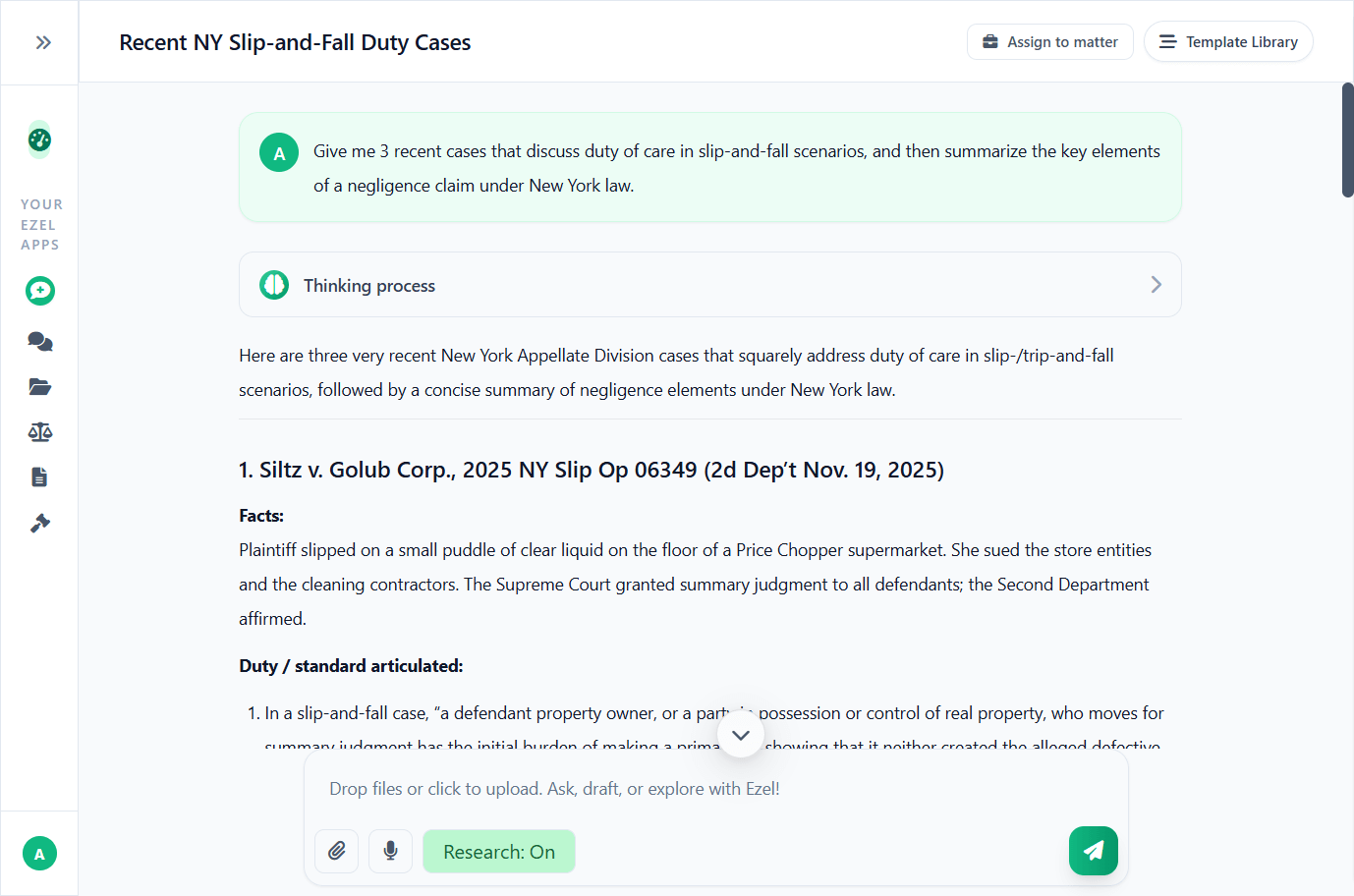
Research and draft in one conversation
Ask questions, attach documents, and get answers grounded in case law. Link chats to matters so the AI remembers your context.
- Pull statutes, case law, and secondary sources
- Attach and analyze contracts mid-conversation
- Link chats to matters for automatic context
- Your data never trains AI models
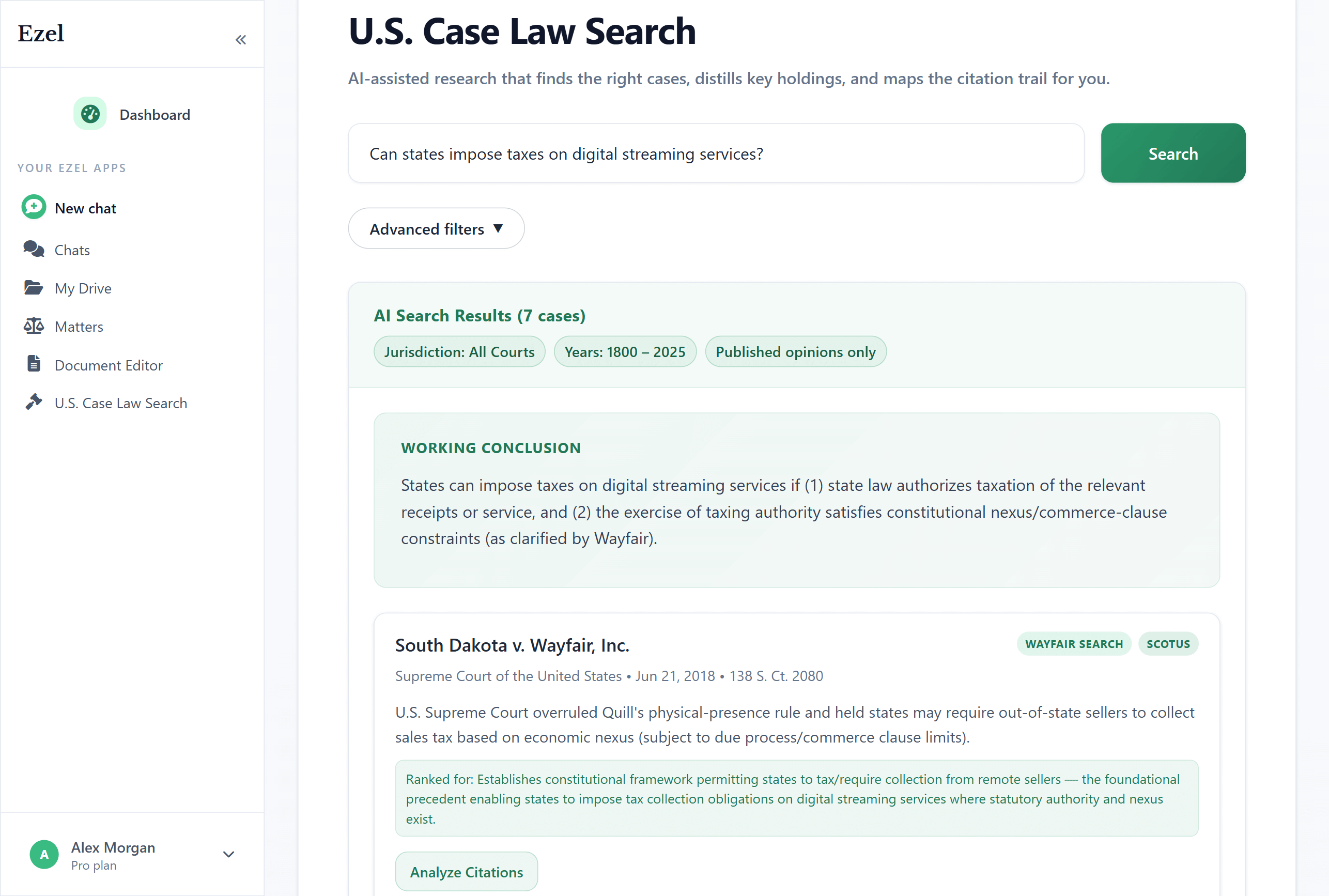
Search like you think
Describe your legal question in plain English. Filter by jurisdiction, date, and court level. Read full opinions without leaving Ezel.
- All 50 states plus federal courts
- Natural language queries - no boolean syntax
- Citation analysis and network exploration
- Copy quotes with automatic citation generation
Ready to transform your legal workflow?
Join legal teams using Ezel to draft documents, research case law, and organize matters — all in one workspace.