CREDITOR STANDSTILL AGREEMENT
(Forbearance and Standstill During Workout / Restructuring)
Effective Date: [__/__/____]
Agreement Number: [________________________________]
RECITALS
WHEREAS, the Debtor (as identified below) is indebted to the Creditor(s) (as identified below) pursuant to the Existing Debt Documents (as defined herein);
WHEREAS, certain Events of Default (as defined in the Existing Debt Documents) have occurred or are expected to occur, as more particularly described in Schedule A attached hereto (the "Acknowledged Defaults");
WHEREAS, the Debtor has requested that the Creditor(s) forbear from exercising their rights and remedies under the Existing Debt Documents and applicable law during the Standstill Period (as defined herein) to allow the Debtor an opportunity to pursue a financial restructuring, refinancing, recapitalization, asset sale, or other workout transaction (the "Restructuring");
WHEREAS, the Creditor(s) are willing to temporarily forbear from exercising certain rights and remedies on the terms and conditions set forth herein, while preserving their rights and remedies to the fullest extent permitted by law;
WHEREAS, the parties desire to establish a framework for cooperation, information sharing, and good-faith negotiation during the Standstill Period;
NOW, THEREFORE, in consideration of the mutual covenants contained herein and for other good and valuable consideration, the receipt and sufficiency of which are hereby acknowledged, the parties agree as follows:
ARTICLE I — PARTIES AND DEFINITIONS
Section 1.1 — Debtor
| Field | Information |
|---|---|
| Legal Name | [________________________________] |
| Entity Type | ☐ Individual ☐ Corporation ☐ LLC ☐ Partnership ☐ Other: [________] |
| State of Organization | [________________________________] |
| Tax ID / EIN | [________________________________] |
| Principal Address | [________________________________] |
| City, State, ZIP | [________________________________] |
| Contact Person | [________________________________] |
| Telephone | [________________________________] |
| [________________________________] | |
| Legal Counsel | [________________________________] |
| Counsel Contact | [________________________________] |
Section 1.2 — Creditor(s)
Creditor 1 (Lead/Agent Creditor, if applicable):
| Field | Information |
|---|---|
| Legal Name | [________________________________] |
| Entity Type | ☐ Bank/Financial Institution ☐ Corporation ☐ LLC ☐ Fund ☐ Other: [________] |
| Outstanding Debt Amount | $[________________________________] |
| Security Interest (Y/N) | ☐ Yes ☐ No |
| Collateral Description | [________________________________] |
| Principal Address | [________________________________] |
| City, State, ZIP | [________________________________] |
| Contact Person | [________________________________] |
| Telephone | [________________________________] |
| [________________________________] | |
| Legal Counsel | [________________________________] |
Creditor 2:
| Field | Information |
|---|---|
| Legal Name | [________________________________] |
| Outstanding Debt Amount | $[________________________________] |
| Security Interest (Y/N) | ☐ Yes ☐ No |
| Collateral Description | [________________________________] |
| Principal Address | [________________________________] |
| City, State, ZIP | [________________________________] |
| Contact Person | [________________________________] |
Creditor 3:
| Field | Information |
|---|---|
| Legal Name | [________________________________] |
| Outstanding Debt Amount | $[________________________________] |
| Security Interest (Y/N) | ☐ Yes ☐ No |
| Collateral Description | [________________________________] |
| Principal Address | [________________________________] |
| City, State, ZIP | [________________________________] |
| Contact Person | [________________________________] |
(Attach additional Creditor pages as Schedule B if necessary.)
Section 1.3 — Definitions
(a) "Acknowledged Defaults" means the Events of Default described in Schedule A hereto that have occurred prior to or as of the Effective Date and are acknowledged by the Debtor.
(b) "Adequate Protection Payments" means the payments described in Article V, Section 5.1, to be made by the Debtor during the Standstill Period to protect the Creditors' interests.
(c) "Collateral" means all property in which any Creditor holds a security interest, lien, or encumbrance, as described in the Existing Debt Documents and/or Schedule C.
(d) "Existing Debt" means the aggregate outstanding indebtedness of the Debtor to the Creditors as of the Effective Date, totaling approximately $[________________________________], as more particularly described in Schedule D.
(e) "Existing Debt Documents" means, collectively, all loan agreements, credit agreements, promissory notes, security agreements, guarantees, mortgages, deeds of trust, and other instruments and agreements evidencing, securing, or otherwise relating to the Existing Debt, as listed in Schedule D.
(f) "Financial Advisor" means the financial or restructuring advisor retained by the Debtor, currently [________________________________].
(g) "Milestones" means the restructuring milestones set forth in Article IV, Section 4.5.
(h) "New Defaults" means any Events of Default under the Existing Debt Documents that occur after the Effective Date and are not Acknowledged Defaults.
(i) "Permitted Actions" means the actions that the Creditors are permitted to take during the Standstill Period as set forth in Article III, Section 3.3.
(j) "Required Creditor Consent" means the written consent of Creditors holding at least [____]% of the aggregate outstanding Existing Debt (by principal amount).
(k) "Restructuring" means the financial restructuring, refinancing, recapitalization, asset sale, or other workout transaction that the Debtor proposes to pursue during the Standstill Period.
(l) "Restructuring Proposal" means the written restructuring proposal to be delivered by the Debtor to the Creditors as described in Article IV, Section 4.5(b).
(m) "Standstill Period" means the period described in Article II, commencing on the Effective Date and ending on the Termination Date.
(n) "Termination Date" means the date on which this Agreement terminates pursuant to Article VIII.
(o) "Termination Event" means any event described in Article VIII, Section 8.1.
ARTICLE II — STANDSTILL PERIOD
Section 2.1 — Duration
The Standstill Period shall commence on the Effective Date and shall expire on:
☐ [__/__/____] (specific date), unless earlier terminated or extended as provided herein.
☐ The date that is [____] days after the Effective Date, unless earlier terminated or extended.
☐ The date that is [____] months after the Effective Date, unless earlier terminated or extended.
Section 2.2 — Extension
(a) The Standstill Period may be extended by written agreement of the Debtor and Creditors holding the Required Creditor Consent.
(b) Any extension shall specify the new Termination Date and any modified Milestones or conditions.
(c) Maximum extensions:
☐ Up to [____] additional extensions of [____] days each.
☐ Total Standstill Period (including extensions) not to exceed [____] days.
☐ No maximum; extensions by mutual agreement only.
Section 2.3 — Effect of Standstill
During the Standstill Period, the rights and obligations of the parties shall be governed exclusively by the terms of this Agreement. To the extent of any conflict between this Agreement and the Existing Debt Documents during the Standstill Period, this Agreement shall control. The Existing Debt Documents remain in full force and effect except as expressly modified herein.
ARTICLE III — CREDITOR FORBEARANCE AND STANDSTILL COVENANTS
Section 3.1 — Forbearance
Subject to the terms and conditions of this Agreement, during the Standstill Period each Creditor agrees to forbear from exercising the following rights and remedies arising from the Acknowledged Defaults:
☐ (a) Acceleration. Declaring the Existing Debt immediately due and payable or demanding payment in full;
☐ (b) Litigation. Commencing, maintaining, or joining in any lawsuit, action, or proceeding against the Debtor for collection of the Existing Debt;
☐ (c) Execution and Attachment. Seeking or enforcing any writ of execution, attachment, garnishment, or levy against the Debtor or its assets;
☐ (d) Foreclosure. Commencing or continuing any foreclosure or repossession proceeding with respect to the Collateral, whether judicial or non-judicial;
☐ (e) UCC Remedies. Exercising any remedies available under UCC Article 9, Part 6 (§§ 9-601 through 9-628), including taking possession of, collecting, or disposing of any Collateral;
☐ (f) Set-Off. Exercising any right of set-off, recoupment, or counterclaim against any accounts of the Debtor held by any Creditor;
☐ (g) Involuntary Bankruptcy. Filing or joining in the filing of an involuntary petition under Title 11 of the United States Code or similar state insolvency proceedings against the Debtor;
☐ (h) Default Interest. Charging, accruing, or collecting default interest or late fees on the Existing Debt (note: if this box is not checked, default interest shall continue to accrue during the Standstill Period);
☐ (i) Cross-Default. Declaring a cross-default under any other agreement between any Creditor and the Debtor based solely on the Acknowledged Defaults;
☐ (j) Guaranty Enforcement. Commencing or continuing any action or proceeding against any guarantor, surety, or other obligor with respect to the Existing Debt based on the Acknowledged Defaults.
Section 3.2 — Scope Limitation
(a) The forbearance in Section 3.1 applies only to the Acknowledged Defaults and does not extend to any New Defaults.
(b) Upon the occurrence of a New Default, each Creditor's rights and remedies shall be fully restored with respect to such New Default, and the Creditor may, at its option, declare a Termination Event.
(c) The forbearance does not constitute a waiver of any Acknowledged Default or any other default, breach, or event of default, and all rights and remedies of the Creditors are expressly reserved except as specifically provided in Section 3.1.
Section 3.3 — Permitted Actions During Standstill
Notwithstanding the forbearance in Section 3.1, each Creditor retains the right during the Standstill Period to:
(a) Send default notices, reservation-of-rights letters, and other communications to the Debtor and any guarantors;
(b) File, continue, or amend UCC financing statements and any other filings necessary to maintain the perfection, validity, and priority of its security interest;
(c) Attend and participate in all proceedings involving the Debtor (including any bankruptcy proceeding if a voluntary filing occurs);
(d) File proofs of claim and protective filings in any proceeding;
(e) Request and receive financial information and reports from the Debtor as provided in Article VI;
(f) Inspect the Collateral and the Debtor's books and records;
(g) Engage legal, financial, and other advisors at the Debtor's expense as provided in Article IX;
(h) Enforce the terms of this Agreement; and
(i) Take any action necessary to protect the Collateral from imminent loss, destruction, or material impairment.
ARTICLE IV — DEBTOR COVENANTS AND MILESTONES
Section 4.1 — Affirmative Covenants of Debtor
During the Standstill Period, the Debtor covenants and agrees:
☐ (a) Good Faith Negotiation. Debtor shall negotiate in good faith with the Creditors toward a consensual Restructuring.
☐ (b) Preservation of Business. Debtor shall continue to operate its business in the ordinary course and shall maintain and preserve its assets, properties, and business relationships.
☐ (c) Maintenance of Collateral. Debtor shall maintain the Collateral in good condition and repair, shall keep the Collateral insured (with Creditors named as loss payees or additional insureds as applicable), and shall not waste, diminish, or impair the value of the Collateral.
☐ (d) Compliance with Laws. Debtor shall comply with all applicable laws, regulations, and orders material to its business and operations.
☐ (e) Payment of Taxes. Debtor shall timely pay all taxes, assessments, and governmental charges except those being contested in good faith with adequate reserves.
☐ (f) Financial Reporting. Debtor shall provide the financial reports and information required by Article VI.
☐ (g) Advisors. Debtor shall retain and maintain qualified legal counsel and a financial advisor acceptable to the Required Creditors.
☐ (h) Cooperation. Debtor shall cooperate fully with the Creditors and their advisors in connection with the due diligence, analysis, and negotiation of the Restructuring.
☐ (i) Court Filings. Debtor shall promptly notify the Creditors of any legal proceeding filed by or against the Debtor.
☐ (j) Board Oversight. Debtor's board of directors (or equivalent governing body) shall actively oversee the Restructuring process.
Section 4.2 — Negative Covenants of Debtor
During the Standstill Period, the Debtor shall not, without the prior written consent of Creditors holding the Required Creditor Consent:
(a) Incur New Debt. Incur, assume, or guarantee any new indebtedness, except trade payables incurred in the ordinary course of business not exceeding $[________________________________] in the aggregate;
(b) Grant New Liens. Grant, create, or permit any new lien, security interest, or encumbrance on any of its assets or Collateral;
(c) Dispose of Assets. Sell, transfer, lease, or otherwise dispose of any material assets outside the ordinary course of business;
(d) Capital Expenditures. Make capital expenditures exceeding $[________________________________] in the aggregate during the Standstill Period;
(e) Distributions. Make any dividend, distribution, or payment to equity holders;
(f) Preferential Payments. Make any payment on account of pre-existing unsecured debt (other than Adequate Protection Payments and ordinary course trade payables);
(g) Insider Transactions. Enter into or modify any transaction with insiders, affiliates, or related parties outside the ordinary course of business;
(h) Corporate Changes. Amend its organizational documents, change its legal name, state of organization, or organizational structure, or merge, consolidate, or dissolve;
(i) Voluntary Bankruptcy. File a voluntary petition under Title 11 of the United States Code or any similar state insolvency law without first providing [____] days' prior written notice to the Creditors; and
(j) Insurance Changes. Cancel, reduce, or materially modify any insurance policy covering the Collateral.
Section 4.3 — Operating Budget
(a) Within [____] days of the Effective Date, the Debtor shall deliver to the Creditors a detailed operating budget (the "Budget") covering the Standstill Period.
(b) The Budget shall be subject to approval by Creditors holding the Required Creditor Consent.
(c) The Debtor shall not deviate from the approved Budget by more than [____]% in any category without prior written consent of the Required Creditors.
(d) The Debtor shall deliver weekly or monthly (as agreed) variance reports comparing actual results to the Budget.
Section 4.4 — Cash Management
(a) During the Standstill Period, the Debtor shall maintain all operating accounts at [________________________________] (or such other institution acceptable to the Required Creditors).
(b) Debtor shall not open any new bank accounts without prior written consent.
(c) Debtor shall sweep excess cash to a segregated account controlled by or subject to a control agreement in favor of the secured Creditor(s), as applicable.
Section 4.5 — Restructuring Milestones
The Debtor shall achieve the following Milestones within the timeframes specified:
| Milestone | Deadline |
|---|---|
| (a) Retention of Financial Advisor | [__/__/____] |
| (b) Delivery of Restructuring Proposal to Creditors | [__/__/____] |
| (c) Delivery of Updated Financial Projections | [__/__/____] |
| (d) Commencement of Marketing Process (if asset sale) | [__/__/____] |
| (e) Receipt of Binding Offer(s) / Term Sheet(s) | [__/__/____] |
| (f) Execution of Definitive Restructuring Agreement | [__/__/____] |
| (g) Closing of Restructuring Transaction | [__/__/____] |
| (h) Other: [________________________________] | [__/__/____] |
Failure to achieve any Milestone by its specified deadline shall constitute a Termination Event unless waived by the Required Creditors.
ARTICLE V — ADEQUATE PROTECTION AND PAYMENTS DURING STANDSTILL
Section 5.1 — Adequate Protection Payments
During the Standstill Period, the Debtor shall make the following payments to the Creditors as adequate protection of their interests:
☐ (a) Interest Payments. Monthly payments of accrued interest on the Existing Debt at the non-default contract rate, due on the [____] day of each month, commencing [__/__/____].
☐ (b) Principal Payments. Monthly payments of principal in the amount of $[________________________________], due on the [____] day of each month, commencing [__/__/____].
☐ (c) Professional Fees. Payment of the reasonable fees and expenses of the Creditors' legal counsel and financial advisors, within [____] days of presentation of invoices.
☐ (d) Insurance. Maintenance of insurance on the Collateral with premiums paid current.
☐ (e) Tax Payments. Timely payment of all real property taxes and assessments on Collateral.
☐ (f) Additional Collateral. Grant of additional or replacement liens on property of the Debtor as specified in Schedule E.
☐ (g) Other Adequate Protection. [________________________________]
Section 5.2 — Failure to Make Adequate Protection Payments
The failure of the Debtor to make any Adequate Protection Payment when due (subject to a cure period of [____] business days after written notice) shall constitute a Termination Event.
Section 5.3 — Application of Payments
All Adequate Protection Payments shall be applied in the following order:
(a) First, to accrued and unpaid fees and expenses of the Creditors (including professional fees);
(b) Second, to accrued and unpaid interest on the Existing Debt;
(c) Third, to principal of the Existing Debt; and
(d) Fourth, as otherwise directed by the Required Creditors.
ARTICLE VI — INFORMATION AND REPORTING REQUIREMENTS
Section 6.1 — Financial Reporting
During the Standstill Period, the Debtor shall provide the following information to the Creditors:
☐ (a) Weekly Cash Flow Reports. Within [____] business days after each week-end, a report showing actual cash receipts and disbursements compared to the Budget.
☐ (b) Monthly Financial Statements. Within [____] days after each month-end, unaudited financial statements (balance sheet, income statement, and cash flow statement).
☐ (c) Accounts Receivable and Payable Aging. Within [____] days after each month-end, detailed aging reports of accounts receivable and accounts payable.
☐ (d) Budget Variance Reports. Within [____] days after each month-end, a report comparing actual results to the approved Budget with explanation of material variances.
☐ (e) 13-Week Cash Flow Forecast. Updated rolling 13-week cash flow forecast, delivered [____] (weekly/bi-weekly/monthly).
☐ (f) Material Event Notices. Prompt written notice (within [____] business days) of any material adverse event, including material litigation, loss of key customers or contracts, regulatory actions, or casualty or condemnation events.
☐ (g) Restructuring Updates. [____] (weekly/bi-weekly) written reports on the status of the Restructuring, including progress toward Milestones.
☐ (h) Board Materials. Copies of all materials distributed to the Debtor's board of directors relating to the Restructuring.
Section 6.2 — Access and Inspection
(a) Debtor shall permit the Creditors and their advisors to inspect, audit, and examine the Debtor's books, records, accounts, properties, and Collateral at reasonable times upon [____] business days' prior notice (or immediately upon the occurrence of a Termination Event).
(b) Debtor shall make its officers, directors, employees, and advisors (including the Financial Advisor) available for meetings and calls with the Creditors and their advisors at reasonable times.
Section 6.3 — Confidentiality
(a) The Creditors agree to hold all non-public information received from the Debtor in confidence and to use such information solely for the purpose of evaluating, negotiating, and implementing the Restructuring, subject to customary exceptions for (i) information already publicly available, (ii) information independently obtained, (iii) disclosures required by law or regulation, and (iv) disclosures to the Creditors' advisors who are bound by confidentiality obligations.
(b) The existence and terms of this Agreement may be disclosed to the extent required by law, regulation, or court order, or as necessary in connection with the Restructuring.
ARTICLE VII — VOTING AND CONSENT THRESHOLDS
Section 7.1 — Required Creditor Consent
Unless otherwise specified, actions requiring consent of the Creditors shall require the written consent of Creditors holding the Required Creditor Consent, which is [____]% of the aggregate outstanding principal amount of the Existing Debt.
Section 7.2 — Supermajority Actions
The following actions shall require the written consent of Creditors holding at least [____]% (the "Supermajority") of the aggregate outstanding principal amount of the Existing Debt:
(a) Extension of the Standstill Period;
(b) Modification of any Milestone deadline;
(c) Consent to the Debtor's incurrence of new secured indebtedness;
(d) Consent to the Debtor's sale of material assets outside the ordinary course; and
(e) Approval of the final Restructuring transaction.
Section 7.3 — Unanimous Consent Actions
The following actions shall require the unanimous written consent of all Creditors:
(a) Release of any Collateral (other than in connection with an approved Restructuring);
(b) Release of any guarantor (other than in connection with an approved Restructuring);
(c) Reduction of any Creditor's principal or interest claim; and
(d) Extension of the maturity of any Creditor's debt beyond [__/__/____].
Section 7.4 — Agent / Lead Creditor
☐ Not Applicable — No agent or lead creditor has been designated.
☐ Applicable — [________________________________] (the "Agent") has been designated as the agent or lead creditor to coordinate communications, receive notices, and act on behalf of the Creditors to the extent authorized herein. The Agent shall act in accordance with the instructions of Creditors holding the Required Creditor Consent.
ARTICLE VIII — TERMINATION
Section 8.1 — Termination Events
This Agreement and the Standstill Period shall terminate immediately (or, where a cure period applies, upon the expiration of such cure period without cure) upon the occurrence of any of the following Termination Events:
(a) Expiration. The expiration of the Standstill Period (including any extensions);
(b) Payment Default. The Debtor's failure to make any Adequate Protection Payment when due (subject to [____] business days' written notice and cure);
(c) Breach of Covenant. The Debtor's material breach of any affirmative or negative covenant under Article IV (subject to [____] business days' written notice and cure, if curable);
(d) Misrepresentation. Any representation or warranty of the Debtor under this Agreement or any certificate delivered hereunder proves to have been materially false or misleading when made;
(e) Milestone Failure. The Debtor's failure to achieve any Milestone by its specified deadline, unless waived by the Required Creditors;
(f) New Default. The occurrence of a New Default under the Existing Debt Documents (other than the Acknowledged Defaults);
(g) Bankruptcy Filing. The filing of a voluntary or involuntary petition under Title 11 of the United States Code or any similar insolvency law by or against the Debtor;
(h) Material Adverse Change. A material adverse change in the Debtor's business, financial condition, operations, assets, or prospects that, in the reasonable judgment of Creditors holding the Required Creditor Consent, materially impairs the likelihood of a successful Restructuring;
(i) Collateral Impairment. Material loss, destruction, or impairment of the Collateral that is not covered by insurance;
(j) Budget Deviation. The Debtor's actual cash expenditures exceed the approved Budget by more than [____]% in any single category or [____]% in the aggregate;
(k) Mutual Agreement. Mutual written agreement of the Debtor and Creditors holding the Required Creditor Consent; or
(l) Creditor Vote. Written notice by Creditors holding the Required Creditor Consent that they elect to terminate this Agreement after the occurrence and continuance (beyond any applicable cure period) of any event described in clauses (b) through (j) above.
Section 8.2 — Effect of Termination
Upon termination:
(a) All rights and remedies of the Creditors under the Existing Debt Documents and applicable law shall be fully restored without further notice or demand;
(b) The forbearance granted herein shall immediately cease;
(c) All Existing Debt shall be deemed immediately due and payable (to the extent acceleration has been declared or is automatic under the Existing Debt Documents);
(d) The Creditors may exercise all remedies available under the Existing Debt Documents, the UCC, or applicable law, including acceleration, foreclosure, collection, and judicial action;
(e) Any waivers of default interest or fees during the Standstill Period shall be revoked, and such interest and fees shall accrue retroactively from the date of the Acknowledged Defaults (unless otherwise agreed); and
(f) The provisions of Articles IX, X, and XI shall survive termination.
Section 8.3 — No Waiver Upon Termination
Termination of this Agreement shall not constitute a waiver by any Creditor of any rights, remedies, or claims (whether arising before, during, or after the Standstill Period), and all such rights, remedies, and claims are expressly reserved.
ARTICLE IX — RESERVATION OF RIGHTS
Section 9.1 — No Waiver
Except as expressly provided in Article III, Section 3.1:
(a) No Creditor waives any Acknowledged Default, any New Default, or any other default, breach, or event of default under the Existing Debt Documents;
(b) No Creditor waives any right, remedy, power, or privilege under the Existing Debt Documents, at law, in equity, or otherwise;
(c) Nothing in this Agreement shall be deemed to be a consent to any action or omission by the Debtor;
(d) The execution of this Agreement shall not constitute a course of dealing or establish a custom or usage of trade between the parties; and
(e) The forbearance is temporary and limited in scope, and shall not be construed as establishing any obligation to forbear in the future.
Section 9.2 — Pre-Bankruptcy Stay Waivers
☐ Not Applicable.
☐ Applicable. The Debtor acknowledges that the forbearance and standstill provided herein were negotiated as part of a negotiated restructuring framework and not as part of the original Existing Debt Documents. The Debtor agrees that, in the event of any subsequent bankruptcy filing, the Creditors may seek to enforce the terms of this Agreement and any pre-petition waivers contained herein, including waiver of the automatic stay, to the extent permitted by applicable bankruptcy law and recognized by the bankruptcy court.
Note: Pre-petition stay waivers in forbearance agreements are generally more likely to be enforced by bankruptcy courts than stay waivers in original loan documents, but enforcement remains within the bankruptcy court's discretion. See In re BGM Pasadena, LLC, 2016 WL 796860 (Bankr. C.D. Cal. 2016) and related authority.
Section 9.3 — No Release
Nothing in this Agreement constitutes a release, discharge, or satisfaction of any of the Existing Debt or any obligation of the Debtor, any guarantor, or any other obligor under the Existing Debt Documents.
ARTICLE X — REPRESENTATIONS AND WARRANTIES
Section 10.1 — Debtor's Representations and Warranties
The Debtor represents and warrants as of the Effective Date and as of each date on which a financial report is delivered:
(a) Authority. The Debtor has full power and authority to execute, deliver, and perform this Agreement. The execution and performance hereof have been duly authorized by all necessary organizational action.
(b) Enforceability. This Agreement constitutes a legal, valid, and binding obligation of the Debtor, enforceable in accordance with its terms.
(c) No Conflicts. The execution and performance of this Agreement do not violate the Debtor's organizational documents, any applicable law, or any material agreement.
(d) Acknowledged Defaults. Schedule A accurately and completely describes all Events of Default that have occurred under the Existing Debt Documents as of the Effective Date.
(e) Financial Condition. The financial statements and information previously provided to the Creditors are true, correct, and complete in all material respects and fairly present the Debtor's financial condition as of the dates thereof.
(f) No Material Omission. The Debtor has not withheld any information from the Creditors that would be material to the Creditors' decision to enter into this Agreement.
(g) No Pending Litigation. Except as disclosed in writing to the Creditors, there is no pending or threatened litigation, arbitration, or governmental proceeding against the Debtor that could materially adversely affect the Debtor's business, assets, or financial condition.
(h) Insurance. All insurance policies covering the Collateral are in full force and effect and all premiums are paid current.
(i) Taxes. All tax returns have been filed and all taxes paid except as disclosed and being contested in good faith.
(j) Collateral. The Debtor has not sold, transferred, or encumbered any Collateral in violation of the Existing Debt Documents.
Section 10.2 — Creditors' Representations
Each Creditor represents and warrants:
(a) It has full power and authority to execute and perform this Agreement.
(b) This Agreement constitutes a legal, valid, and binding obligation.
(c) It is the legal and beneficial holder of the Existing Debt described opposite its name in Schedule D (or is authorized to act on behalf of such holder).
ARTICLE XI — STATE-SPECIFIC ENFORCEMENT CONSIDERATIONS
Section 11.1 — California
If this Agreement is governed by California law:
(a) California courts have recognized forbearance agreements as enforceable contracts separate from the underlying loan documents;
(b) One-action rule (Cal. Code Civ. Proc. § 726) and anti-deficiency statutes (Cal. Code Civ. Proc. §§ 580a, 580b, 580d) may affect the Creditors' remedies upon termination of the Standstill Period;
(c) Guarantor protections under Cal. Civ. Code §§ 2787-2855 and waiver provisions under Cal. Civ. Code § 2856 should be considered in connection with any guarantor forbearance; and
(d) California's fair debt collection practices law (Cal. Civ. Code § 1788 et seq.) may apply if any Creditor qualifies as a "debt collector."
Section 11.2 — Texas
If this Agreement is governed by Texas law:
(a) Texas courts enforce forbearance and standstill agreements as binding contracts;
(b) Texas constitutional homestead protections (Tex. Const. Art. XVI, §§ 50, 51) apply to homestead property and cannot be waived by forbearance agreement;
(c) Texas usury laws (Tex. Fin. Code Chapter 302 et seq.) should be considered in connection with any modification of interest rates; and
(d) The Texas Uniform Fraudulent Transfer Act (Tex. Bus. & Com. Code Chapter 24) may affect transfers made during the Standstill Period.
Section 11.3 — Florida
If this Agreement is governed by Florida law:
(a) Florida courts enforce forbearance and standstill agreements;
(b) Florida's homestead exemption (Fla. Const. Art. X, § 4) provides unlimited value protection and may affect enforcement of personal guarantees;
(c) Florida commercial financing disclosure requirements (effective January 1, 2024) may apply to any modification or refinancing of the Existing Debt; and
(d) Florida fraudulent transfer laws (Fla. Stat. §§ 726.101-726.112) may affect transfers during the Standstill Period.
Section 11.4 — New York
If this Agreement is governed by New York law:
(a) New York courts routinely enforce forbearance and standstill agreements;
(b) New York's confession of judgment provisions (CPLR § 3218) are limited to New York residents (for confessions executed after August 30, 2019);
(c) New York's commercial financing disclosure law (N.Y. Fin. Serv. Law Art. 8) may apply to covered commercial financing transactions; and
(d) New York's Uniform Voidable Transactions Act (N.Y. Debtor & Creditor Law Art. 10) may affect transfers during the Standstill Period.
ARTICLE XII — GENERAL PROVISIONS
Section 12.1 — Governing Law
This Agreement shall be governed by and construed in accordance with the laws of the State of [________________________________], without regard to its conflict-of-laws principles.
Section 12.2 — Jurisdiction and Venue
The parties irrevocably submit to the exclusive jurisdiction and venue of the state and federal courts located in [________________________________] County, State of [________________________________].
Section 12.3 — Jury Waiver
☐ JURY WAIVER INCLUDED. EACH PARTY HEREBY IRREVOCABLY WAIVES, TO THE FULLEST EXTENT PERMITTED BY APPLICABLE LAW, ANY AND ALL RIGHT TO TRIAL BY JURY IN ANY LEGAL PROCEEDING ARISING OUT OF OR RELATING TO THIS AGREEMENT.
☐ Jury waiver not included.
Section 12.4 — Notices
All notices under this Agreement shall be in writing and deemed given when (a) delivered personally, (b) sent by certified or registered mail, return receipt requested, postage prepaid, (c) sent by nationally recognized overnight courier, or (d) sent by email with confirmation of receipt, addressed to the parties at the addresses set forth in Sections 1.1 and 1.2.
Section 12.5 — Expenses
The Debtor shall pay all reasonable out-of-pocket costs and expenses incurred by the Creditors (and their counsel and advisors) in connection with the negotiation, preparation, execution, and enforcement of this Agreement and the Restructuring, including reasonable attorneys' fees and financial advisory fees.
Section 12.6 — Amendments and Waivers
No amendment, modification, or waiver of any provision shall be effective unless in writing and signed by the Debtor and Creditors holding the Required Creditor Consent (or, for matters requiring Supermajority or Unanimous consent, the applicable threshold).
Section 12.7 — Severability
If any provision is held invalid, illegal, or unenforceable, the remaining provisions shall continue in full force and effect.
Section 12.8 — Entire Agreement
This Agreement, together with the Existing Debt Documents and all Schedules hereto, constitutes the entire agreement regarding the standstill and forbearance and supersedes all prior negotiations and agreements on this subject.
Section 12.9 — Counterparts
This Agreement may be executed in counterparts, each of which shall be deemed an original. Signatures by facsimile or electronic transmission shall be deemed originals.
Section 12.10 — Successors and Assigns
This Agreement shall be binding upon and inure to the benefit of the parties and their successors and assigns. No party may assign its rights or obligations without the prior written consent of the other parties.
Section 12.11 — Indemnification
The Debtor shall indemnify and hold harmless each Creditor and its officers, directors, employees, agents, and advisors from and against any and all claims, damages, losses, liabilities, and expenses (including attorneys' fees) arising out of or relating to (a) the Debtor's breach of this Agreement, (b) any misrepresentation by the Debtor, or (c) any claim by a third party arising from the Restructuring or the Debtor's business or operations.
ARTICLE XIII — SIGNATURES
IN WITNESS WHEREOF, the parties have executed this Creditor Standstill Agreement as of the date first written above.
Debtor:
| Legal Name | [________________________________] |
| By (Name) | [________________________________] |
| Title | [________________________________] |
| Signature | _______________________________ |
| Date | [__/__/____] |
Creditor 1 (Lead/Agent):
| Legal Name | [________________________________] |
| By (Name) | [________________________________] |
| Title | [________________________________] |
| Signature | _______________________________ |
| Date | [__/__/____] |
Creditor 2:
| Legal Name | [________________________________] |
| By (Name) | [________________________________] |
| Title | [________________________________] |
| Signature | _______________________________ |
| Date | [__/__/____] |
Creditor 3:
| Legal Name | [________________________________] |
| By (Name) | [________________________________] |
| Title | [________________________________] |
| Signature | _______________________________ |
| Date | [__/__/____] |
(Additional Creditor signature pages may be appended.)
SCHEDULE A — ACKNOWLEDGED DEFAULTS
| No. | Description of Default | Section of Existing Debt Document | Date Occurred | Cured (Y/N) |
|---|---|---|---|---|
| 1. | [________________________________] | [________________________________] | [__/__/____] | ☐ Yes ☐ No |
| 2. | [________________________________] | [________________________________] | [__/__/____] | ☐ Yes ☐ No |
| 3. | [________________________________] | [________________________________] | [__/__/____] | ☐ Yes ☐ No |
| 4. | [________________________________] | [________________________________] | [__/__/____] | ☐ Yes ☐ No |
SCHEDULE B — ADDITIONAL CREDITORS
| Creditor Name | Outstanding Amount | Security Interest | Collateral | Contact |
|---|---|---|---|---|
| [________________________________] | $[________________________________] | ☐ Yes ☐ No | [________________________________] | [________________________________] |
| [________________________________] | $[________________________________] | ☐ Yes ☐ No | [________________________________] | [________________________________] |
SCHEDULE C — COLLATERAL DESCRIPTION
| Creditor | Collateral Type | Description | UCC Filing No. | Filing Date |
|---|---|---|---|---|
| [________________________________] | [________________________________] | [________________________________] | [________________________________] | [__/__/____] |
| [________________________________] | [________________________________] | [________________________________] | [________________________________] | [__/__/____] |
SCHEDULE D — EXISTING DEBT SUMMARY
| Creditor | Document | Date | Original Amount | Outstanding Balance | Interest Rate | Maturity |
|---|---|---|---|---|---|---|
| [________________________________] | [________________________________] | [__/__/____] | $[________________________________] | $[________________________________] | [____]% | [__/__/____] |
| [________________________________] | [________________________________] | [__/__/____] | $[________________________________] | $[________________________________] | [____]% | [__/__/____] |
| [________________________________] | [________________________________] | [__/__/____] | $[________________________________] | $[________________________________] | [____]% | [__/__/____] |
Total Outstanding Existing Debt: $[________________________________]
SCHEDULE E — ADDITIONAL COLLATERAL (IF APPLICABLE)
| Description | Estimated Value | Creditor Benefited |
|---|---|---|
| [________________________________] | $[________________________________] | [________________________________] |
| [________________________________] | $[________________________________] | [________________________________] |
Sources and References
- Forbearance Agreements in Funded Credit Arrangements (Clifford Chance): https://www.cliffordchance.com/content/dam/cliffordchance/PDF/Forbearance_agreements_in_funded_credit_arrangements.pdf
- Forbearance Agreements and Restructuring Support Agreements (SBLI): https://sbli-inc.org/archive/2023/documents/Pre-Bankruptcy-Agreements-Maizel-Karcher-Tauro-PPT.pdf
- Pre-Bankruptcy Automatic Stay Waivers: https://www.financialservicesperspectives.com/2020/05/pre-bankruptcy-automatic-stay-waivers-more-valuable-than-ever-these-days/
- Back to Basics: Forbearance Agreements: https://www.hfblaw.com/blog/back-to-basics-bankers-edition-forbearance-agreements
- 11 U.S.C. § 362 (Automatic Stay): https://codes.findlaw.com/us/title-11-bankruptcy/11-usc-sect-362/
- 11 U.S.C. § 361 (Adequate Protection): https://www.law.cornell.edu/uscode/text/11/361
- 11 U.S.C. § 364 (Obtaining Credit): https://www.law.cornell.edu/uscode/text/11/364
- UCC Article 9 (Secured Transactions): https://www.law.cornell.edu/ucc/9
This template is provided by ezel.ai for informational purposes only. It does not constitute legal advice. An attorney licensed in the applicable jurisdiction must review and customize this document before use. Standstill and forbearance agreements are complex instruments that may affect creditors' rights, the enforceability of underlying loan documents, and the treatment of the parties in a subsequent bankruptcy proceeding. Last updated: 2026-02-24.
Do more with Ezel
This free template is just the beginning. See how Ezel helps legal teams draft, research, and collaborate faster.
AI that drafts while you watch
Tell the AI what you need and watch your document transform in real-time. No more copy-pasting between tools or manually formatting changes.
- Natural language commands: "Add a force majeure clause"
- Context-aware suggestions based on document type
- Real-time streaming shows edits as they happen
- Milestone tracking and version comparison
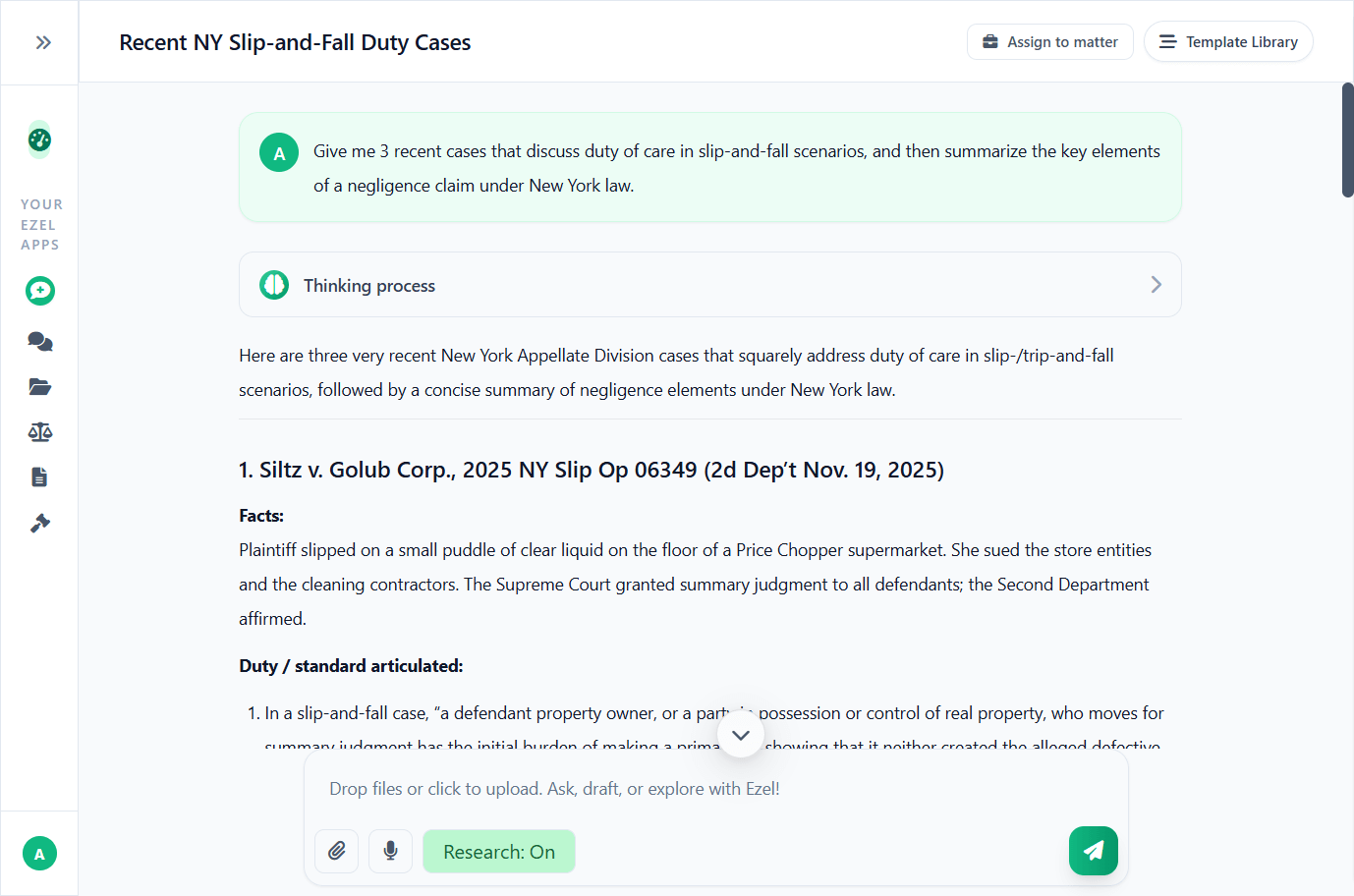
Research and draft in one conversation
Ask questions, attach documents, and get answers grounded in case law. Link chats to matters so the AI remembers your context.
- Pull statutes, case law, and secondary sources
- Attach and analyze contracts mid-conversation
- Link chats to matters for automatic context
- Your data never trains AI models
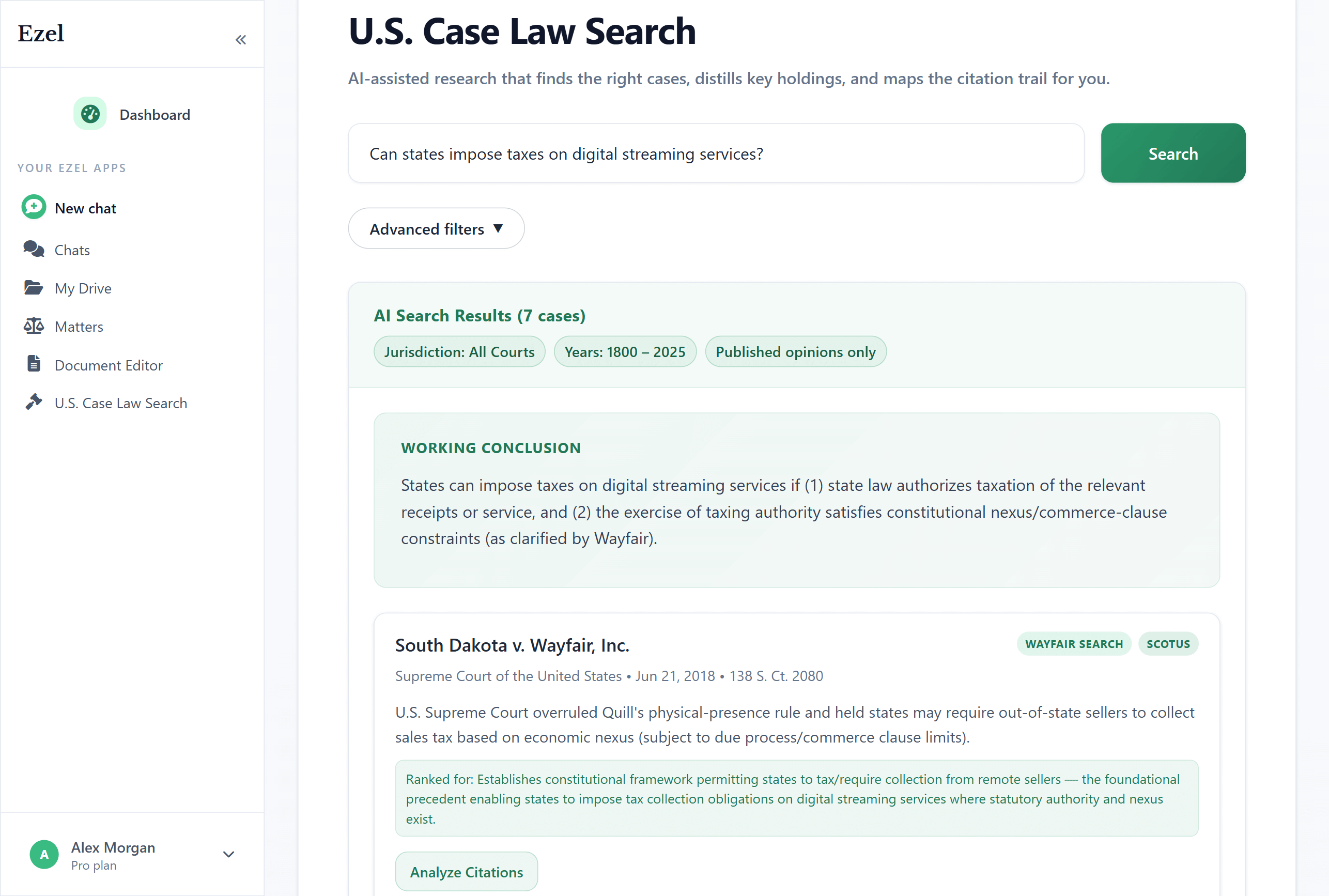
Search like you think
Describe your legal question in plain English. Filter by jurisdiction, date, and court level. Read full opinions without leaving Ezel.
- All 50 states plus federal courts
- Natural language queries - no boolean syntax
- Citation analysis and network exploration
- Copy quotes with automatic citation generation
Ready to transform your legal workflow?
Join legal teams using Ezel to draft documents, research case law, and organize matters — all in one workspace.